
I’ve written about My Tracks, that GPS mapping software that keeps track of my walks every day. There is another app we use almost every day. It’s called Out of Milk.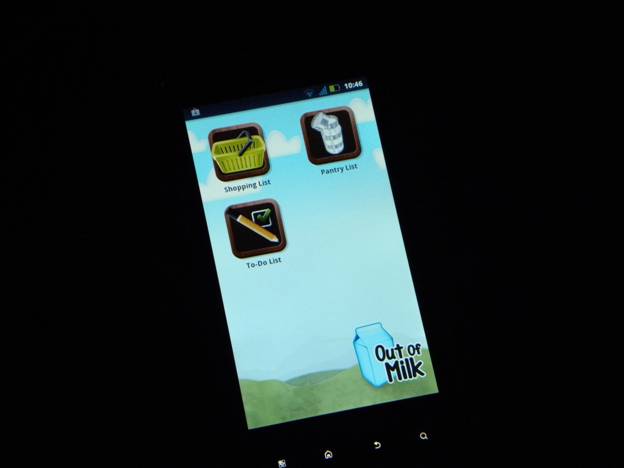 We use it mostly for the shopping list.
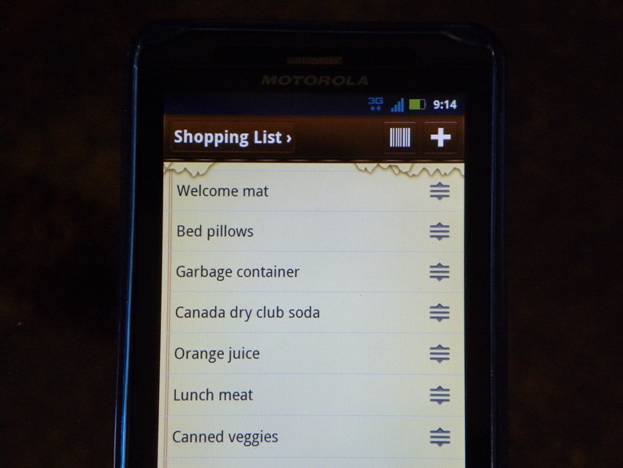 Once you get your list made, you can cross items off with one touch each. When you cross them off, they don’t go away, they just drop to the bottom of the list.
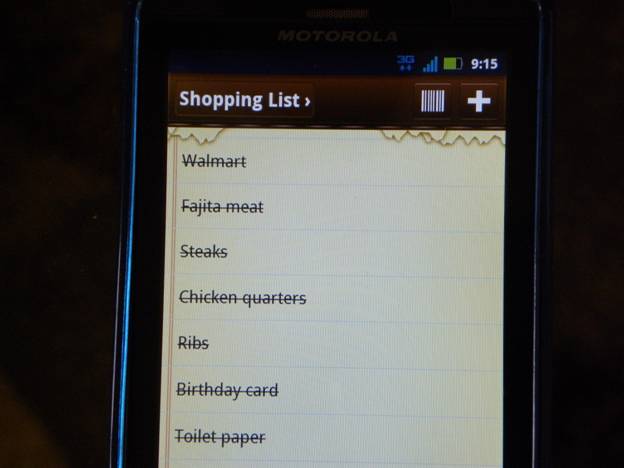 That way, when you’re making your next shopping list, you can go through the crossed off stuff, and with one touch each, you can just pop them back up to the top of the list if you need them again. But even better than that, the list on my phone is linked to the list on Judy’s phone. We work out a list together. I keep track on my phone. When Judy goes to the store, the same list is on her phone. If I think of something else while she’s gone, I just add it to the list on my phone and it shows up at the top of the list on her phone! So cool.
We use it mostly for the shopping list. Once you get your list made, you can cross items off with one touch each. When you cross them off, they don’t go away, they just drop to the bottom of the list. That way, when you’re making your next shopping list, you can go through the crossed off stuff, and with one touch each, you can just pop them back up to the top of the list if you need them again. But even better than that, the list on my phone is linked to the list on Judy’s phone. We work out a list together. I keep track on my phone. When Judy goes to the store, the same list is on her phone. If I think of something else while she’s gone, I just add it to the list on my phone and it shows up at the top of the list on her phone! So cool.