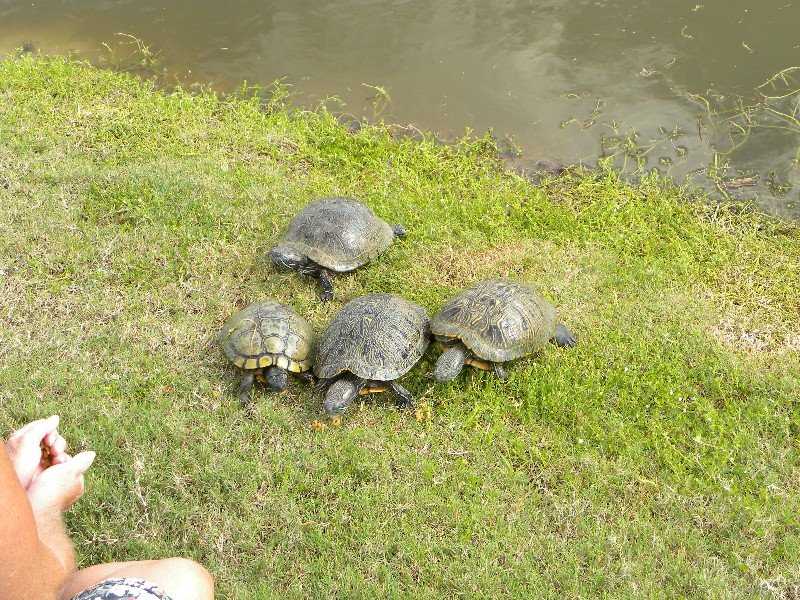
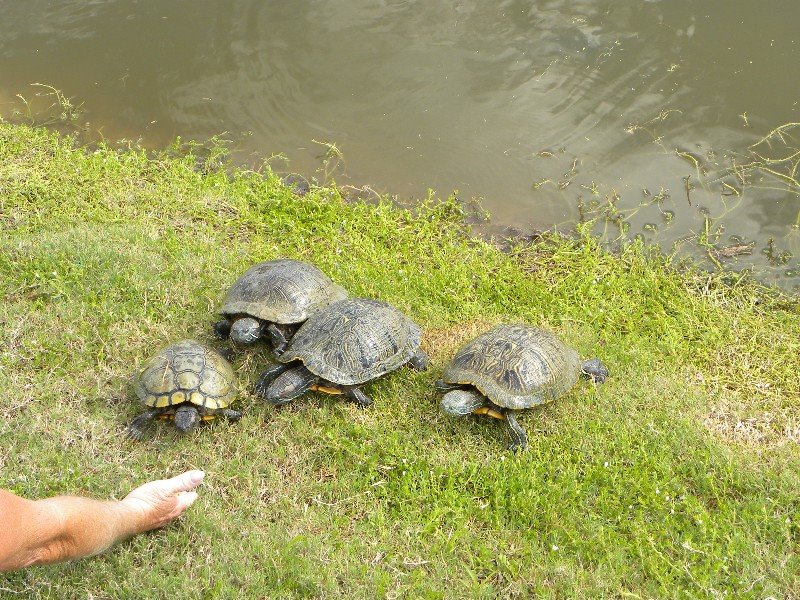
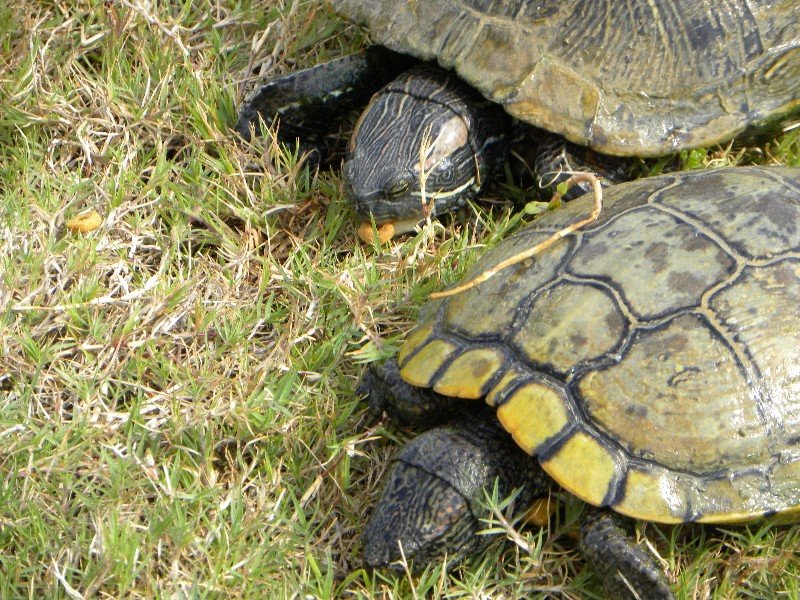
Saturday/Sunday

  Saturday, our friends Ron and Linda moved into the site they just bought next door to us.  Ron is the guy we get to claim as our oldest living friend.   Judy and I drove down to Riviera Sunday, and birded from there over to Baffin Bay and north.  It was a nice sixty-five bird day.  The highlight for us was a flock of common ground doves.  Got spragues pipits and scissortail flycatchers too.   Monday, a follow-up visit with the leg doctor.  We’re healing well.  For the first time he didn’t have to cut out any new black stuff.  We may really be past the infection.  Still on antibiotics indefinitely though.  Whistling ducks in our pond.  A long billed dowitcher.  A couple snipe.  We have hummingbirds again.   Louisiana Waterthrush at Paradise Pond.  The weather is great.    

Wet to dry bandaging

  Wet to dry bandaging.  It sounds so benign.   It isn’t.   Remember when I remarked that this whole thing with my leg wasn’t very painful?  Well, the nature of the game has changed.  We’re in the process of re-growing skin where, for awhile, there was none.  We want to grow new skin from the bottom up and the sides in.  We can’t let it just scab over.  We need to keep it open.   Wet to dry bandaging involves packing wet gauze into the wound, and wrapping it in place with breathable bandaging.  As the gauze dries out, and the wound simultaneously heals, a scab forms.  The gauze packed into the wound becomes part of that scab.  Then the gauze is ripped out, ripping off any scab, down to the new fresh skin, and new gauze packed in its place.  Wet to dry bandaging just doesn’t describe the sensation.  Packing and dressing sounds a little more ominous, but still; entirely inadequate.  Maybe we should call it ripping and stripping.  That comes a little closer to reality.   Have you seen the chest waxing scene in the movie Forty Year Old Virgin?  http://www.youtube.com/watch?v=E4UgkNnbNVc.  That’s me, twice a day, every day (as I get better).    

Rain gauge

  So the rain gauge conclusion is that it doesn’t matter if the rain is coming straight down or at an angle.  Up to a point, the rain gauge will measure the correct amount of rain.  If you go back to my earlier visualization, that we’re sampling a tube of air and raindrops above the top of the rain gauge, maybe instead of imagining tilting that tube and slicing it off diagonally, we should just imagine the drops coming down at an angle inside a tube that is vertical.  Then, for every drop of rain that blows away and escapes the rain gauge, another drop of rain will be blown in and be captured by the rain gauge.   Of course, if there is a strong wind, and the rain is blowing sideways over the top of the rain gauge, you could get plenty wet, without any rain ending up in the gauge. Unlike a rain gauge, we collect rain from any direction.   Then again, I particularly enjoy the thought that a good wind vortex might actually pull some water from the gauge, resulting in negative rain!  

I’ve been thinking

  I’ve been thinking about rain gauge accuracy.   In calm weather, the rain gauge will sample a column of air and water directly above it; a column of air and water exactly the diameter of the rain gauge.  That’s our baseline accuracy.   But what happens when the rain is not coming straight down?  What happens to the accuracy when there is wind with the rain?  If you imagine a column the same diameter as the top of the rain gauge, and slice it off perpendicularly, you’ll have a surface area on the end of the column exactly equal to the surface area of the top of the rain gauge.  If you cut that column of air off diagonally though, indicating the rain striking the top of the rain gauge at an angle, you’ll increase the surface area of the face; the part that intersects the top of the rain gauge.  For the same amount of rain, you’ll collect more rain than if the rain were coming straight down!   But then, if it rains too hard sideways you won’t get any rain in the rain gauge at all, it will just blow straight across the top.  Probably, after a certain point, you get decreasing amounts of water in the gauge as more blows across, so my column of water analogy doesn’t hold up.  The surface area on the face of a column of water would continue to increase, the more acutely you cut across it, to almost infinity, before it suddenly went to zero when the angle went to zero.   Guess I’d better think about something else ….., like maybe how to make perfectly clear ice-cubes in a home refrigerator.