
Best idea ever?


How to electrify the trucking industry.  Surely the size and weight of the batteries required to power an electric semi-truck are a huge obstacle.  Current technology probably allows for building a truck capable of driving a few hundred miles if it weren’t for the fact that it also has to pull a load.


So here is my solution:  Distributed storage.  (Like distributed power on a long freight train.)  Build an electric semi-tractor with a two-hundred-mile range unloaded.  (Because that’s about the range we can get with current technology.)  Then, in each trailer the truck might be pulling, build in a battery big enough to provide the additional power needed to pull just that loaded unit the same distance.  Plug the units together with a big electric cord.  It wouldn’t matter how many trailers you hooked up, or what you hooked them up to, the incremental power would always be there!  Brilliant?


These trucks could be deployed for local fleets that get to return to home base every night.  As battery technology improves, the range improves, until electric trucks can be used for long hauls.  Of course we recharge these imaginary vehicles with wind, solar, or tidal power, and the whole system is clean.


I suppose others might have stolen my idea already by having it first, but no matter.  Whatever it takes to make progress preserving this delicate planet we all rely on.


Physics Talk Online 5:30 MDT Thursday


Who knows what those crazy electrons are going do?  One or two at a time and they act just fine.  Once they start to run in packs though, look out, anything could happen.


Are there enough electrons that we need to worry about them?  This guy says there are more electrons in the atoms of a paper clip than there are stars in the universe, so yeah, I guess it matters what electrons do.  We’re all invited to attend tomorrow night as he explains what we think we know about when “many electrons” get together.


Heinz R Pagels Public Lecture

Please join us LIVE ONLINE TOMORROW

Thursday, July 15, 5:30 pm MDT/23:30 UTC

followed by an interactive Q&A


Cyrus Dreyer

Stony Brook University


Understanding Solids with Supercomputers

Many Electrons at a Time


According to visionary American physicist Richard Feynman, the most important concept in all of science is “the atomic hypothesis that all things are made of atoms — little particles that move around in perpetual motion, attracting each other when they are a little distance apart, but repelling upon being squeezed into one another.” The properties of the materials that make up the world around us are governed by how these atoms attract and repel each other, which is determined by interactions between the electrons most loosely-bound to those atoms. For example, whether a solid is hard and translucent like diamond, or soft and opaque like graphite; whether a material conducts electricity and heat like copper, or prevents the flow of electricity and heat like rubber; whether a material can be used in computer chips, like silicon; or whether a drug like aspirin will mitigate a fever. 


Understanding these interactions turns out to be a very difficult problem, one that has challenged physicists for a century. For one thing, electrons are small, and thus governed by the weird properties of quantum mechanics. Also, there are a lot of them in a given material: there are more electrons in the atoms that make up a paper clip than there are stars in the universe. In this talk I will describe a particular approach to tackling the “many electron problem”, known as Density Functional Theory, which, combined with the most powerful supercomputers in the world, has revolutionized our ability to describe and predict the properties of materials. I will give a variety of examples of how this knowledge of materials can be used to develop novel electronic devices for modern technology.


Cyrus Dreyer earned a Ph.D. in Materials from the University of California, Santa Barbara, and then was a postdoctoral associate at Rutgers University. He is currently an assistant professor at Stony Brook University in the department of Physics and Astronomy, and an affiliate research scientist at the Flatiron Institute,  Center for Computational Quantum Physics. His research interests involve developing and implementing computational techniques based on density functional theory to explore the properties of electronic materials.


Introducer and Co-host:

Ali Yazdani, Princeton University


Please join using the Zoom link below. You’ll be able to ask questions during the Q&A by clicking on the hand at the bottom of your screen. The co-host will call on you.


Heinz R Pagels Public Lectures continue next Thursday at 5:30 pm Aspen time with Mark Alford, Washington University in St Louis

“Faster than Light: Spooky Action at a Distance in Nature”


Lectures are added to our YouTube channel, AspenPhysics.

Descriptions are on our website:


Public Lectures


Aspen Center for Physics | 970-925-2585 | patty@aspenphys.org


Connect with us


Aspen Center for Physics | 700 West Gillespie St., Aspen, CO 81611

Trusted Email from Constant Contact - Try it FREE today.


Quick work of it


Some rain and a lake.


The rain stopped.  A few 4″ pumps across the way sucking water out of the field and putting it into a nearby irrigation canal for a few days…


And problem solved!


Oops.  It just rained another inch tonight.  No matter.  I can hear the pumps running again.


402


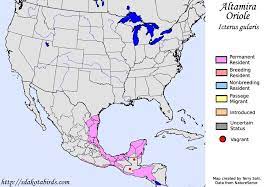
We drove to Choke Canyon State Park.  There, by 75 Acre Lake, we scoured the little forest from the parking lot.  Judy was first to spot it, an orange bird with black trim, black eyeline on an orange face, robin sized.  I saw it too.  Bullocks Oriole!  Number 402!


Didn’t get a photo, but if I’d gotten a close-up, it would have looked like this.

(Not my photo.)


I did get this photo of a nice crested caracara though.


I have his shoes


It seems I always have something of Johnny’s.


The first time he visited us in Colorado he hitchhiked out from California and brought some ski gear along and we all went skiing together.  When it was time to go, he didn’t want to mess with the ski poles on the return hitchhiking trip, so he gave them to me, each carefully labelled with the name “Seethaler” with scotch tape well wrapped over the label to protect it.  I skied with those poles for decades.  Skis, boots, bindings; all changed over the years, but the poles never did.


Last time we visited with John in Colorado he had a pair of Xero Shoes he had bought that were just a little too small for him.  Just right for me though.


I’ll have these shoes the rest of my life.