Have you ever wondered
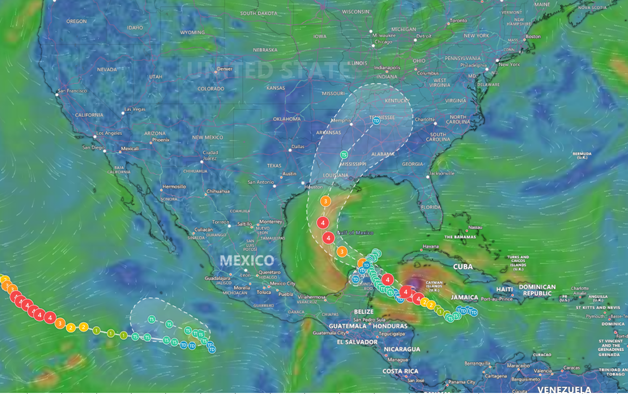
Have you ever wondered why it’s so easy to drive across Alabama on Interstate 10? Most of Alabama is a normally-wide state, but it only takes an hour to drive across it along the Gulf Coast. Look at the map. Beachfront is always the prime property, but Alabama didn’t get it. Florida hogged it all. Alabama got hosed!

You could look at this and figure “Well, Florida got there first. They took the best part.” Understandable, but no. That’s not how this sad situation came to be.
According to Google, in the early 1800s, Georgia was a giant state including what are now Mississippi and Alabama. Florida (and West Florida) belonged to Spain and spanned the Gulf Coast all the way to New Orleans. New Orleans was already part of the U.S. as a result of the Louisiana Purchase in 1803. The whole west end of then-Georgia was landlocked. In 1812, the federal government got pissed at Georgia, and didn’t like Spain being in West Florida either, so they marched down and claimed the Gulf Coast from New Orleans to Mobile as part of the United States, and partitioned off three equally sized states out of the previously giant Georgia state. There still wasn’t much waterfront available for Mississippi and Alabama, but they split what was between the two new states. Spain finally gave up Florida to the U.S. in 1821, but by then the state lines were already established, so the new state of Florida got to keep all that Gulf Coast!
Aren’t you glad you asked?
This is my Coronavirus baseline
I’ve been tracking this same graph for months.
If the line for total cases stays straight, then we’ve got the same number of new cases every day. For every little bit the line tips to the right, the virus is that much closer to being under control. However, if the line starts to curve up to the left…

Here is a link to an amazing animation from the New York Times about the coronavirus spread.
Once the page loads, you can scroll down through the text to control the speed the story unfolds.
This thing is not done with us yet. Please everybody, stay safe.
FW: Physics Talk 5:30 MDT Tonight
Today’s topic: Macrocosm in the Microcosm: Analogies between Materials and Particle Physics.
“Echoing the multiverse of the string theorists, every material presents its own set of physical laws that may not have an analogy in the world of our experience.” Uhhh. Yeah. Right. Count me in!
Free access to this talk on the “Zoom Registration Link” below. It’s not really a registration, It’s just a click to get there.
Steve
From: Aspen Center for Physics <patty@aspenphys.org>
Sent: Thursday, June 25, 2020 9:02 AM
To: Steve Taylor <steve@taylorroth.com>
Subject: Physics Talk 5:30 MDT Tonight
|
|
|||||||||||||||||||||||||||
|
You’re sitting on the deck
…and a fly lands on your leg. You brush it off with your hand, but it comes back. You swat at it to no avail. It won’t leave you alone. You pick up a dayglo plastic flyswatter and take a whack at it. A swing and a miss. You whack right next to the fly, but he escapes and never comes back. Nothing else would do the trick but that just did. The fly just learned.
Another time, another annoying fly. You pick up a dayglo plastic flyswatter and suddenly the fly is nowhere to be seen. I suspect that fly has developed an innate sense to avoid dayglo plastic flyswatters. Instinctive behavior.
I wonder about learned behavior and instinctive behavior. Where does instinctive behavior come from; survival of the fittest; genetically encoded behavior that provides such a survival advantage that the flies that have that behavior outcompete/out-survive all the other flies and they all end up having that trait?
And learned behavior only applies to that one fly? He’s not genetically encoded to be afraid of dayglo plastic things, but he is coded to fly away and not come back if something scary almost kills him?
So what exactly is the connection between learned and instinctive behavior; why one and not the other? Does instinctive behavior always start out as learned behavior? Given enough time would all learned behavior eventually become instinctive behavior? Why not? If you have to learn the same thing every generation endlessly, wouldn’t it be a lot handier if it just became instinctive?
You can’t create a hornless breed of cattle by chopping off the horns of every cow and bull before you breed them. Experiences don’t get encoded in genetics. Unless they do. Are some people afraid of snakes, even if they have not had experience with them? Is that an instinctive reflex? How did it come about? Was being naturally repelled by snakes a genetic mutation that provided such a competitive advantage that it replicated more in the people that had it than the people that didn’t? Or is there a more direct way for experience to make its way into the genetic code? Is there a path for fears and phobias that is not explained by survival of the fittest?