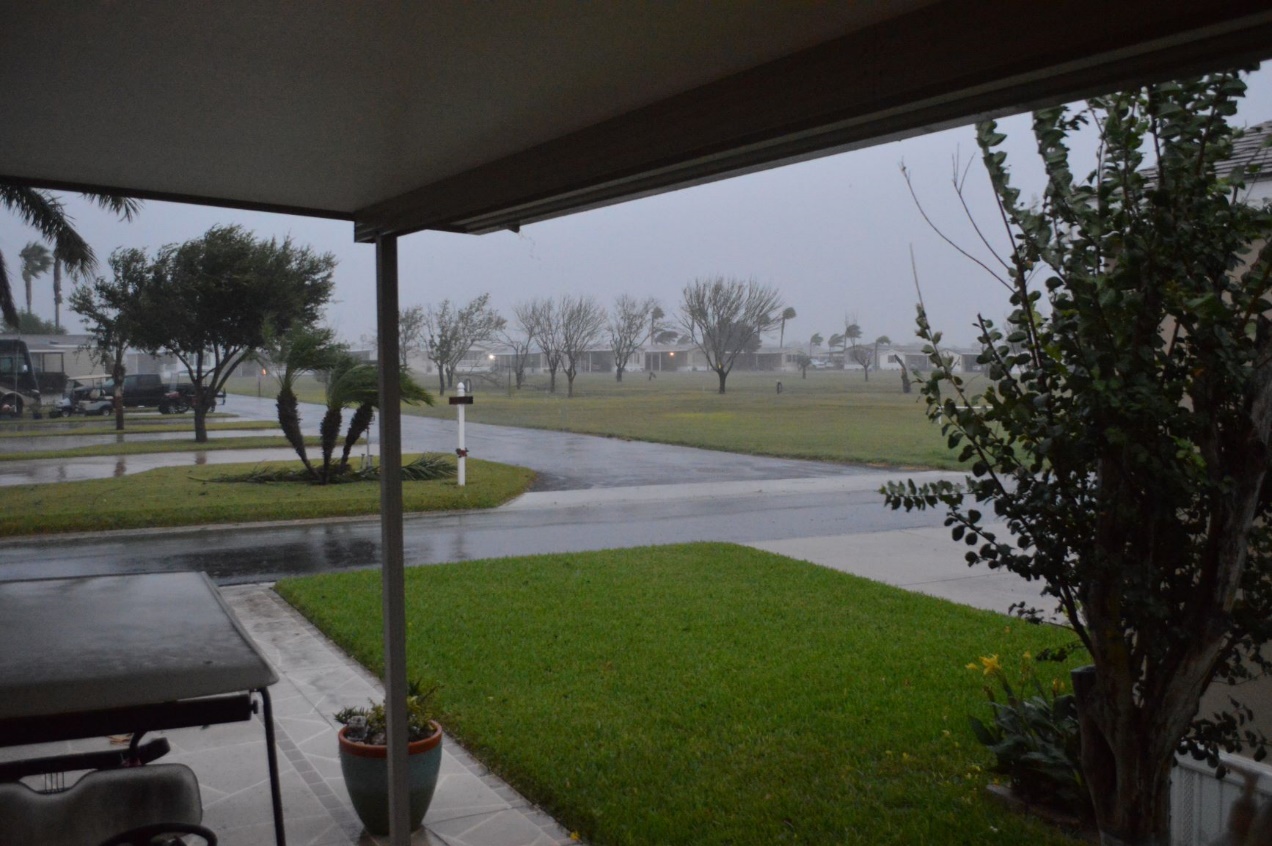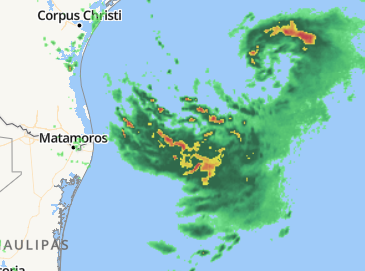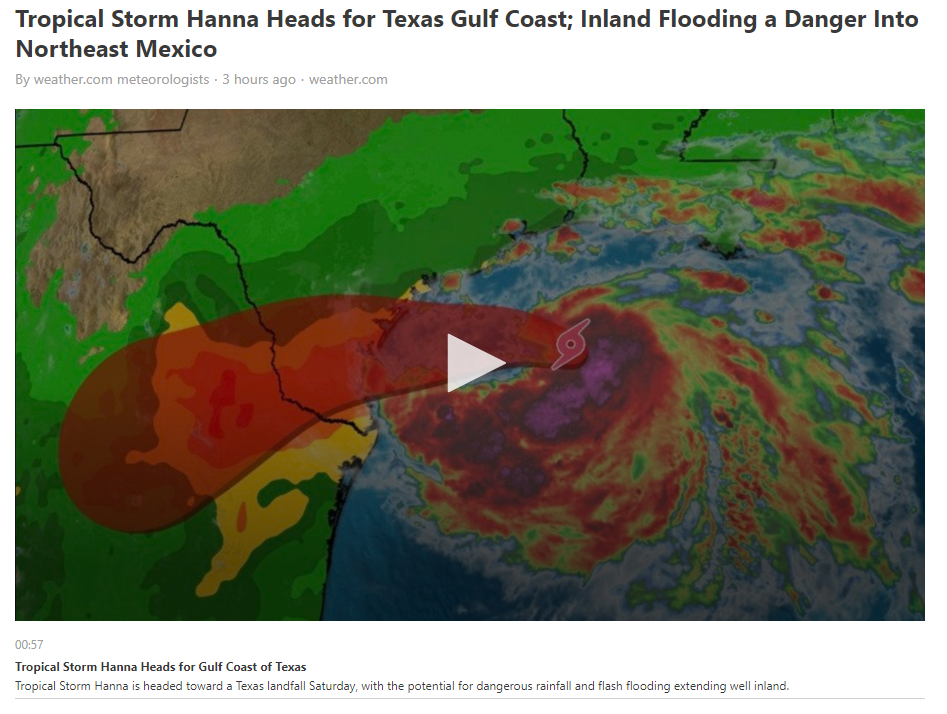
What the


We’re cruising along, safe in The Valley.  Hardly anybody else in the country even knows we’re down here.  Sheltering in place for the pandemic, but no real problem, just a few hundred cases.


Lately though, we’ve been hearing more about it.  And yesterday, we get a reverse 911 Emergency Public Safety Alert on our telephones, like when there is a child abduction or severe weather coming.


Hospitals are at capacity!  They’re already shipping sick people to other parts of Texas because there is nowhere left to put them here.  Soon the rest of Texas might be full as well.  Houston already is.  It was risky to go out before.  We’re even less likely to go anywhere now.


Meanwhile, a smokin hot fourth of July! 


We’ll enjoy it from our air conditioning.  Enjoy safely everybody!

Hummingbirds


We just made our hummingbirds’ lives a little easier.  We trimmed the Firebush.  It was getting so big we couldn’t walk past it in our little yard, so I cut back about a third of it.  There are still plenty of flowers all over the top, but way less for the little birds to remember.  The little birdbrains can remember every feeder along their migration route and even recognize individual people who refill the feeders too.  Maybe as we welcome back the flood of hummingbirds in the fall on their migration south to Central America, some of them will be glad to see us as well.


Ghislaine Maxwell


Just when we thought Jeffrey Epstein’s secrets about the rich and powerful died with him when he committed suicide, here in today’s news comes the arrest of his partner-in-crime for recruiting, using, and sharing underage girls, Ghislain Maxwell.  Guess one more person will have to commit an unattended suicide for the secrets to stay safe.


FW: Physics Talk 5:30 Aspen Time Tonight


Tonight at 5:30 Mountain Time.  A discussion on black holes and the information paradox!


It’s there just for the clicking on the link below.


From: Aspen Center for Physics <patty@aspenphys.org>
Sent: Thursday, July 2, 2020 1:03 PM
To: Steve Taylor <steve@taylorroth.com>
Subject: Physics Talk 5:30 Aspen Time Tonight


2020 Heinz R. Pagels Physics Talks

Please join us LIVE ONLINE TONIGHT

5:30 Aspen time (11:30 UTC) followed by an interactive Q&A


Netta Engelhardt

MIT


The Black Hole Information Paradox:

A Resolution on the Horizon?


Can information escape from a black hole? General Relativity, which describes the behavior of black holes, and quantum mechanics, which describes the behavior of information, do not agree on the answer. This disagreement is the essence of the famous 45-year-old Black Hole Information Paradox. Understanding the resolution of this problem is a central pillar in the quest for quantum gravity, a theory that describes the universe at the smallest scales by unifying General Relativity and quantum mechanics. In the past year, there has been an unprecedented amount of progress towards a resolution. I will describe the origin of the paradox and the current status in light of the new developments.  


Netta Engelhardt grew up in Jerusalem, Israel and Boston, MA. She received her BSc in physics and mathematics from Brandeis University and her PhD in physics from the University of California, Santa Barbara. She was a postdoctoral fellow at Princeton University and a member of the Princeton Gravity Initiative prior to joining the physics faculty at MIT in July 2019.


Professor Engelhardt works on gravitational aspects of quantum gravity with an emphasis on string theory. Her research focuses on understanding the predictions of quantum gravity in the vicinity of gravitational singularities. These include phenomena such as the thermodynamic behavior of black holes as well as cosmic censorship, the hypothesis that singularities are always hidden behind event horizons. She approaches these problems from the perspective of semiclassical gravity, leveraging insights from the interplay between gravity and quantum information via gauge/gravity duality.


Introducer and Co-host: Hong Liu, MIT


Please register in advance by clicking the Zoom button above. You’ll be able to ask questions during the Q&A by clicking on the hand at the bottom of your screen.


Join us next Thursday for Darkly Charged Dark Matter

with Lisa Randall, Harvard University


Aspen Center for Physics | 970-925-2585 | patty@aspenphys.org


Connect with us


Talks will be recorded and posted on our YouTube channel.


Aspen Center for Physics | 700 West Gillespie St., Aspen, CO 81611


Hummingbirds


Watching a hummingbird fly around a bush checking out each flower, you might think it is following a random path, but it isn’t.  Studies show hummingbirds remember every flower they visit.


Can you imagine that?  This firebush in our yard has a thousand flowers on it.


The hummingbird knows this bush and every other bush in the neighborhood!  It doesn’t waste time going back to a flower it has already visited and it knows how long to wait for the plant to replenish the pollen and nectar.


How do they do it?  Brains.  Size matters.  Now you may not think much of the size of a hummingbird brain, it’s smaller than a pea, but the brain of a hummingbird makes up 4% of its bodyweight.  We humans?  A measly 2%.  So the next time somebody calls you a birdbrain, check to see if they mean hummingbird.