A tough night for Annie

 She has been getting older naturally; her eyesight failing, her hearing failing, her rear legs even failing.  But she has been hanging in there, still eating, pooping, peeing, and having fun. As late as Sunday morning, she was alert and active.  She ran and played a little bit with Henry after breakfast.  Life started getting difficult for her about dinnertime.  We’ve been having this conversation about knowing when it’s time; not waiting too long before we help her on her way.  That’s our job, to help her when it’s time.  By eight pm she was in enough discomfort we decided it was time.  We took her to the car and drove to the 24 hour vet in McAllen.  She died on the way.  That was as good a place as any for her to take her last breath; she has always loved riding in the car with us.  Best of all, we didn’t have to take her inside to get a shot; she didn’t have to get scared at the vet’s office like dogs do. They were kind to us.  We stayed with Annie for about half an hour to finish our goodbyes.  It was very peaceful.  She was warm and relaxed.  Annie hasn’t looked that comfortable lately. It was a tough night for Annie.  It was a tough night for us. She lived a good life.  She made a lot of people smile.  The picture says it all. 

Hearing aid

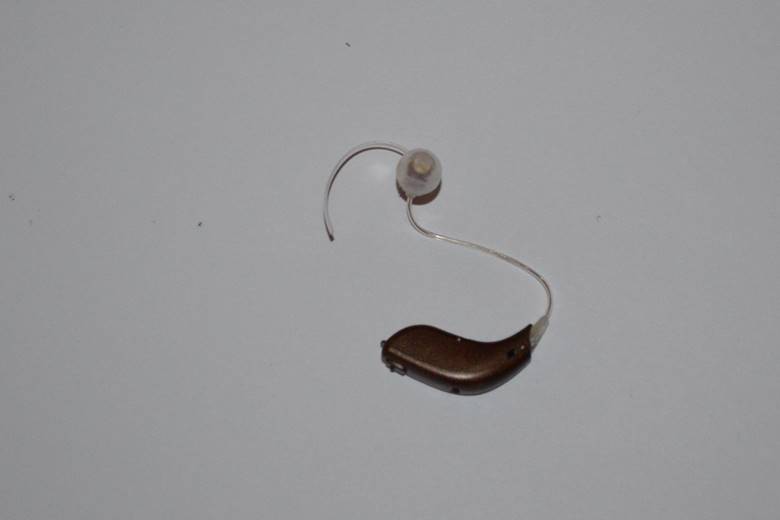
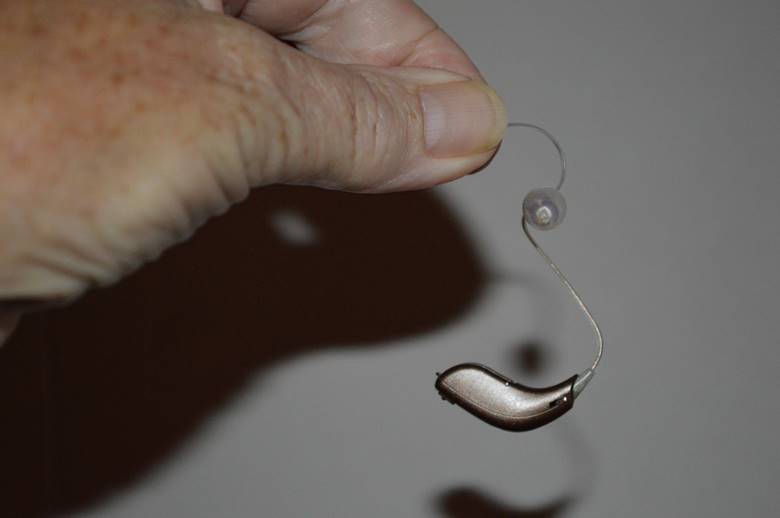
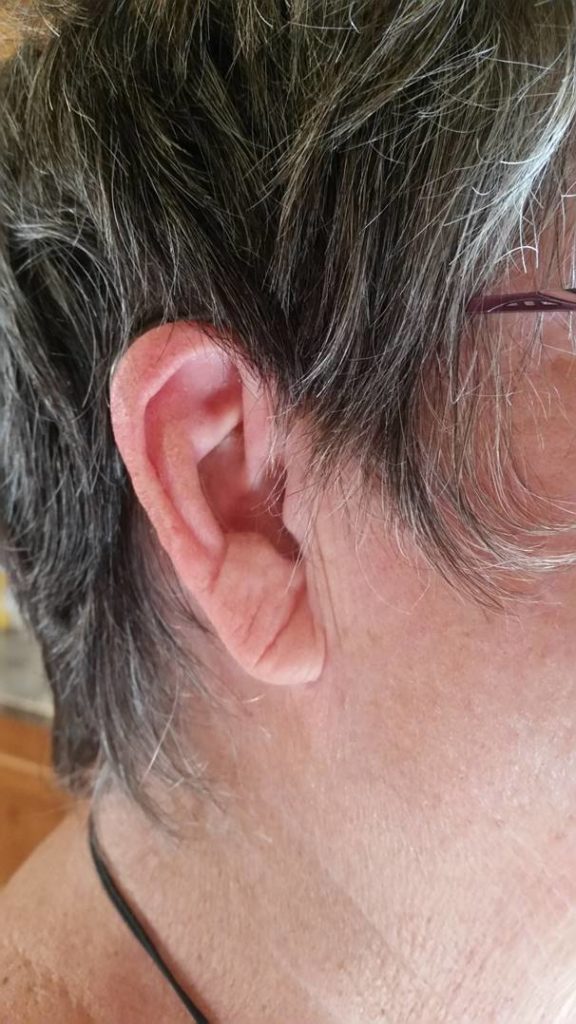
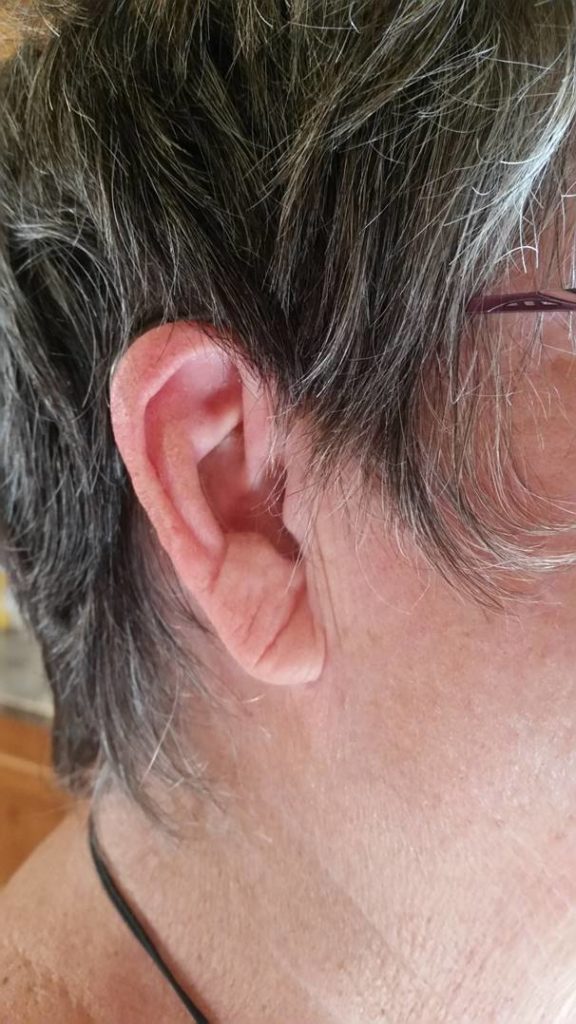
 I realized after I sent out last night’s report that I didn’t show what the hearing aid looks like.  It looks like this in the ear: There is a clear plastic tube that goes from the top front of the ear down into the ear canal.  The hearing device hangs on the outside behind the ear, the tube leads to the part that sticks in the ear, and there is a little tag of monofilament that hooks in the outer ear to hold everything in place. If we set it on a table it looks like this: For size perspective, we can see it’s a lot smaller than my thumb.  

Judy has hearing loss

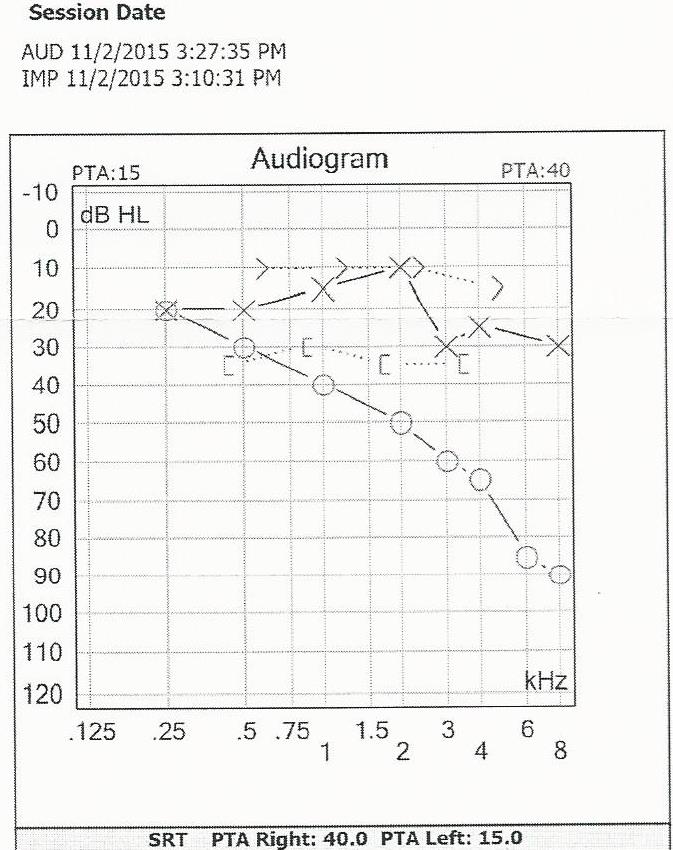
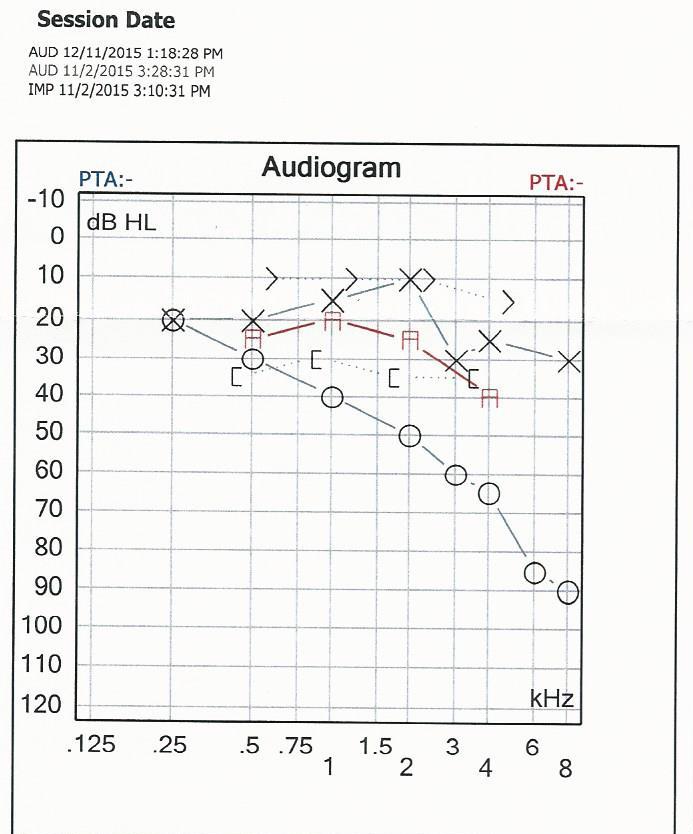
 Her hearing has been pretty good as we age, but she had a bad ear infection a couple years ago and lost a lot of the hearing in her right ear, as illustrated by this audiogram.  The way this chart reads is the bottom axis represents frequency.  The higher the sound, the farther right on the chart.  The left axis represents volume.  The farther down on the chart, the louder the sound has to be for each frequency to be heard.  For normal hearing on a young person, all the lines would be pretty much horizontal and within the 10 to 20 range. For our purposes, there are a couple of extraneous lines, the ones with the dotted lines.  The two important ones are the solid ones, the “X”s for her left ear and the “O”s for her right ear.  Her left ear can hear almost everything within the normal range of hearing.  The volume has to go up a little for her to hear the higher pitched sounds.  Her right ear drops off pretty fast.  The volume has to be unrealistically loud for her to hear any high pitched sounds out of her right ear.  An odd result of disparity is that pretty much everything she hears seems to be coming from her left.  She has lost the ability to hear something and look right at the direction it’s coming from. Today she got a hearing aid in her right ear.  We got the audiologist to run the audiogram again; hearing aid in.  It came out like this.  There are still two dotted lines to try to ignore, but an additional line of importance superimposed; the “A”s.  That is how her right ear hears now, practically the same as the left ear; the “X”s. She spent the rest of the day marveling at how much stuff she could hear, how she could tell which direction a sound was coming from, and how much we could turn down the television and she could still understand the dialog.  Great fun. Here is how it looks when she’s wearing it. Hard to tell.