…but before that we were awesome. That Big Day plan Jon put together was a masterpiece. He timed every distance and stop perfectly. We tried a different approach this year and started way up northeast to get birds we don’t usually see on this annual effort. We also decided not to count as we went along. We’ll just do the best we can and see how it comes out in the end. It was the right day to do it. The conditions were perfect. Virgina Rail at the Birding Center in Port Aransas at midnight. Common Gallinule, Sora, then a drive up the coast for the King Rail and Black Rail at Magic Ridge outside Indianola. We did great on rails. We got everything but the Clapper Rail. From there we went inland to Victoria for Pileated, Red-bellied, and Downy Woodpecker. We got Blue Jay, Barred Owl, Great Horned Owl, Carolina Chickadee, Tufted Titmouse, and American Crow. We had 35 species by dawn, and the policeman who busted us in Riverside Park at 5 o’clock in the morning didn’t ticket us. He didn’t even make us leave and wait until the park opened to visitors at 6am. He volunteered that he had never heard our excuse for being in the park in the middle of the night before, and that it didn’t seem like we were out to cause any trouble. After dawn, we headed back to the coast and a newly flooded rice field outside Indianola. Shorebirds galore. We got everything except Western Sandpiper. We got all three grackles at Tivoli: Common, Boat-tailed, and Great-tailed. Across the ferry and back to Port Aransas before noon. Didn’t get much at Jetty Beach because there were so many people on it for the holiday weekend. Most of the birds had gone somewhere else. Got a few terns. Scored big mid-day on migrants at Paradise Pond and the Birding Center. We added 25 more birds to our list in less than an hour. We had to be way ahead of last year. And that pretty much covers the part where we were awesome. Next, we went to Packery Channel for Eared Grebe. Oops. Too many people. There were fishermen standing in the shallow water next to their kayaks out in the bay, casting, where the grebes should have been. The wind had come up by the time we got to Hans Suter so we didn’t see much there. We looped around to the peninsula past Texas A&M for small plovers and got totally shut-out. The road to the military base past the school was blocked, presumably for the three-day weekend. We couldn’t get to where the plovers were. Things were slowing down. We heard it was good at Blucher and the Nature Conservancy house across the street in the morning, but by the time we got there it was slow. A few birds at Rose Hill and Tule Lake. It’s just a quiet afternoon. We kept moving. Got a few birds at Pollywog, Hazel Bazemore and Sandia, but new birds to add to the list are coming in ones and twos now. No big bunches. We’re running out of time. We got the Monk Parakeet at Orange Grove and went out to Jim Wells County to finish off the daylight. Normally we start the day out there and get maybe 35 birds during the morning chorus. This afternoon, not so much. Got the Audubon’s Oriole, but couldn’t fill in many more blanks. We made our count to see how we were doing. We have previous Big Day records of 205 and 207. All that planning. All that execution. We only came up with 189 birds. There are only 3 birds remaining that we could get in the dark on our way back. We called it off. It’s official. We suck. 21+ hours. 500 miles. 8 counties. 189 birds. No matter. It was good to try a different approach. We saw different birds this time and what the heck, we can’t set a record every time. And when we finished, we were still 80 miles from home, so we had the opportunity on the drive back to analyze, evaluate, and strategize about how we will approach the Big Day next year. Only 364 days to go.
The Big Day
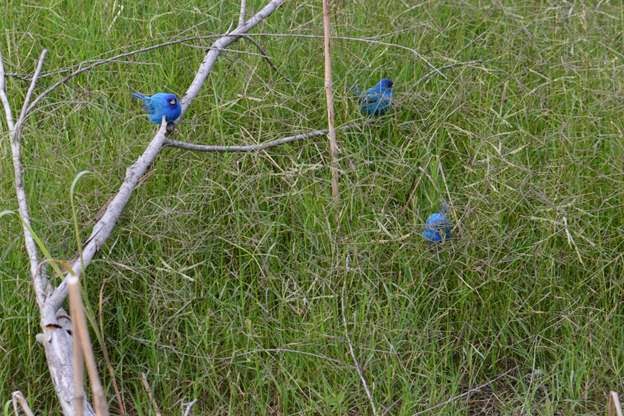
Jon set up the Big Day schedule as a Google Map: https://maps.google.com/maps/ms?msid=212295519158563322043.0004f745ce0cea06b6f0d&msa=0&ll=28.350317,-96.888428&spn=0.895546,1.674042 We’ve done this every year for a bunch of years now. I’ve tried just staying up the day before until midnight, then doing the 24 hours from there. No sense going to sleep if you have to be up by midnight, right? Wrong! That leaves me up for two days straight. The sleep-deprivation gets me before the second day is done. It works better if I get a few hours of sleep the day before, between dinner and midnight, so I’ll turn in early tonight. I’ll be up again before tomorrow. Jon and I will meet at the birding center at midnight to listen for teal and rails, then off we go. We’ll be well into it by dawn and gaining momentum for the day. More suspects: Wood Thrush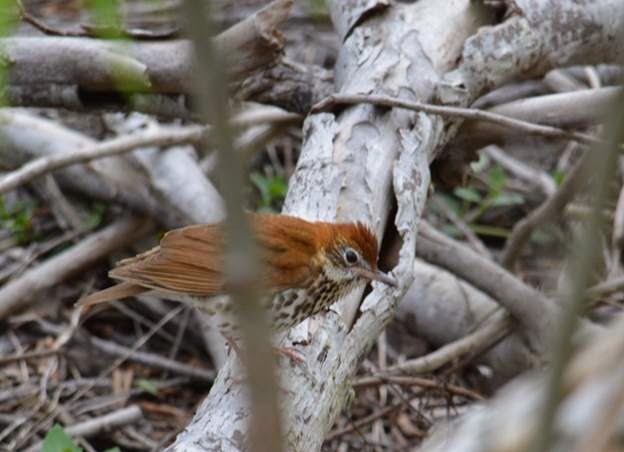 Indigo Buntings
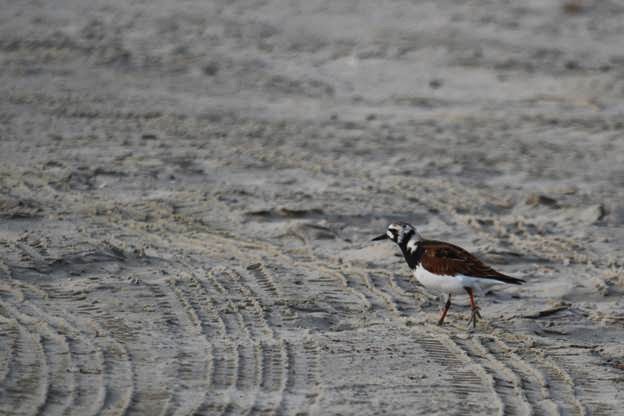
 A Ruddy Turnstone with his dancing clothes on
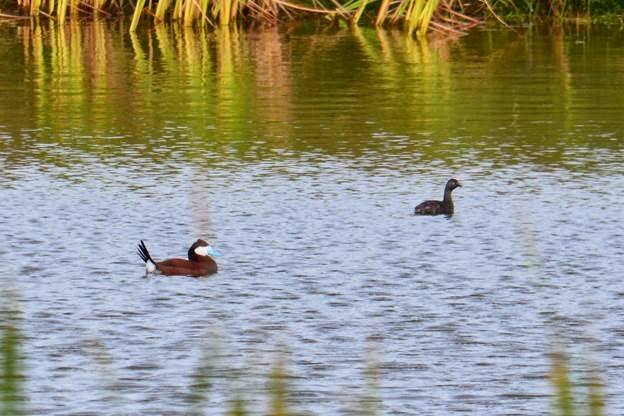
 And a very excited Ruddy Duck
Indigo Buntings A Ruddy Turnstone with his dancing clothes on And a very excited Ruddy Duck The Big Day is coming!
No, I’m not having a religious moment. This is the Birding Big Day. Jon and I. We’re set for Saturday, starting Friday night at midnight. 24 hours straight through. How many species of birds can we identify in that time? We can identify them by sight or sound; it doesn’t matter. It just matters that we’re sure. Left to my own devices, I can go find 100 birds in a day this time of year. We expect to see 200 or more on Saturday. The first hundred birds are easy. Seeing twice as many birds in one day is a lot more than twice as hard. I don’t think 10 times as hard would adequately describe it. “Totally impossible” would be more accurate for me on my own. For the second hundred birds, you really have to know what you’re doing. Lucky for me, Jon is a professional birder. He guides people to all the hard-to-find birds, so he is perfectly prepared for this. All I have to do is try to keep up. In the meantime, here are some photos of usual suspects. Green Heron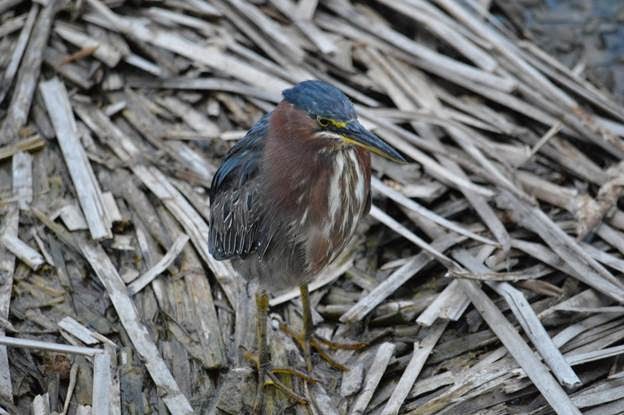 Nutria
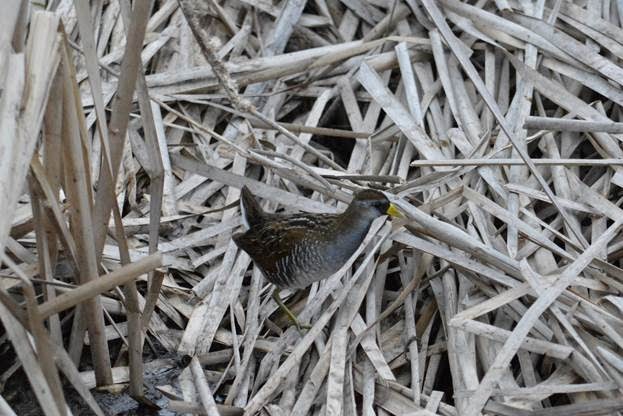
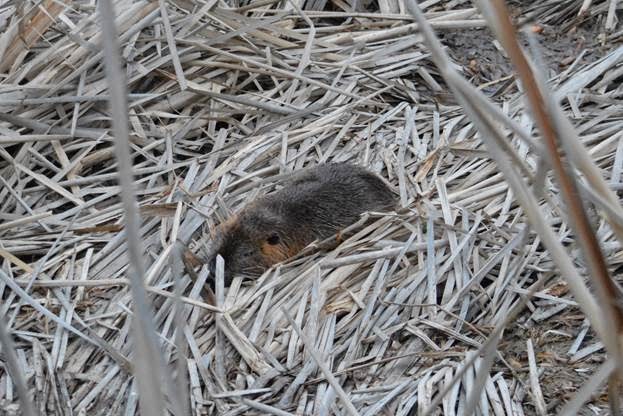 (This doesn’t count as a bird.) Sora
 Scarlet Tanager
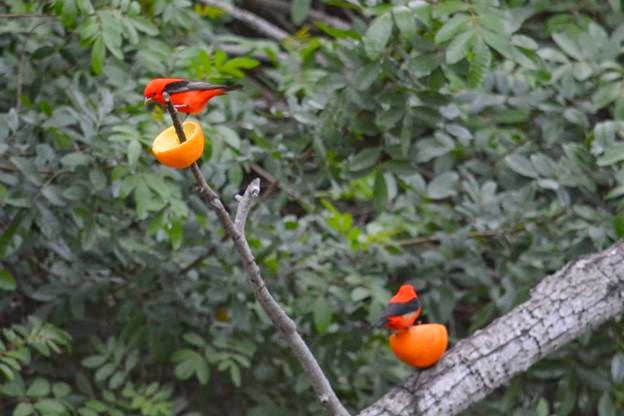
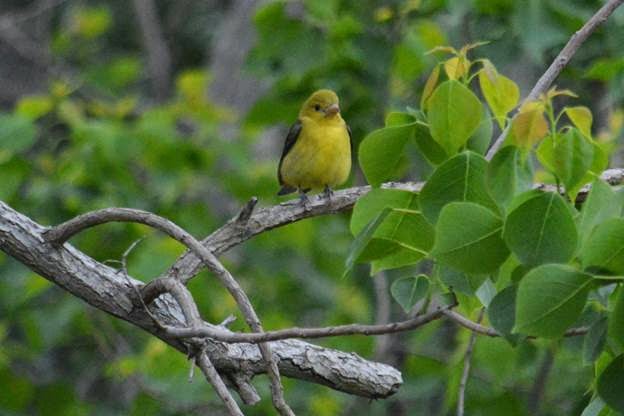 (Male and female.)
Nutria(This doesn’t count as a bird.) Sora Scarlet Tanager (Male and female.) Migration
There are two warblers that are really easy for me to miss each year, the Worm-eating and the Swainson’s. They are both primarily ground-dwelling. When we were at High Island a couple weeks ago, the Worm-eating was probably the most abundant warbler there. They were too far away for any good pictures though. Here in the Corpus Christi area, I walked right up on a Swainson’s Warbler.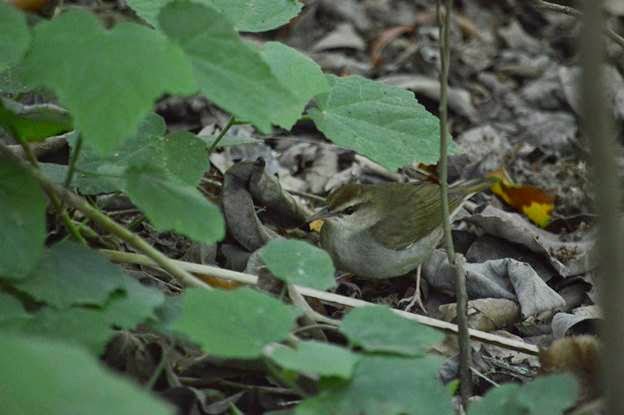
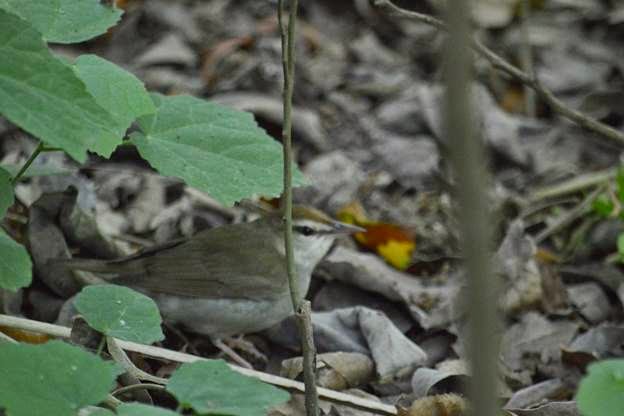 Got them both already. It’s a good migration.
 Remember that picture I sent out a couple years ago?
My favorite billboard.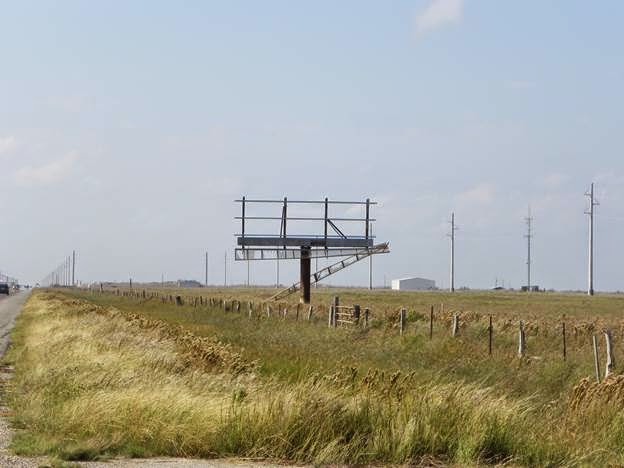 It has a message more powerful than any advertisement for aftershave. It is still delivering it.
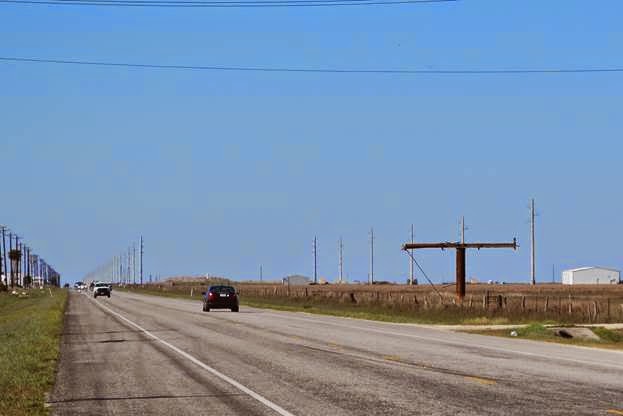 I think the message says “You’re temporary. Whatever you do, whatever you put here, in the end Nature Rules.”
It has a message more powerful than any advertisement for aftershave. It is still delivering it. I think the message says “You’re temporary. Whatever you do, whatever you put here, in the end Nature Rules.”