We’re back at Sandpipers.
Water towers
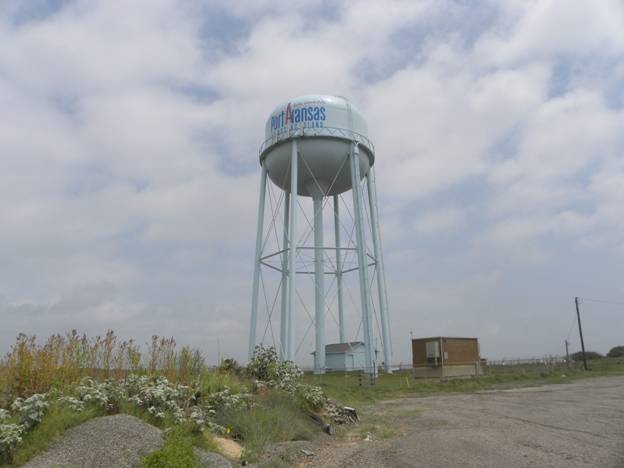 We see them in every small town; sometimes more than one per town. Port Aransas has two.
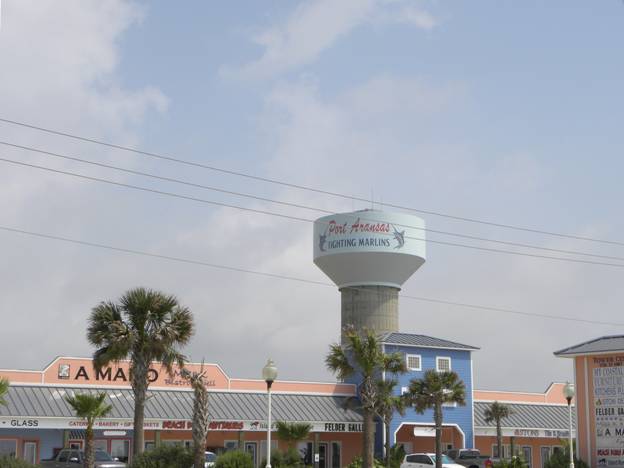 They’re probably in every big town too, but they’re really conspicuous in small towns on flat land, like the Midwest, and South Texas. Ever wonder what they’re for? Are they like those standpipes for irrigation systems that took me so long to figure out; giant burp holes to let out sudden excess pressure? Are they storage devices randomly built in the sky? There are so many shapes and sizes; are they doing different things? I had to look it up. Water towers provide constant pressure for the water supply. Put some water up high and gravity wants to bring it back down. Tie that into your water system, and suddenly it’s pressurized. The higher you put the water, the more pressure it provides. You can make the tower look like anything you want. They all do the same thing; provide pressure. So you put enough water up in a tower to provide about one day’s supply for the community. The minimum height to supply enough pressure from gravity is about 80 feet. That will give you maybe 35psi. The more pressure you want in your water system, the higher you build the tower. Many municipal water systems want to maintain 50 to 100 psi, so their water towers are much higher. With a water tower, not only have you established the right amount of pressure, but you only need to buy a pump big enough to handle the average daily usage for the town. Maybe a city averages using 500 gallons of water per minute over the course of 24 hours, but peak demand might be 2,000 gallons per minute. Using a tower with one day’s water in reserve means they only have to buy a 500 gallon per minute pump, not a 2,000 gallon per minute pump! It’s not a static system; it’s dynamic. Water from the tank gets used every day, then the tank gets filled back up at night. If your pump breaks, you’ve got a backlog of one day’s worth of water. You’ve got a day to fix the pump before anyone even knows it’s broken. And of course, this tower in the sky is the perfect place to promote your local high school team.
 Black-tailed Godwit
There has never been one reported in Texas. Until now. He was reported last Monday. The next morning, Jon left here before dawn and got it. It’s up by Houston and I have a day-job, so we didn’t go to get it until Saturday. By Friday, the Godwit was only being seen sporadically. Hit-and-miss. Friday afternoon he flew in at 4pm and stayed until 6:30. We had daily reports. So up and gone (after coffee) on Saturday, we were there at his pond by 11:30. People had been there since dawn, so we know we didn’t miss him with such a leisurely start. It was warm. We settled in for the siege. It got warmer. We wandered around the vicinity looking at other birds a little bit, but mostly we sat there, waited, and watched. There was a little breeze, but not much. It was a full-on stake-out. Twenty cars lined up along the road next to the pond. Forty people watching; most with scopes. Most of us from Texas. Two people from California. Two from North Carolina. One guy had been in the hospital for two months and got out with a foot still in a cast and using a walker, but he was there. His friend drove. There were false alarms. Hudsonian Godwit. A White-tailed Hawk. That was good. A Franklin’s Gull. That was unusual. A Phalarope flyover. Wilson’s. A federal game warden helped us pass the time. We saw Black-bellied Whistling-Duck, Mallard (Domestic type), Mottled Duck, Blue-winged Teal, Northern Shoveler, Neotropic Cormorant, Great Blue Heron, Great Egret, Snowy Egret, Little Blue Heron, Tricolored Heron, Cattle Egret, Green Heron, Yellow-crowned Night-Heron, White Ibis, White-faced Ibis, Roseate Spoonbill, Black Vulture, Turkey Vulture, White-tailed Hawk, American Coot, Killdeer, Black-necked Stilt, Hudsonian Godwit, White-rumped Sandpiper, Wilson’s Phalarope, Laughing Gull, Franklin’s Gull, Least Tern, Forster’s Tern, Royal Tern, Sandwich Tern, Eurasian Collared-Dove, Mourning Dove, Yellow-billed Cuckoo, Red-bellied Woodpecker, Downy Woodpecker, Scissor-tailed Flycatcher, Loggerhead Shrike, American Crow, Purple Martin, Barn Swallow, Cliff Swallow, Northern Mockingbird, European Starling, Northern Cardinal, Red-winged Blackbird, Eastern Meadowlark, Great-tailed Grackle, Brown-headed Cowbird, and House Sparrow. No Black-tailed Godwit. It was 8pm. It was getting too dark to see. We still had a 4 hour drive home. We left. Birding is like that. No guarantees. You don’t get to see every bird, but you don’t get to see *any* birds if you don’t put yourself out there. We keep on going out, and we’ll take what we get. 435 miles. 9 hours of watching. 8 hours of driving. We were home by midnight (almost). A missed opportunity for the Godwit. We gave him every chance to see us and he took a pass. I guess he’d seen enough Texans all week, and decided to go somewhere else and see some different people.
The Willet
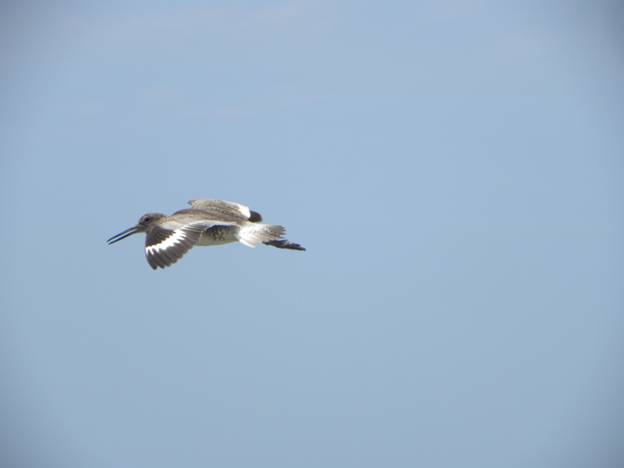
Feeding in the shallows, he couldn’t be more plain.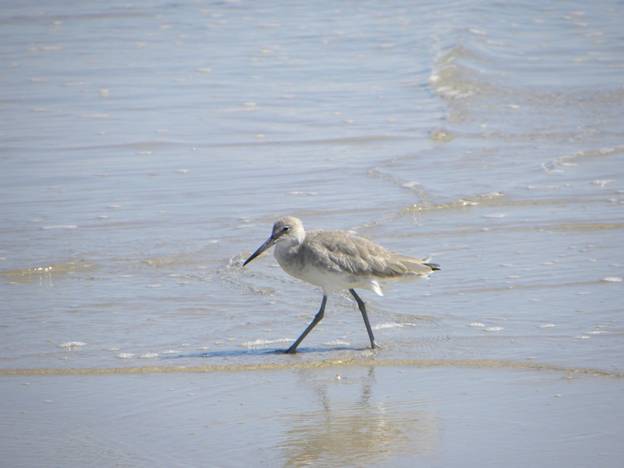 But in flight, he couldn’t be more conspicuous!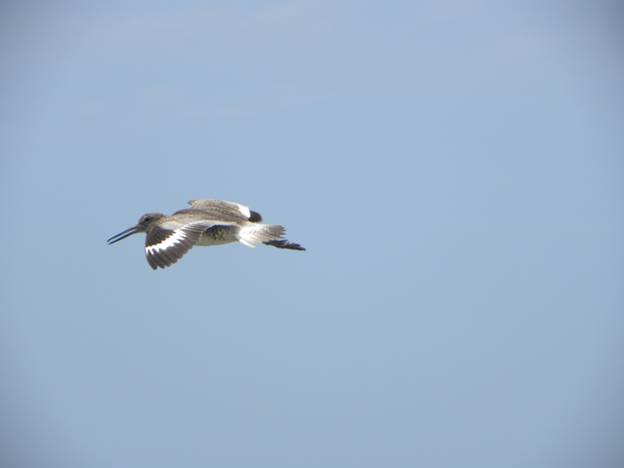
But in flight, he couldn’t be more conspicuous! Charlie’s Pasture
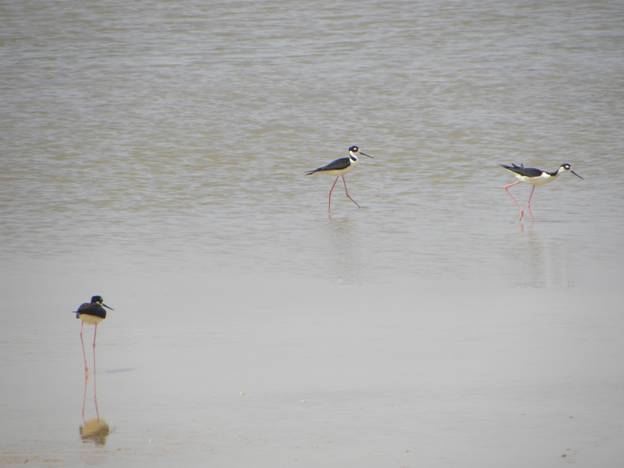
Black-necked Stilts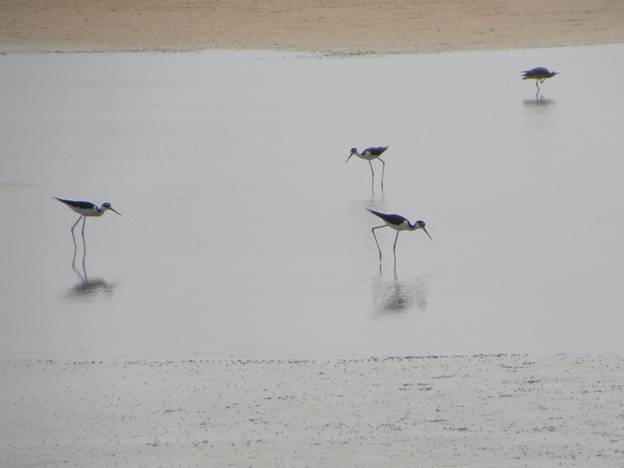
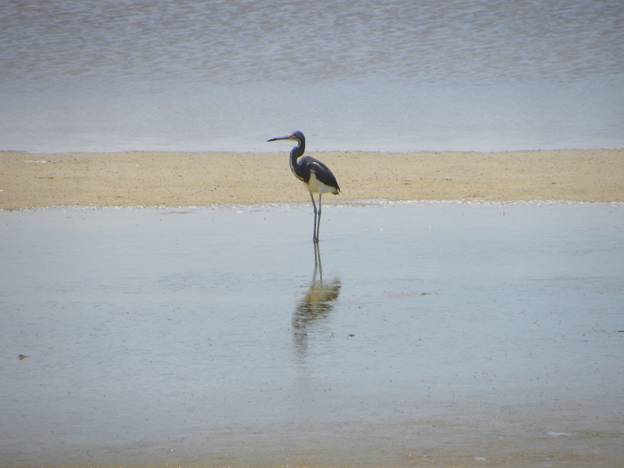
 Tricolored heron
 Willet
 And Wilson’s Plover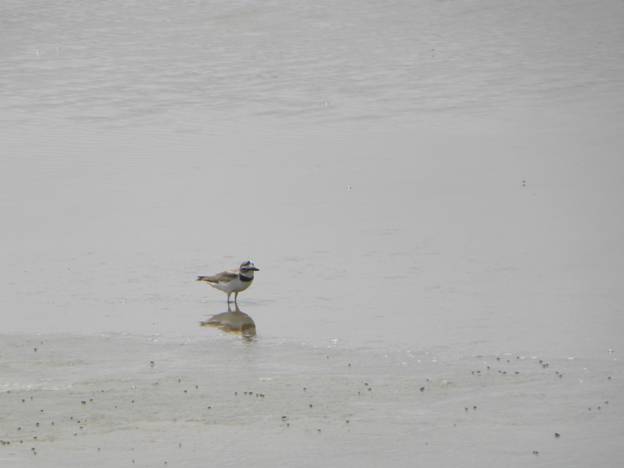
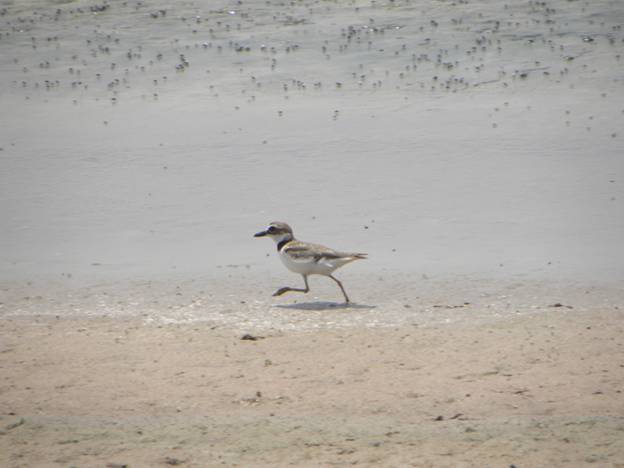
Tricolored heron Willet And Wilson’s Plover