But we’re adjusting. We stopped and changed money before we crossed the border. It was great. They gave us Canadian dollars for our Greenbacks one-to-one. Suppose it will come out that even when we exchange our leftovers on the way back? Things seem to cost a little more here dollar-for-dollar. They speak a foreign tongue, but we’re mastering it. We had a chat with someone from Yellowknife in the Northwest Territories, and she said we hardly had any accent at all, eh? All the road signs are bilingual; English and French. Now we can screw up French pronunciations as we drive along instead of Spanish like we usually do in South Texas. I get to drive 100. They measure distance in kilometers. That’s not a difficult conversion for us. Kilometers to miles: about 1 to 0.6. Meters to feet: about 1 to 3. We’re even starting to think in metric instead of making every conversion. Fuel is a different matter. Gasoline only costs $1 per unit, but the unit is not gallons, it’s litres. I guess since I don’t really know the dollar-to-dollar conversion, there’s no point in taxing my brain trying to convert litres to gallons at the same time. I just watched the dollars on the pump instead of the gallons (litres). It cost us $60 to fill up the Jeep, so I think we lost a little ground on that exchange. Diesel costs less than gas. Temperature is measured in centigrade. Doesn’t matter to us. All our thermometers still read Fahrenheit. There is a weight limit posted on a bridge. 4,500 kg. What are we supposed to do with that? Does that even mean anything? And road warning signs. There are some different ones here. If you see a sign with a drawing that looks like a dead beaver, that means there is a bump coming. If you see a sign that looks like a whole family of beavers got run over, it means there is a whole rough patch of road coming up. That’s it. I think we’ve mastered everything except metric time. How do you tell time to the base ten?
Wednesday
Glaciers. Waterfalls. Icebergs. Spruce forest. Boreal chickadees. Tundra. Caribou. Caribou? Wow. A big bull. Popped right out from behind some scrub. Trotted down to the trail, and headed off. He came within 20 feet of us. Who knew there were even caribou here? We checked later and found out there are only 150 caribou in the entire park. How lucky is that?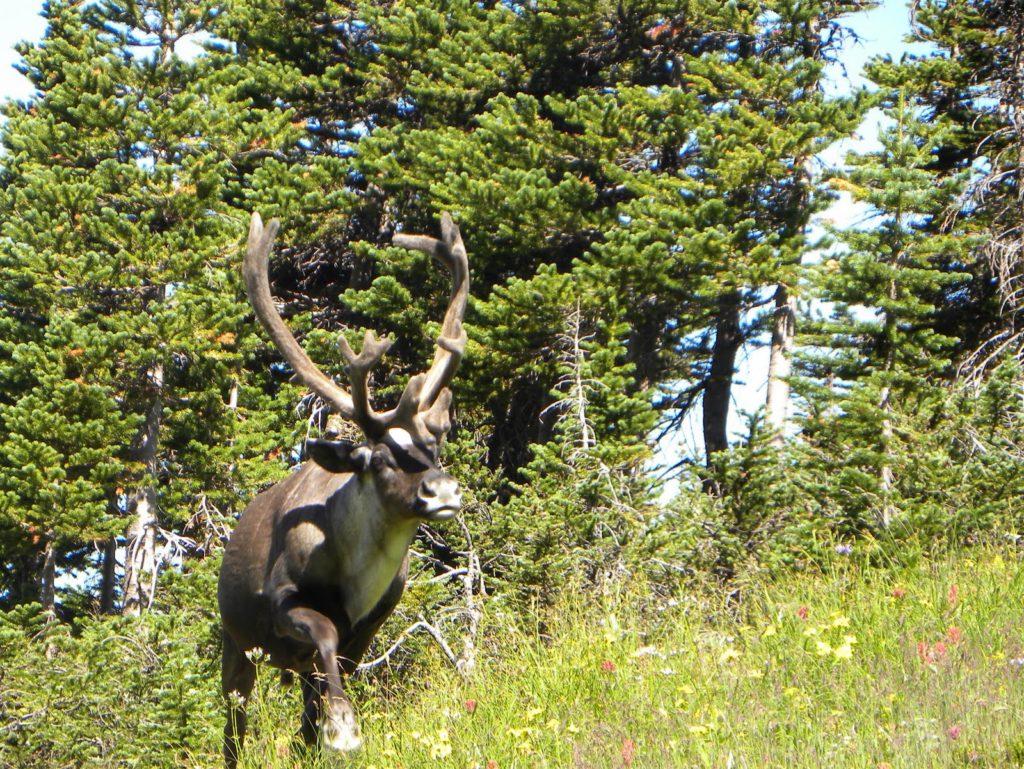


Wednesday
Glaciers. Waterfalls. Icebergs. Spruce forest. Boreal chickadees. Tundra. We hiked all the way through the spruce forest zone and popped out the top.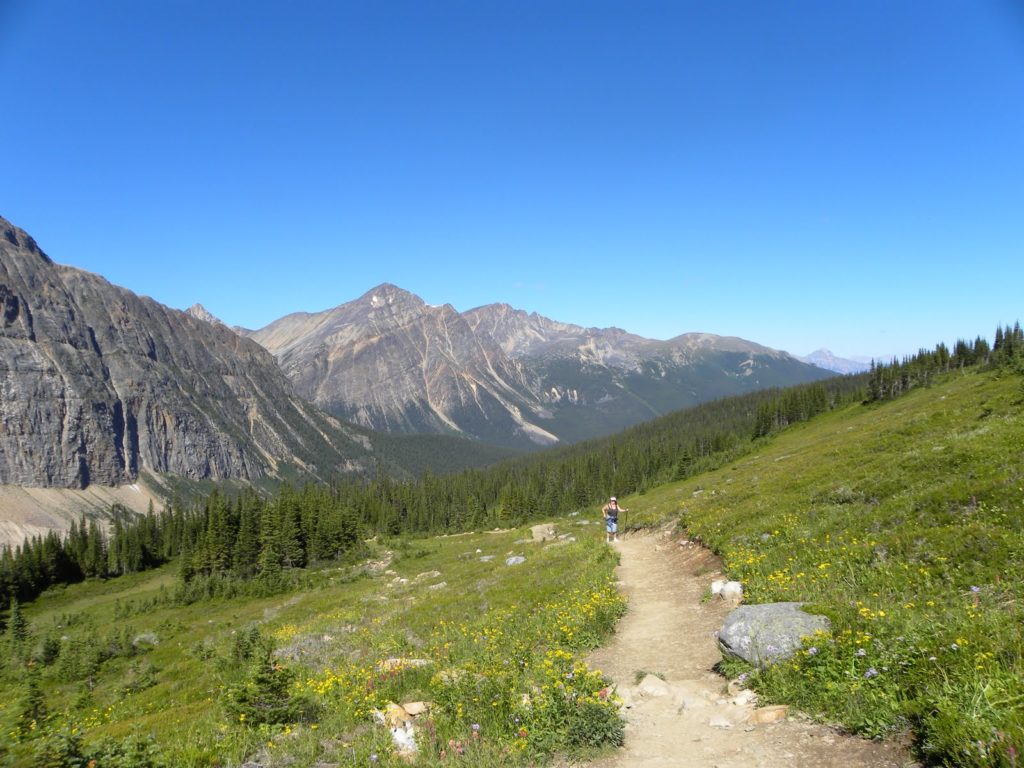


Wednesday
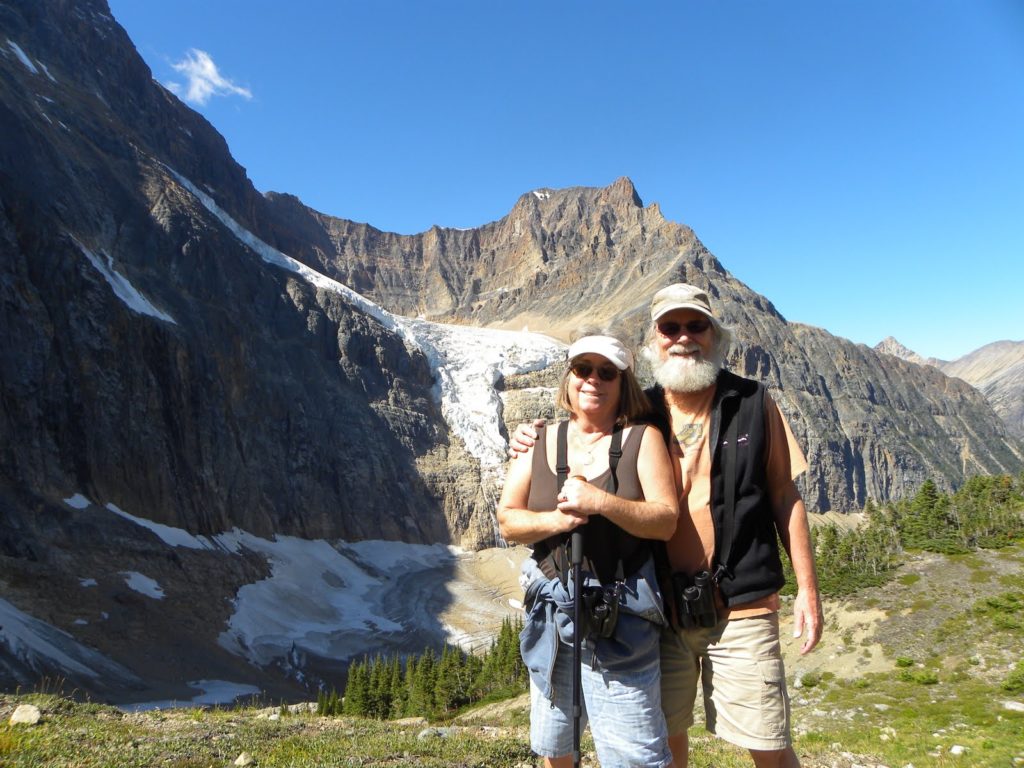
Still no internet. Guess we should take another hike. The Edith Cavell Meadow Trail in Jasper. Glaciers. Waterfalls. Icebergs. Spruce forest. Boreal chickadees.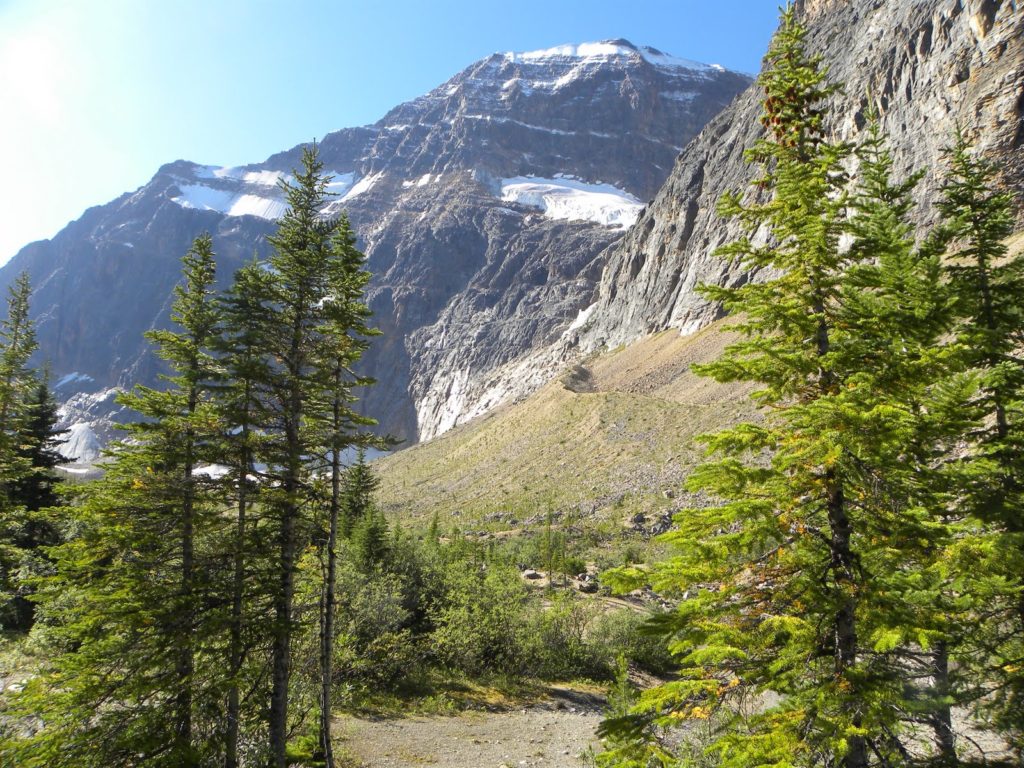 See that glacier up on the right? We hiked a different ridge and were looking right across at it.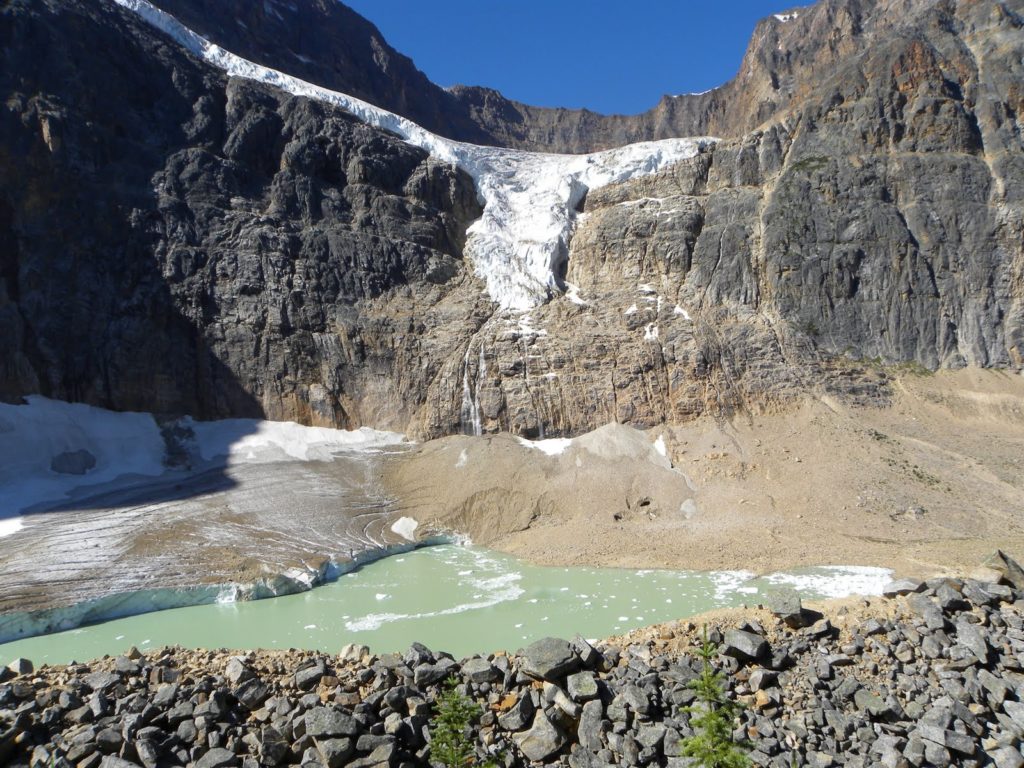
 See that glacier up on the right? We hiked a different ridge and were looking right across at it.
See those little dark dots just above the lake to the right of center? Those are ice caves.
With people in them!
Tuesday – Jasper
Well. Going north certainly did the trick. Sunday night in Banff, the low was 37. Monday night in Hinton, outside Jasper, the low was 61. Balmy weather. Borderline internet, but it’s too nice to leave. We’re going to explore here for a few days before we reestablish contact with the outside world.
No birds at the KOA, but Jasper was nice and birdy. Started off with a common loon and a bald eagle on the drive to the National Park. Took a walk around a lake, Lac Beauvert:

Lots of little birds in the forest, but none of our target birds yet. Guess we’d better go back tomorrow.
Meanwhile, we left Annie in the coach and Miles from the KOA staff watched her for us while we were in the National Park. I think Annie spent most of her time at the office and riding around in the golf cart.
It gets dark late here. It’s not really dark until 9:30. It stays light really late in June. In June, the sun sets at 11:30.