I’ve been thinking about Neanderthal Man


Homo Neanderthalis.


They lived for hundreds of thousands of years, principally in what is now Europe.  Neanderthals seem to be the result of an early human migration out of Africa that then evolved to Neanderthal.  They never expanded their range beyond what is now Southern Europe and Western Asia.  They never evolved into anything else.  They alone inhabited their territory until modern man, Homo Sapiens, came along on a much later migration out of Africa.  From the fossil records we can tell that during the last part of the Neanderthal reign, from about thirty thousand years ago, these two human species co-existed in the same habitat at the same time, for about 10,000 years, but only one species came out alive.  Thirty thousand years ago; twenty thousand years ago; tiny blips of time in the history of human evolution.  Neanderthals almost lasted long enough for us to know a time when there were two different species of humans living at the same time in our lifetimes!


Early on, in the early 1900s, it was thought that Neanderthals were dumb brutish grunting cavemen thugs.  That perception has shifted over the years, research revealing that Neanderthals had social groups, were cooperative ambush hunting forest dwellers, and were in control of fire and cooking.  They either copied art from the arriving homo sapiens, or produced it on their own before the invaders arrived.  New evidence continues to be discovered, and new analyses made, so our understanding of our earliest ancestors, and those other human species encountered along the way, continues to evolve.  Recent discoveries suggest there were a whole series of early human migrations out of, and back to, Africa, complicating existing explanations.  Our neat explanations don’t stay neat for very long.


It has been postulated that Homo Sapiens invaded and wiped out Homo Neanderthal, or they outcompeted them for resources with their superior intellect, or maybe Neanderthals never went extinct at all but were just absorbed by the newcomers.  But none of those speculations are supported by evidence.  We still don’t know why Neanderthals aren’t here anymore.


Much of what we know has been learned since the first genetic sequencing of Neanderthal DNA in 2010.  The question had often been asked: “Did Neanderthals and Modern Humans interbreed?” and that question has been the source of much speculation.  The DNA sequencing provided the first conclusive evidence that there definitely was interaction between Neanderthals and Modern Humans.  Even after all this time, up to 2% of the DNA of Modern Humans has been contributed by Neanderthals. 


That also crushes that theory that maybe Neanderthals never really went extinct but were absorbed by the Modern Humans and continue to exist as part of them to this day.  If that were the case, there would be a much higher proportion of Neanderthal DNA in Modern Humans and the total amount of Neanderthal DNA would be more complete.  For current humans all over the planet, about 1 to 2% of their DNA is from Neanderthals.  But different groups of people have different Neanderthal DNA.  Altogether, spread out across a whole lot of different people, about 20% of Neanderthal DNA survives today.


Now that we’ve answered the question about how much Neanderthal DNA survives in today’s humans though, that makes me wonder, how much did Modern Humans affect, or infect, Neanderthal?  These two species coexisted for 10,000 years.  How much Modern Human DNA did the last Neanderthals have?  Was it the same 1 or 2% as we have of theirs?  And how much did the amount of homo sapiens DNA they absorbed influence what happened to them?
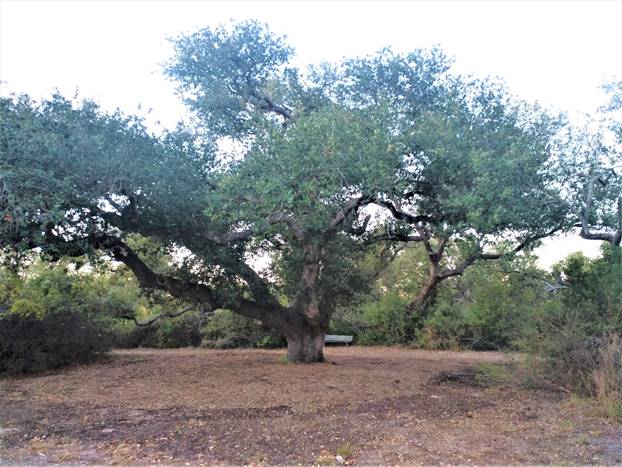
 

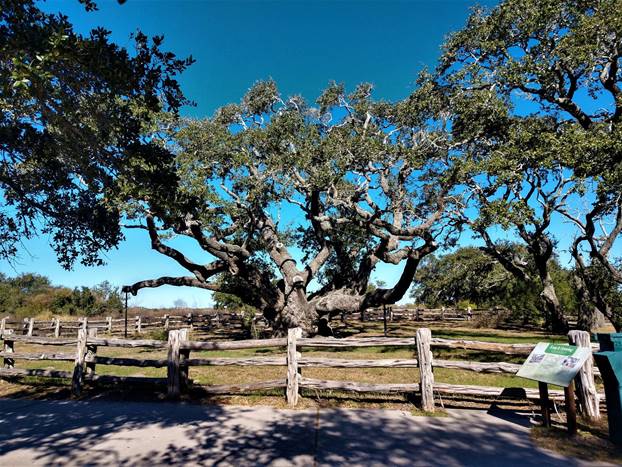
A big oak tree


In the campground at Goose Island State Park.  (We’re not there now but this is a picture from when we just were.)


It’s a really nice tree.


If you want to see a really large oak though, you have to go a couple miles down the road to the Big Tree.


The base of this coastal oak is 35 feet around.  It’s somewhere between 1,000 and 2,000 years old!  This tree was alive when the population of the entire planet was around 300 million people, just 4% of the current population of 7 billion.


I’ve been thinking


We’ve spent all year staring at our backyard except when we’ve gone out in the bus to some state parks.  Staying at home is okay, and it’s the safe thing to do, but it got lethargic.  Not doing anything was draining.  The less we did, the less motivated I was to do anything.  I need a project.


I’m thinking about doing another Big Year.  In 2019 we did a Big Year by going everywhere we wanted to go and paying attention to what birds were around us while we did that.  We netted 500 species.  I’m thinking if we flipped that strategy and went places specifically to see birds, and incidentally enjoyed ourselves, we could do better than 500 species.  Maybe we could see 600.


Two problems.  First, Covid isn’t gone yet, a Big Year would require flying and staying in hotels, and we’re not ready to fly and stay in hotels again yet.  Second, given that every different kind of bird has its own range map of where it is when, that’s a big logistical challenge to figure out a reasonable travel schedule that puts us where we need to be when.


Two solutions.  First, don’t do the Big Year until 2022.  Problem solved.  We’ll be free to travel by then.  Second, split the Big Year challenge into two parts.  Figure out which birds we can get in Texas before we start flying all over the country.  Do a Big Texas Year in 2021 to perfect our approach.


There are a lot of species that have been seen in the US at one time or another.  The count is somewhere in the 900s.  A lot of those are incidental odd accidents though.  As far as birds we can actually expect to find, the count is more like 800 birds.  If our target is to find 600 species in one year, that seems doable.  (The record Big Year for North American birds is 750 or so.  I think that was before they added Hawaii to the ABA area.)


If our target is 600 birds, we should be able to hit that number without life-altering moments-notice trips (and financial ruin) to chase down every rare exotic bird sighting.  Well, given a target of 600 birds, how many of those might we expect to find in Texas?  I know 500 is doable, because our friend Jon has done it.  I think if we set our sights a little lower, like 400 for Texas, we could knock 400 birds off our count, without leaving the safety and comfort of our motorhome.  If we get 400 species in Texas, that only leaves 200 birds outside of Texas that we need.  That’s not such a daunting logistical task for the airplane and hotel part of the effort in 2022.


So there we have it.  We do a Texas Year in 2021, starting in a little over two weeks, with a target of 400, as practice for a Big Year the next year.  The planning has begun.  I’m mapping out which birds only go as far south as Northern Texas in the winter.  We’ll have to go up around Lubbock and Amarillo to get those.  And which birds only go as far north as Southern Texas in the summer.  We’ll have to be in South Texas for those.  For the migrants, we’ll have to be along the coast in April to get all we can on their way north, then again in September to pick up any we missed in April as they work their way back south.  West Texas will provide the desert birds that only go that far east, and East Texas, the eastern birds that only go that far west.  We’ll fill in with the year-round birds whenever we have the chance.


That’s our plan.


Quinta Mazatlan


That historic adobe mansion in McAllen.


http://www.quintamazatlan.com/visitors/default.aspx


Quinta Mazatlan on the map


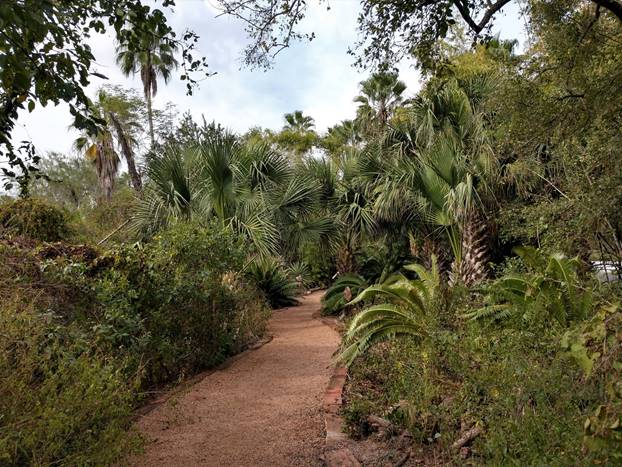
And surrounding grounds with nature trails.


Some decorated for the Holidays.


And part of it set up for an outdoor event today.


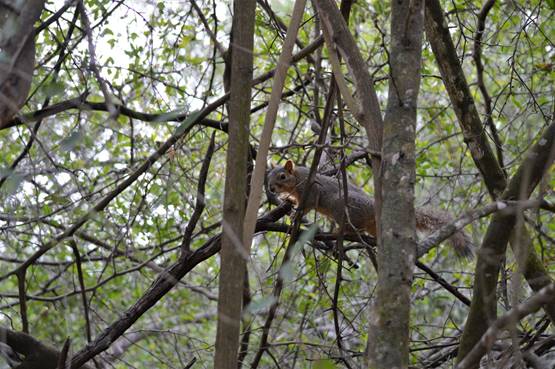
Fox squirrel.


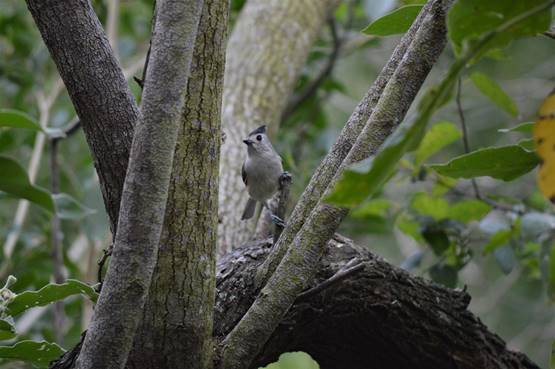
Black crested titmouse.


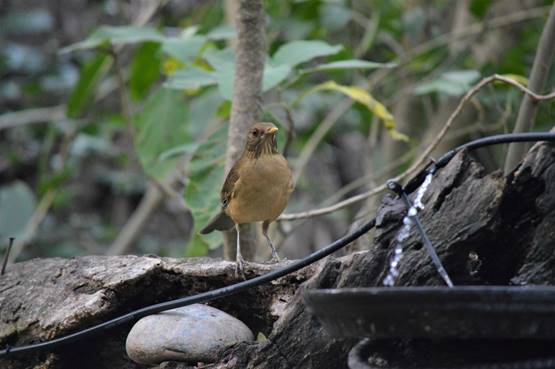
Clay-colored thrush.

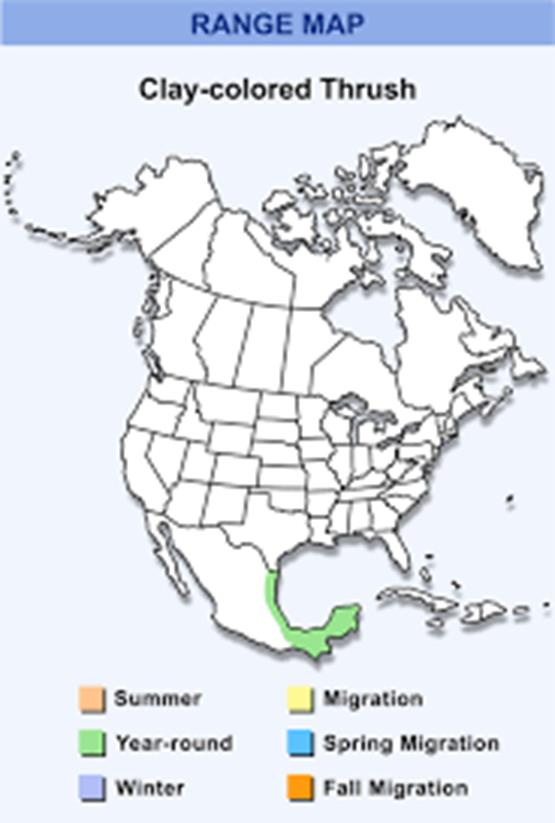
The clay-colored thrush is a close relative of the American robin, but without the wide distribution.  Not commonly found in the U.S., except right here.  This is a range map for the thrush.


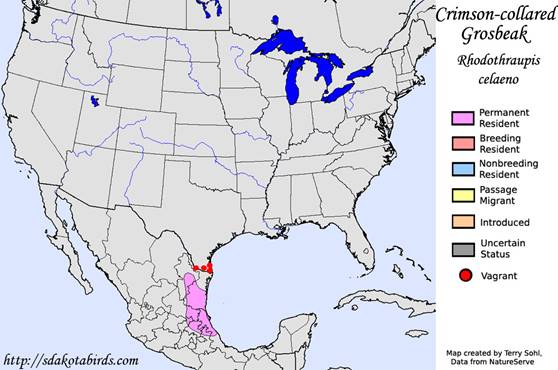
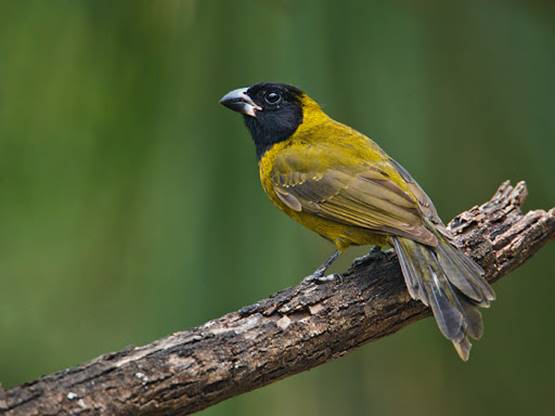
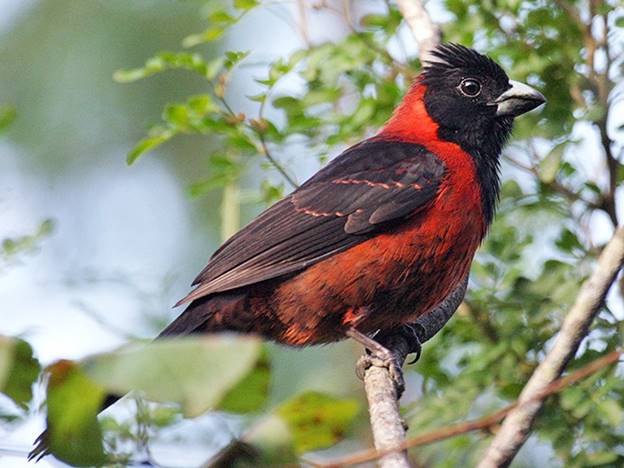
And one more South Texas specialty, the crimson collared Grosbeak.  Not commonly found even here.


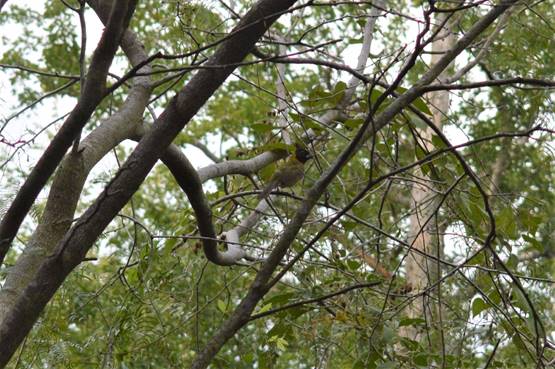
I got a quick glimpse of a female that has wandered our way.


One shot and it was gone.  A better photo of it would have looked like this.


Males are more dramatic.


But I’ve never seen one.