
A good idea
This sweet little puppy
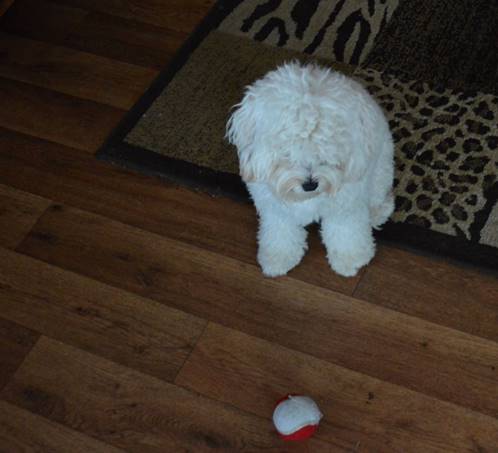
…loves to play with balls.
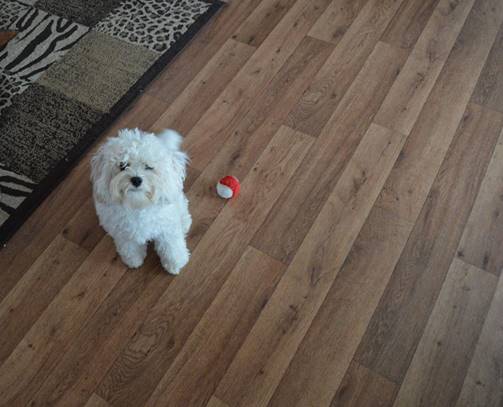
She likes playing fetch the best. She’ll run and get the ball, bring it back, and drop it at your feet. If you don’t keep playing with her, she’ll just continue on by herself; picking it up, dropping it, bouncing it, chasing it. She gets hours of entertainment each day chasing balls.
Problem is, balls don’t always stay out in the open where she can get them. They roll under couches and ottomans. They roll under and stop, out of a puppy’s reach. Now the playing turns into scratching and whining because of all the balls in the toy box, that particular ball is the only one worth playing with. (It’s a different ball each day, and that day that ball is the only one that matters.) The minor distraction of her playing, if we’re doing something else, turns into a major distraction until we get up, get a stick, and fish the ball out from under whatever it’s under. Again. And again. Now what?
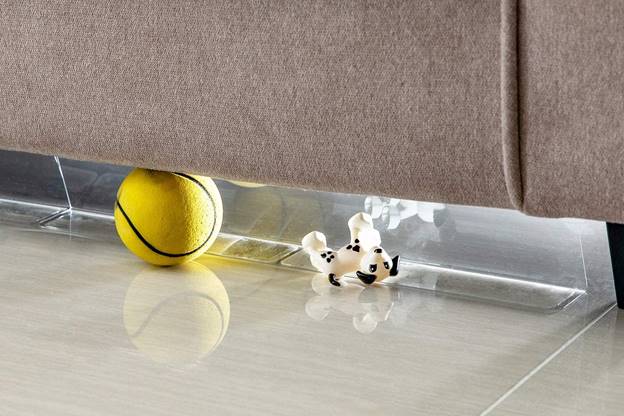
Well, Judy found a solution for that. It’s called a Bowerbird toy blocker. It looks like this on their website.
https://smile.amazon.com/gp/product/B07J4N7512/ref=ppx_yo_dt_b_asin_title_o01_s00?ie=UTF8&psc=1
Pieces of semi-rigid plastic that stick to the floor under furniture.
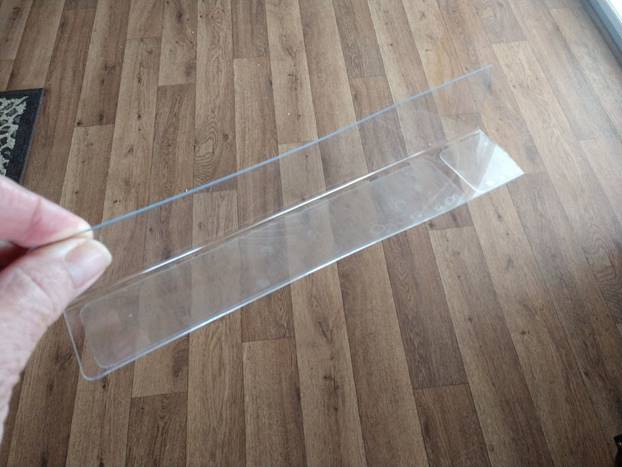
Sticking strips to the floor wasn’t working like we wanted, not because they didn’t stick well, but because it’s hard to slide a couch around to clean under it with plastic strips stuck to the floor beneath it on the front and sides, and the couch is too heavy to lift up and over. I pulled the strips up off the floor, turned the furniture over, and staple-gunned the strips to the bottom of the furniture edges and that did the trick.
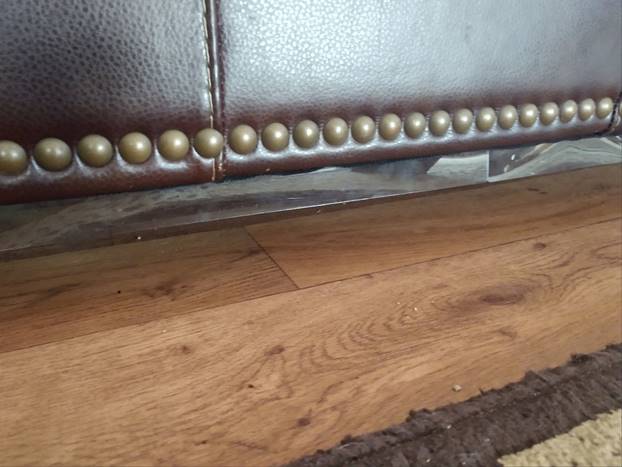
The strips are set back from the edge, invisible from above and impenetrable at toy level. The furniture can be moved, and the toy blockers are always in place.
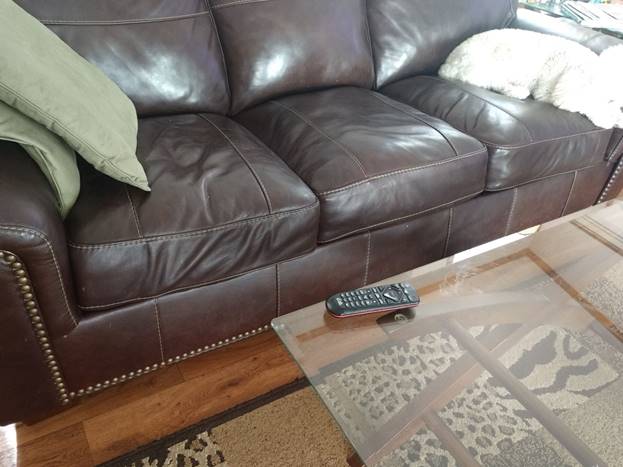
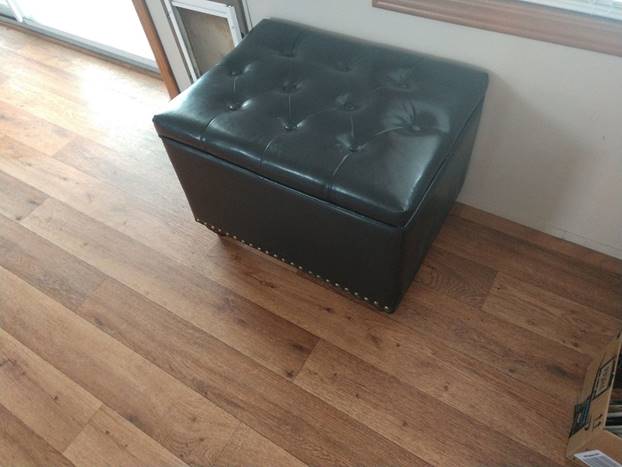
The furniture is easily moved and when Jesse tries to roll toys under the furniture they bounce right back out. The game goes on without any intervention from us!
Brilliant!
I’ve been thinking
All this talk about reopening schools. We have to get back to normal and send our kids back to school. We can’t get back to normal because it’s not safe. We can, because kids don’t get the virus much. We can’t, because there is no science to tell us how much kids actually do get the virus or how contagious they are for their teachers, or their siblings, parents, and grandparents when they get home. We’re going to reopen schools in person, in September, and with no masks and social distancing. We’ve already declared online learning only for schools next fall.
So I have a thought. Let’s get some data fast. For the locations that are committed to reopening in-person schools in September, don’t wait and do it all at once, do a test right now. For the parents that are willing to risk their children, create test classrooms. Make one for preschoolers, another for elementary school, and so on. Do several of each. Monitor the students and their families to determine the viral effect. It wouldn’t be a pure scientific study, but even if you only do it for a month it will provide additional information. And if you continue the test, even after schools open, it will still be a month ahead of the curve. The test might serve as a canary in a coal mine. If school reopening is going to blow up as an unanticipated disaster, it would only happen to a few hundred kids and families instead of the entire country.
What I suggest is a terrible approach, and it’s cold to consider doing that to kids and families, but if it’s about to be done on a grand scale anyway, at least limit the damage done if there is going to be any. Maybe there is no danger for small kids, but with teenagers it’s too risky. Maybe older kids are okay if they wear masks. Maybe there is no danger to reopening the schools at all. If you’re going to do it anyway though, before we know the risks, at least gather some data on a small scale before we go all-in.
FW: Physics Talk 5:30 Aspen Time Tonight
The Evolutionary “Design” of Protein Machines
|
|
|||||||||||||||||||||||||
|







The Roylab coronavirus map is back
We can see total cases for the U.S. again.
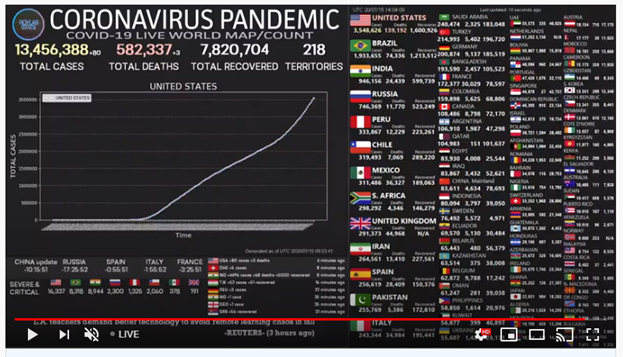
Ugh. We can see the curve of the original spread, the slight tapering off for the extended lockdown, and the rise for the reopening. I wonder what’s next. What’s the next big thing? This rise in cases is as steep as we’ve ever seen. Will it continue up indefinitely? Will we start wearing masks enough to moderate the slope again? Will we do something dramatic and arrest the growth? Today is the day coronavirus reporting is restructured to go through Washington instead of the CDC. Will what we see next even be true?