Judy is seeing blue!


Really.  She goes out to walk the dogs, comes back, and says the dogs have blue spots on them; like if you crinkled up blue cellophane and shined light through it onto the dogs and made spots.  How’s that for a mystery?  Wandering blue dots on (mostly) white dogs.


Want to think about possible explanations for a minute?  We’ve found the cause, but you don’t need to go straight there.  You can make up your own explanation first.

.

.

.

.

.

.

.

.

.

.

The blue spots come and go.  We took photographs of the dogs as Judy was seeing the spots and of course, the dogs weren’t actually blue in the photographs.

.

.

.

.

.

.

.

.

.

.

.

The fact that the spots wandered around made us think of “floaters”; those black dots that are not directly on your line-of-sight, and if you shift your gaze to try to look right at them, they stay just out of reach.

.

.

.

.

.

.

.

.

.

.

Judy called the optometrist.  Turns out sometimes when cataracts are developing, they suppress the yellow input which makes the incoming light look blue, but just in spots!  We already knew Judy had cataracts developing (don’t we all), so this is no big deal at all.  In the meantime, Judy can enjoy the blue spots, and when we get around to it, we’ll get cataract surgery on the schedule.
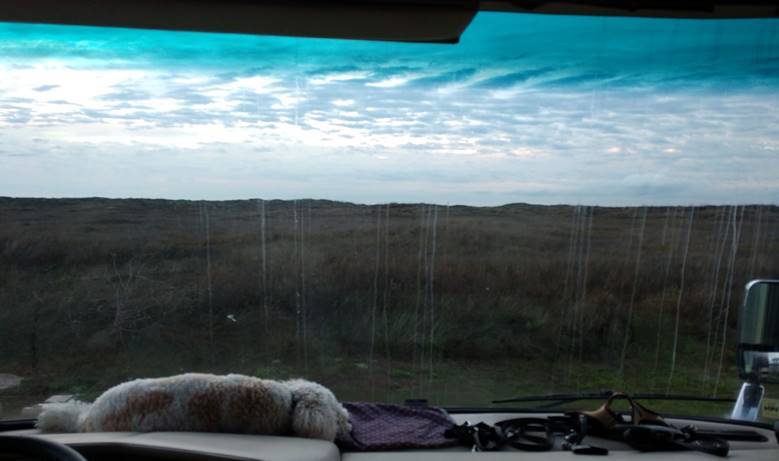


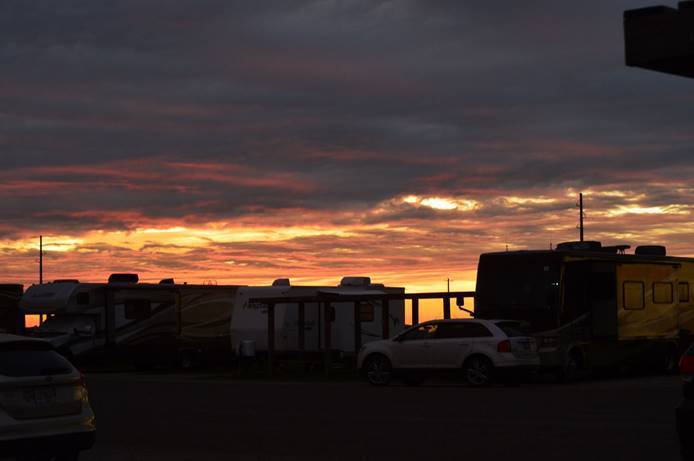
The morning view


Looking east into the morning sun across the dunes (and dune grass) between us and the beach.  It rained the day before so we’re a little streaky.


On our way home from Corpus, I started to take a picture of the rest stop we like so much, but I do that every time we stop there so decided to spare everyone any more photos of it.
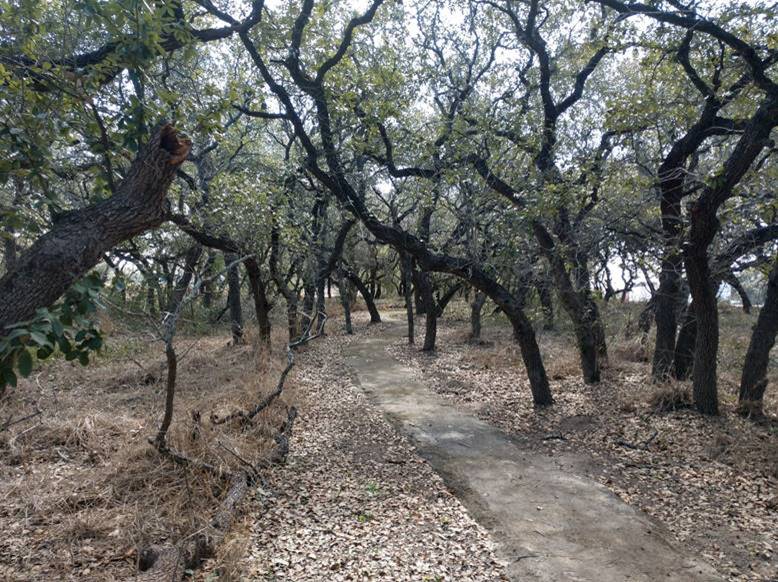
Except for this one.


Port Aransas


It was good to drive into Port Aransas and hurricane damage isn’t the first and only thing to see.  There are parts of it that are gone and we’ll never see again, but a lot of it survived and is back up and running.


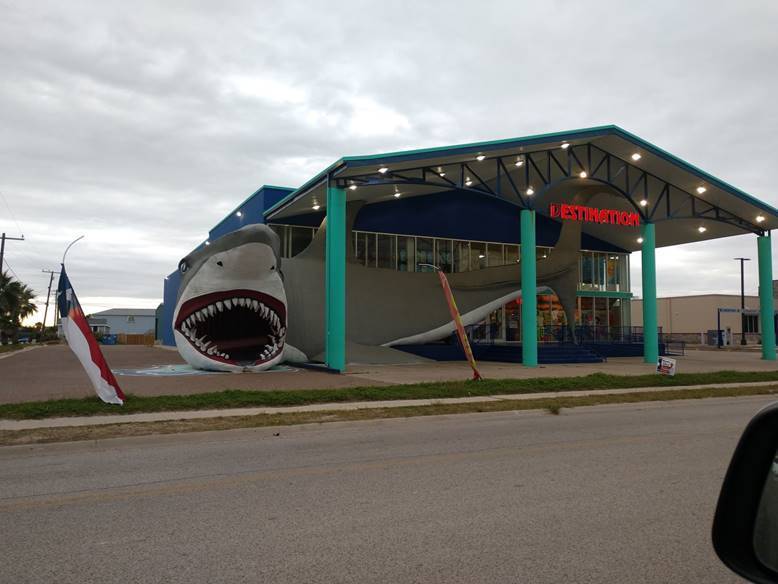
Like gift stores with creative entrances.
 

And dinner at Juan’s.
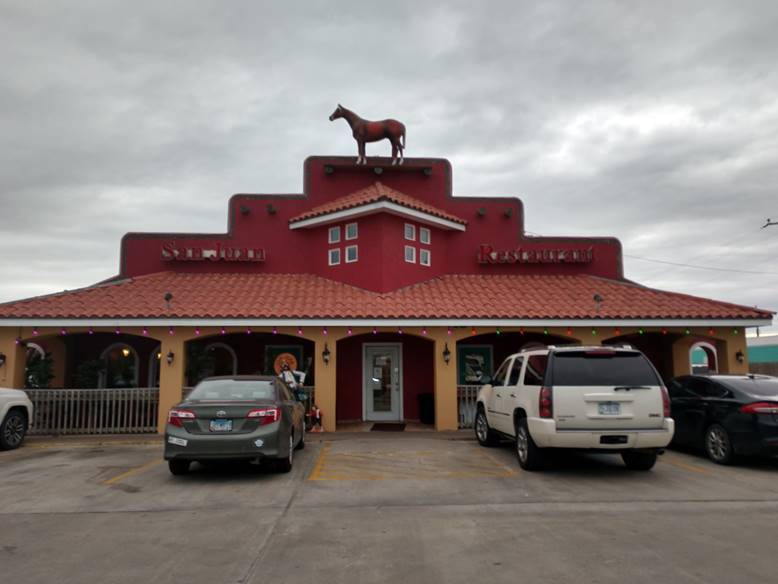
Juan wasn’t there; he’s more of a morning guy now, but we did find Isaac and got to share family photos back and forth.  And the food was just as good as always.


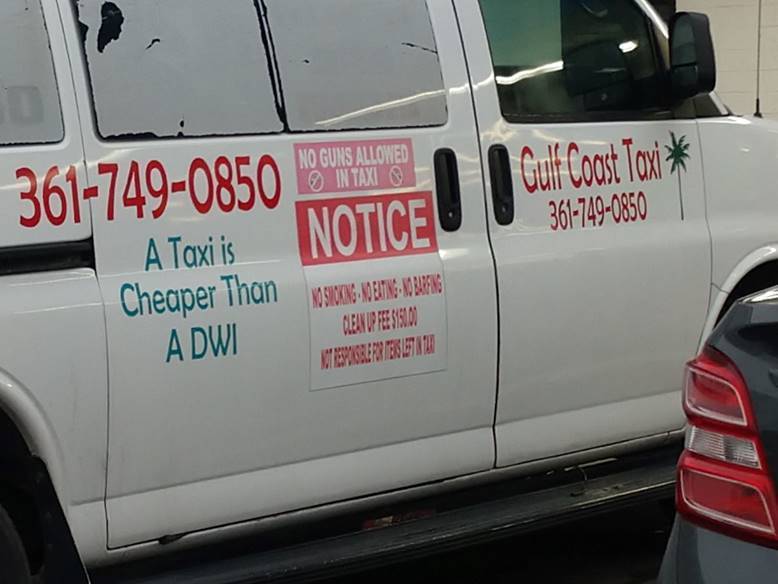
Gulf Coast Taxi is still in service.
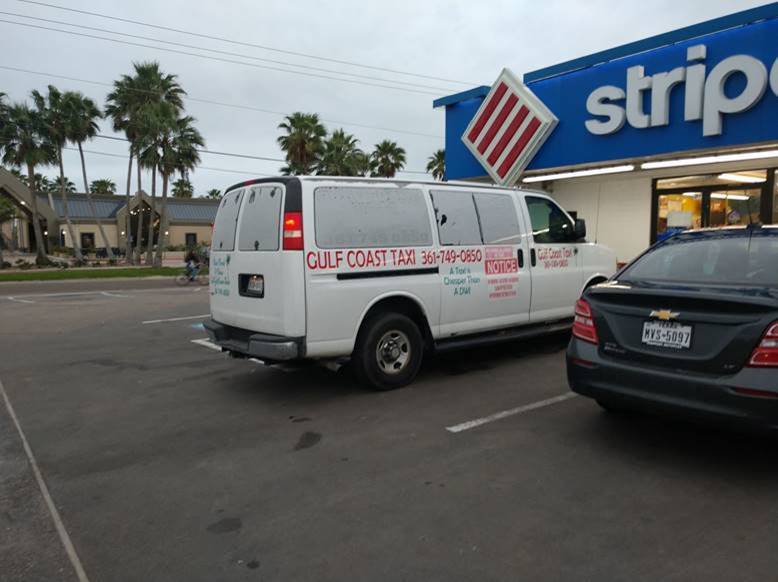
 

They are a better option than drinking and driving, but there are rules.
 

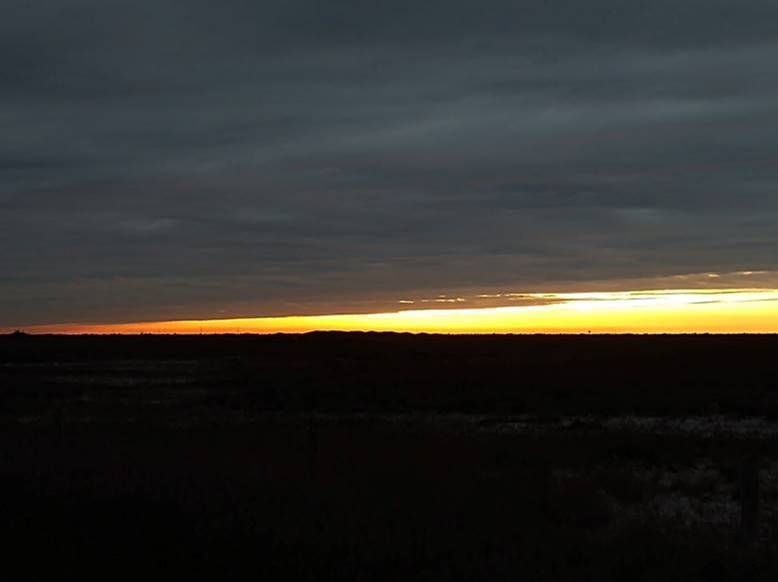
On a gentler note, the drive back to the state park.


The GBBC Starts Friday!


Important announcement:  The Great Backyard Bird Count starts tomorrow!  With or without binoculars, go outside anytime during the next four days and submit your sightings on eBird.  You too can be a citizen scientist and provide data for conservation!


From: The Great Backyard Bird Count <gbbc@cornell.edu>
Sent: Wednesday, February 12, 2020 6:03 PM
To: Steve Taylor <spt@thetaylorcompany.net>
Subject: The GBBC Starts Friday!


In this issue: Using your checklists for conservation, getting ready for the GBBC, and how to help build a bird game.

Is this email not displaying correctly?
View it in your browser.


Friend on Facebook

Follow on Twitter


Great Backyard Bird Count

February 2020

Animated Map

The above animation for Barn Swallows is using eBird data to show where the species may be found at any time of the year. Click on the image to learn more.

Citizen Science Transforming Conservation

For the first time, animated abundance maps with an unprecedented level of detail have been released for 610 North American bird species, based on eBird data. In the example above, we can watch the ebb and flow of movement in the lives of Barn Swallows. Rather like celebrity profiles, these maps answer the question "Where are they now?," and tell you where a species is most abundant. The data can also help pinpoint the best times and places to take conservation action for a species in trouble. It’s a great example of the power of citizen science to reveal new insights and aid conservation efforts. Check out the new maps—you can pause or advance them to see where your favorite species is hanging out right now. 

Read more about this ground-breaking development and how it can power bird conservation.

Sandhill Cranes

Sandhill Crane by Ruben Marchena, Florida, fifth place in Behavior category, GBBC 2019.

Ready, Set, Count!

This Friday, start your Valentine’s weekend off by showing you care about birds–count them for science! Here are some last minute resources to help ensure a successful weekend.

You can also check out the GBBC FAQ section and the eBird Help section.

GBBC animation

Feel free to share this short GBBC animated video! Click image to play.

GBBC Animation to Share

If you’re spreading the word about GBBC and hoping to get your bird organization, scout troop, or other community group to participate, try sharing the short animated video above. It explains why we count birds, how to count for the GBBC, and the impact it can have. Click on the image above to get to YouTube. Click on the "share" button for the video, copy the code and send to others. Thank you!

Common Feeder Bird posters showing eastern and western species.

Keep Counting Birds

Project FeederWatch is a great introduction to more bird counting projects. For those with yards that are busy with birds (or not–lack of birds is important information, too), you can continue submitting data to researchers through mid-April. Join FeederWatch before the end of February and get the rest of this season plus next season for the price of one! Also, we’ll send you a gorgeous poster of common feeder birds to help you identify your feeder visitors. Learn more and sign up for participation in the United States or Canada.

GBBC starts Friday!

February 14-17, 2020

BirdCount.org


GBBC Participation Certificate
Don’t forget to fill out and download your participation certificate from the GBBC website. Certificates are available in English, French, and Spanish.

Tube Bird Feeder

Eliminator tube feeder donated by GBBC sponsor Wild Birds Unlimited.

Show Us Your Birds

Another year, another great opportunity to submit your beautiful bird images for the GBBC Photo Contest. Thanks to sponsor Wild Birds Unlimited, we have a great selection of feeders to be won by those who earn the top spot in each of the contest’s six categories. Have a look!

Photographer in position

GBBC 2019 Honorable Mention in the People category, submitted by the Foundation for Ecological Security, Gujarat, India.

Photo Contest Rules

If you’re planning to submit photos for the 2020 contest, take a moment to refresh your memory on what we’re looking for:

  • Only submit photos taken during the count, February 14 through 17.
  • Submit in the highest resolution possible.
  • Birds only please, not cats, dogs, deer, raccoons, etc.
  • Read the terms of use.
    Read more

newspaper

Alert the Media!

The official Great Backyard Bird Count news release is now available on the website. Please feel free to copy it and send it to local media, nature centers, libraries, or other outlets that might be interested in being a part of the action. 

Image courtesy of Adam Dhalla.

Gaming to Help Birds

Adam Dhalla–a British Columbia high school student, birder, and conservationist–has a big idea for helping birds. His goal is to create a game that will inspire more young people to discover and appreciate birds. Read more on the Birds Canada blog about his creative concept and how you can help.

Visit Wild Birds Unlimited, a sponsor of the Great Backyard Bird Count!

The Cornell Lab of Ornithology is a nonprofit membership institution interpreting and conserving the earth’s biological diversity through research, education, and citizen science focused on birds. Visit the Cornell Lab website at www.birds.cornell.edu

Audubon is dedicated to protecting birds and other wildlife and the habitat that supports them. Our national network of community-based nature centers and chapters, scientific and educational programs, and advocacy on behalf of areas sustaining important bird populations, engage millions of people of all ages and backgrounds in conservation. www.audubon.org

Birds Canada is our country’s leading national charitable organization dedicated to bird research and conservation. Our mission is to conserve wild birds of Canada through sound science, on-the-ground actions, innovative partnerships, public engagement, and science-based advocacy. www.birdscanada.org


Cornell Lab of Ornithology
159 Sapsucker Woods Road
Ithaca, NY 14850
Call toll-free (800) 843-2473

National Audubon Society   
225 Varick Street
New York, NY 10014
Call: 212-979-3196

Birds Canada
Box 160
Port Rowan, ON N0E 1M0 Canada
Call: (888) 448-2473 or (519) 586-3531

Unsubscribe from the GBBC eNewsletter

OR

Unsubscribe from all Cornell Lab electronic communications

Unsubscribe from this eNewsletter

OR

Unsubscribe from all Cornell Lab electronic communications.