We watched the bore tide.
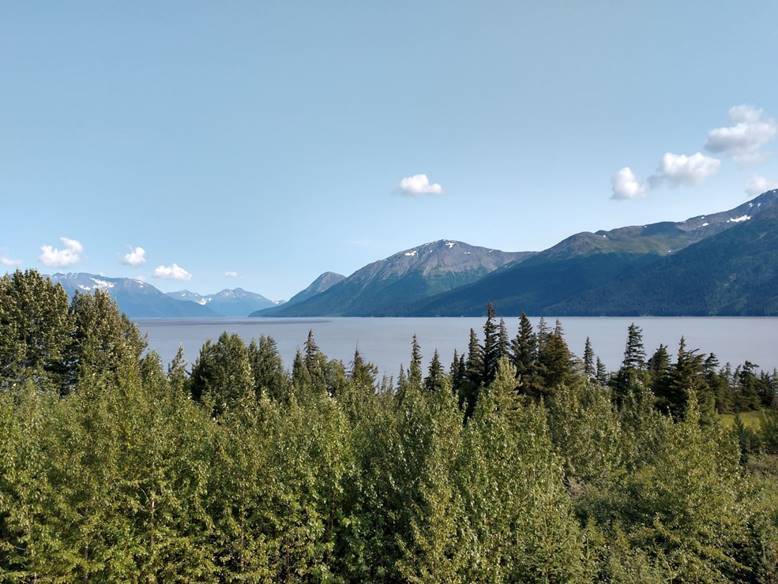
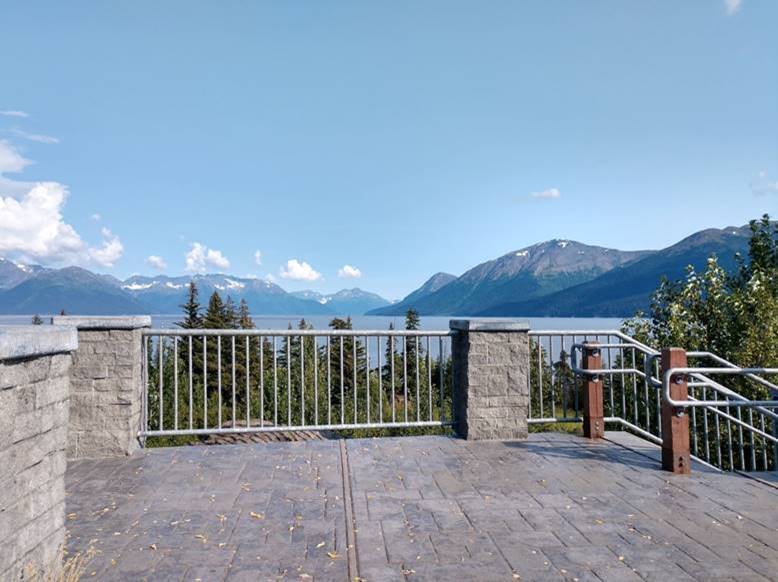
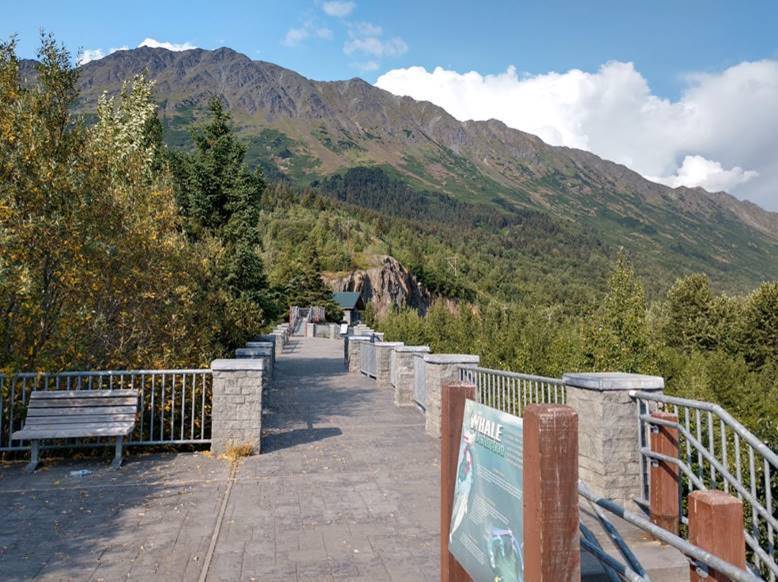
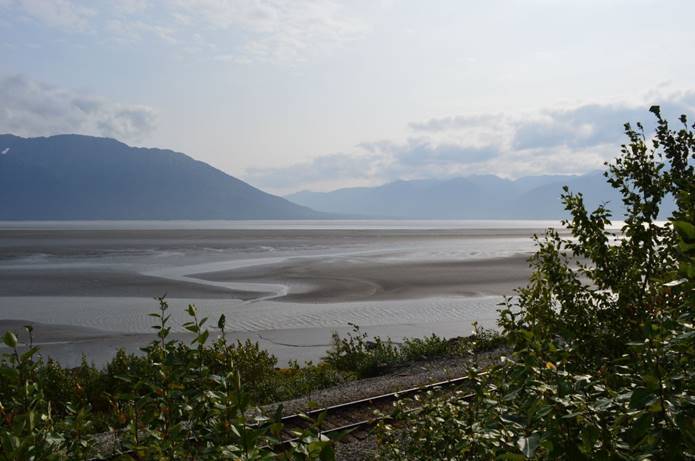
Turnagain Arm is a 45-mile-long body of water off the Cook Inlet. It is up to 4 miles wide. At low tide it is a giant mudflat with a few channels through it, but every twelve hours or so, a tide rushes in and fills it. The tides here at Turnagain Arm are extreme, running about 40 feet! The tide rising 40 feet over a 45-mile stretch can create an incoming wave know as a bore tide that travels along at about 5 miles per hour. The bore tide can be tracked with tide charts, so we showed up at the right time at the right place (Beluga Point), waited, watched and photographed. It wasn’t a spectacular bore tide; maybe a twelve-inch surge, but it was fun to be there.
The name Turnagain Arm is reputed to come from Captain Cook’s 1776 effort to find the fabled Northwest Passage. What made his effort different was that he started from the west coast and looked east; every other attempt being from the east coast looking west. Every large inlet like this had to be explored to determine if it was a passage or a river mouth. Every inlet along this coast was a disappointment. When this too was determined to be a river mouth, it was time to “turn again” and continue on. (He never did discover a Northwest Passage; his ships were ultimately turned around, in August, by impenetrable ice.)
At low tide, mostly mud.
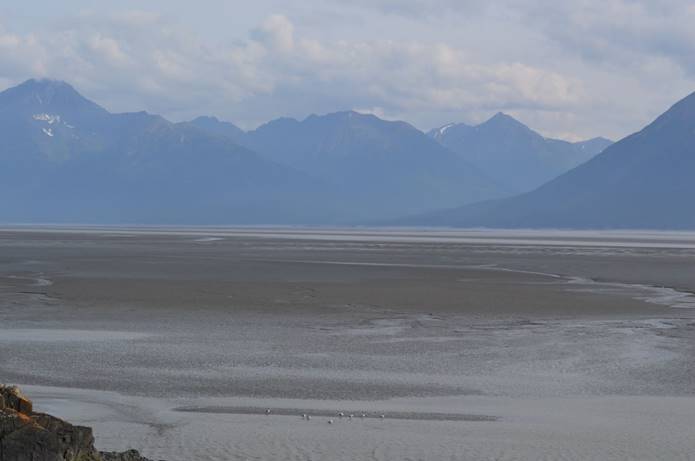
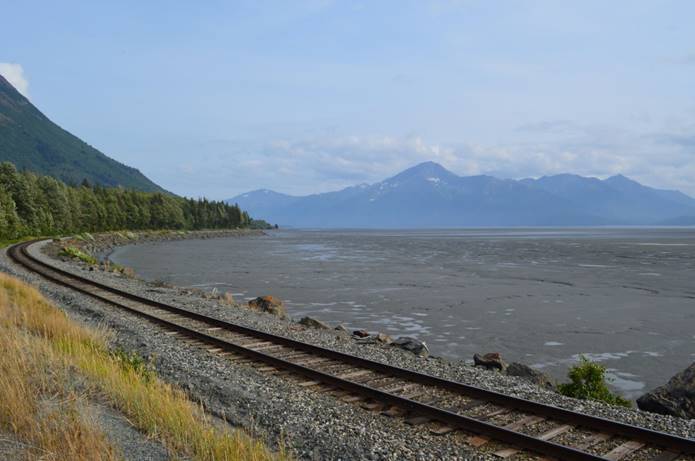
Waiting and watching for the bore tide.
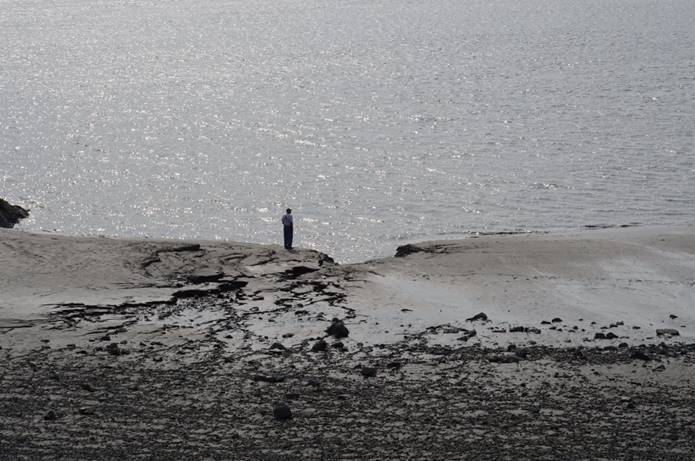
I’m thinking standing on fractured unstable mud might not be the wisest vantage from which to watch the oncoming rush of water.
Here it is, the bore tide itself.
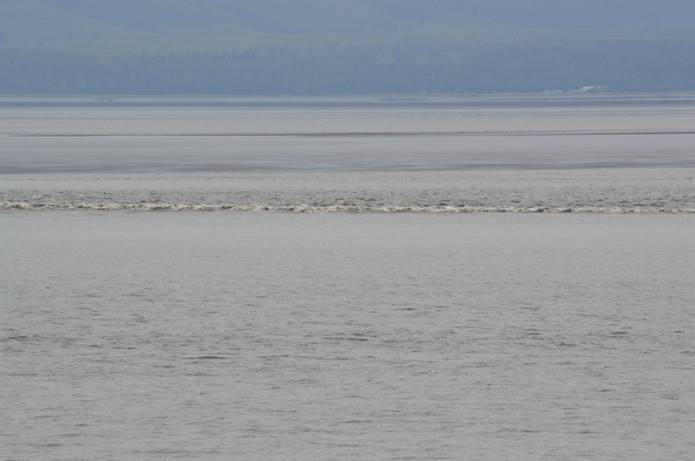
That’s not the entire incoming tide, just the bore tide part of it. Overall the rise in tide is a significant 40 feet.
A lone paddleboarder way out there catching a ride on the ripple.
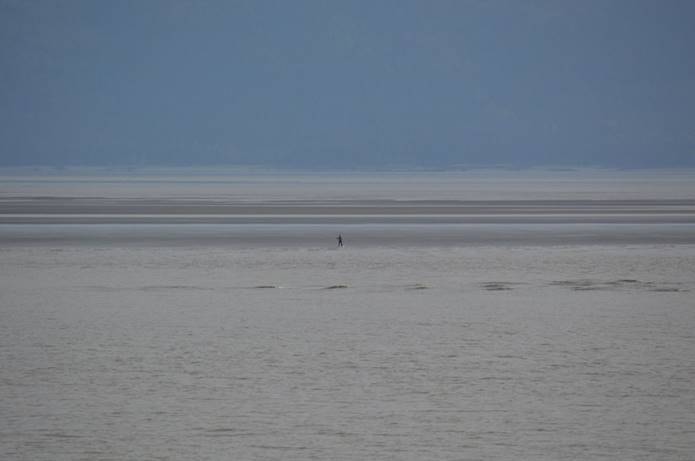
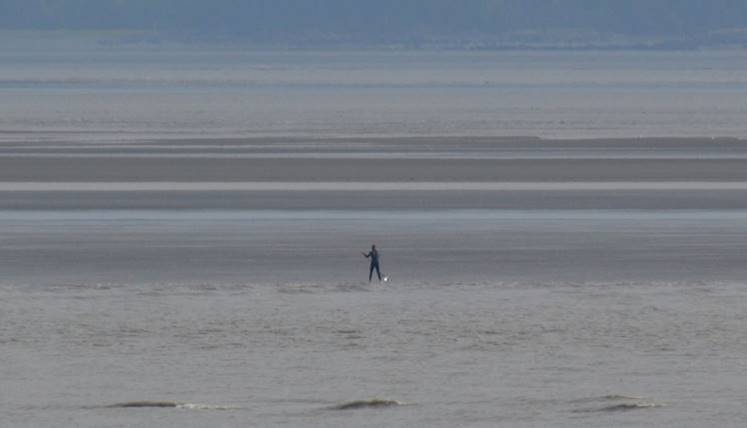
At high tide, just a normal bay.
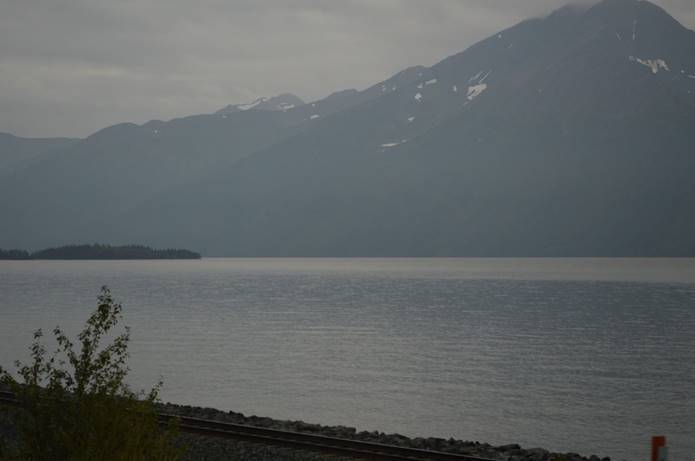
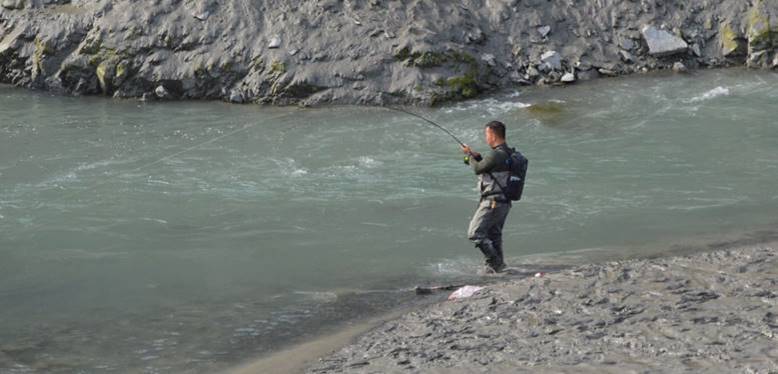
As the tide rushes in, it is filled with salmon this time of year. Many of the fish turn and go up Bird Creek, where fishermen await. There are an array of spinners and flyrods, but there is no point in using bait. These fish are on a mission to spawn and die; they’re no longer interested in food. Fishing for them involves snagging; dragging treble hooks through the mass of fish and hooking them in the side or back. Surprisingly a lot of the fish are released. Snag, drag, and release; not quite like fly fishing with tiny barbless hooks and one-pound-test leader on gold-medal trout water, reviving caught fish to gently release them unharmed.
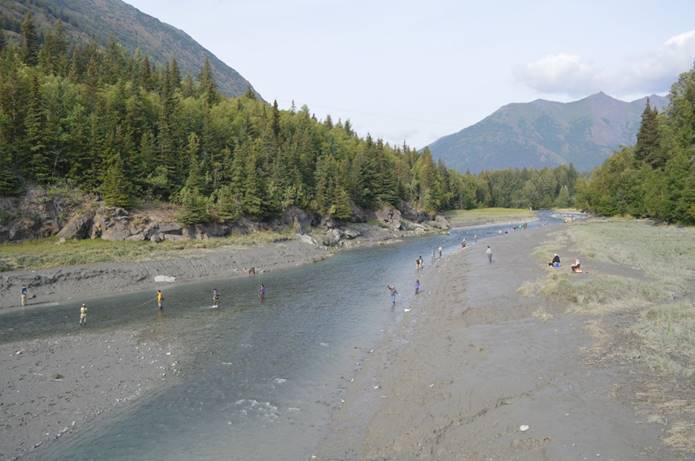
This guy was reeling in a fish on practically every cast.