If we were driving in any other state
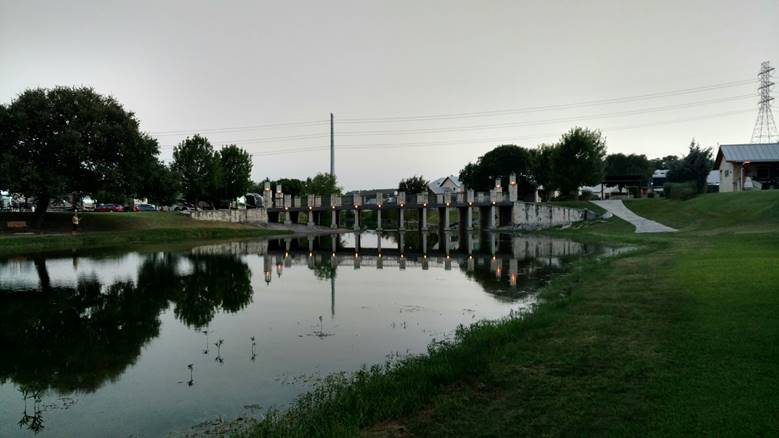
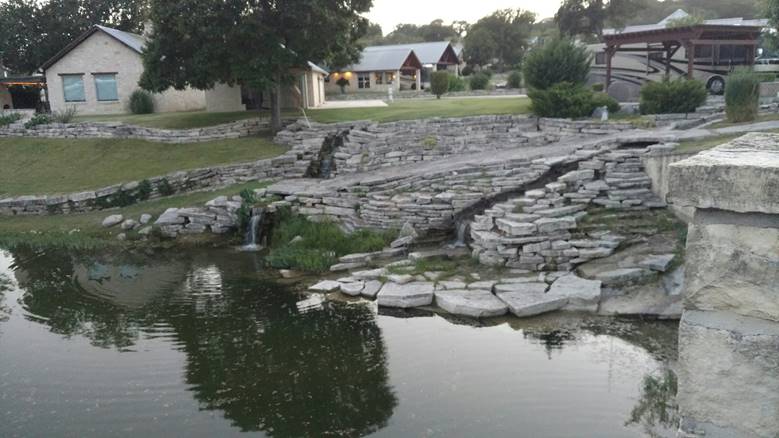
We’d be out the other side by now. As it is, we’re northwest of San Antonio, at Buckhorn Lake RV Resort. 2016 Summer Trip Map 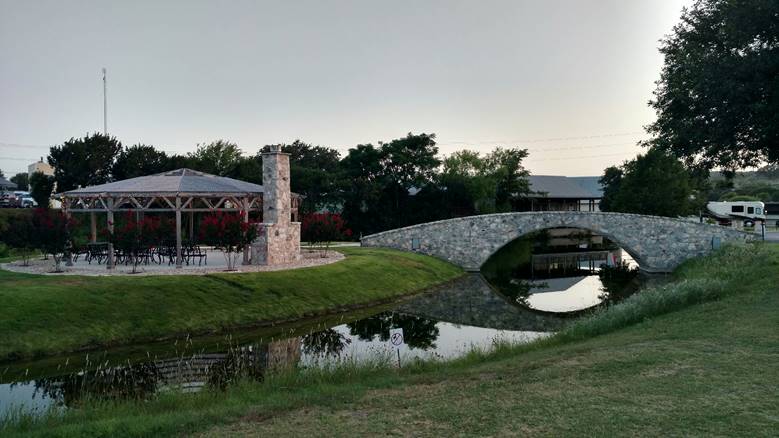
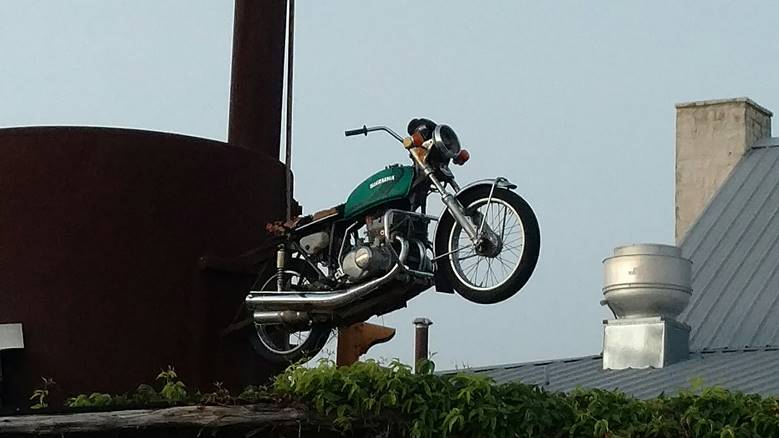
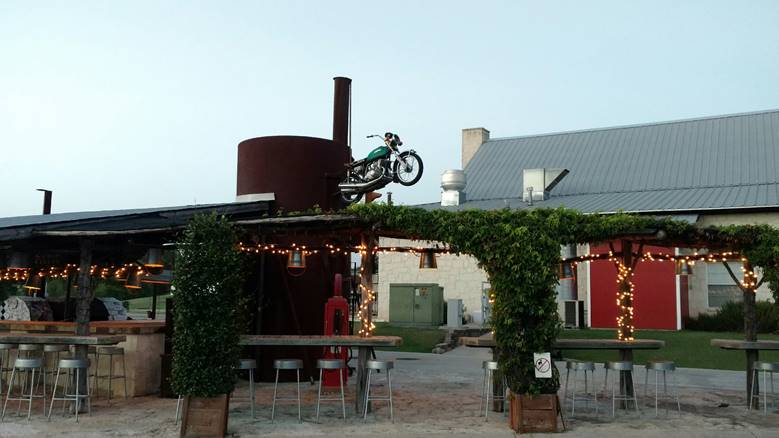 A classic Kawasaki Mach III. A good place for it.
 Here is Henry modeling his Muttluks.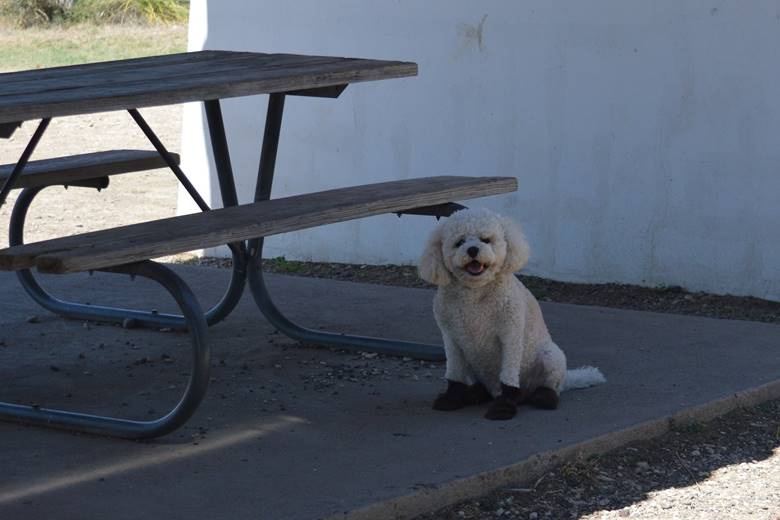
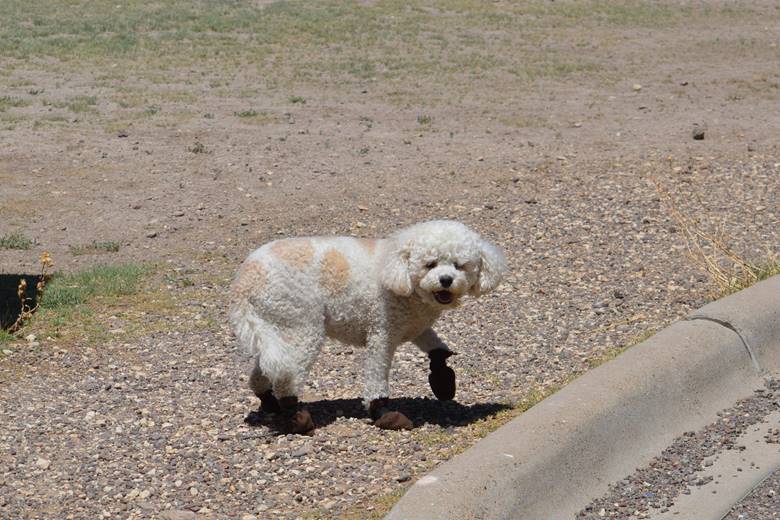 If the asphalt is too hot for us, it’s too hot for Henry. The Muttluks are his freedom machine.
A classic Kawasaki Mach III. A good place for it. Here is Henry modeling his Muttluks. If the asphalt is too hot for us, it’s too hot for Henry. The Muttluks are his freedom machine. We pass a billboard along the highway that says:
Better to miss a message than to lose a life.Don’t text and drive. Sage advice. Isn’t it ironic though, that delivering the message that it’s dangerous to read and drive, requires a billboard for us to read while we’re driving? Another billboard warns again the dangers of prescription drugs. It says: “Prescription pain medication can be just as addictive as Heroin.” Know what that means? It means I have permission to try Heroin. I’ve taken prescription pain medication and haven’t become addicted, so it must be okay to try Heroin and I won’t get addicted to that either! Our daytime highs are still in triple digits, but a stop at Balmorhea State park softens the pain. 2016 Summer Trip Map Benefits of stopping at Balmorhea include a dip in a huge outdoor pool fed by a natural artesian spring that pumps out 15 million gallons of water a day, with a constant temperature in the low 70s. It’s a little chilly getting in, but it’s refreshing and charming; sharing the water with minnows and a few turtles that also live there. We have a night sky with moonlit scattered clouds, stars, planets, and a lightning light show off to the northeast. What a life we lead.
Well, we did really move on from Rusty’s RV Resort
We’re at Hacienda RV Park in Las Cruces tonight. 2016 Summer Trip Map What a difference a few degrees makes. We’ve been in the high nineties the last few weeks, and have been just fine. Getting back out along the Interstate route and into the triple digits; that’s a little much. High nineties feels nice and hot; what you’d expect in the desert. Triple digits; brutal. I would take a picture to show how hot it is, but can’t seem to get it framed right. My daily walks will have to happen after dark for a while. We drove early, stopped early, and stayed inside most of the afternoon (except we went back out for a teriyaki chicken bowl for me for dinner). Tomorrow…..more of the same. Triple digits. (Except maybe without the chicken bowl). Two days, two time zones. Uh oh. We’ve got some adjusting to do. Arizona was Mountain Time, but Mountain Standard, not Mountain Daylight. So even though we were camped in New Mexico, Mountain Daylight, we were right on the border with Arizona, Mountain Standard, where we spent any time we were out and about, so essentially we just stayed on Mountain Standard (same as Pacific Daylight). Tomorrow we cross another time zone, to Central Time, even though we haven’t adapted to this one yet. We missed three birds we were looking for in Arizona: five striped sparrow, red faced warbler, and elegant trogon. No problem; that just leaves us reason to return to Arizona and search again next year. We have gotten our year-list to 393, only 7 birds short of the 400 we want for the year. We’re way ahead of last year in that regard.
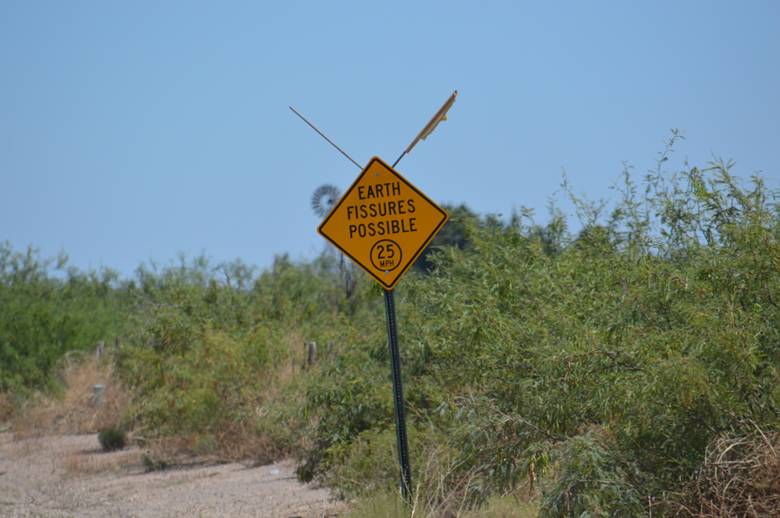
We’ve traveled a lot of miles and seen a lot of road signs
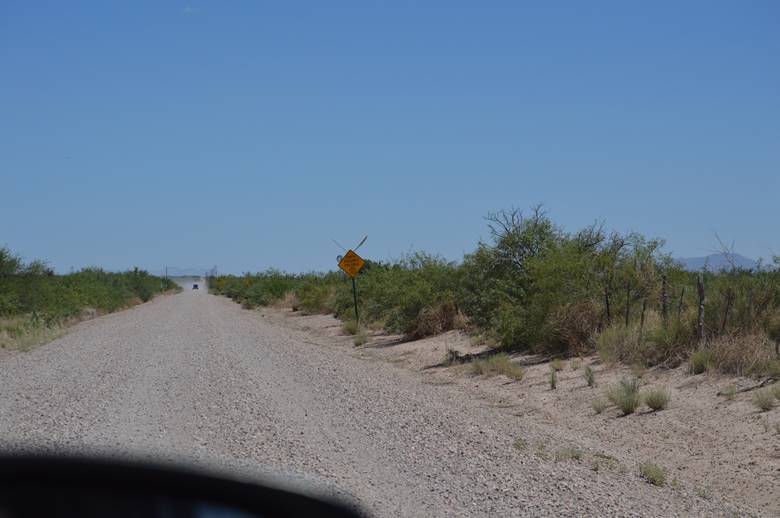 This is a new one on us, though.
 This is an interesting place. It’s really dark, but not in a bad way. Dotted about, out in the desert, are houses with home observatories; sky sheds taking advantage of the practically nonexistent light pollution and clear dry air. Not only are there individual houses, there are entire communities devoted to night-sky-watching.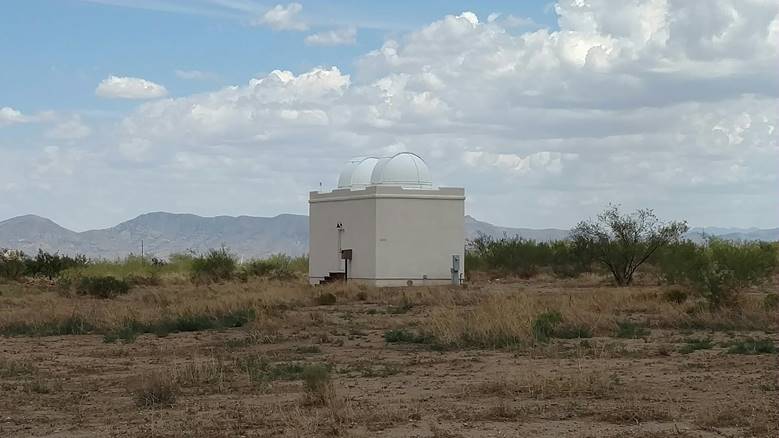
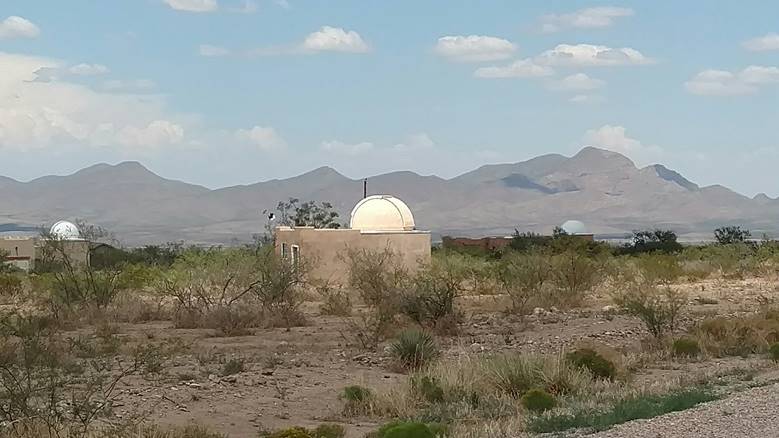
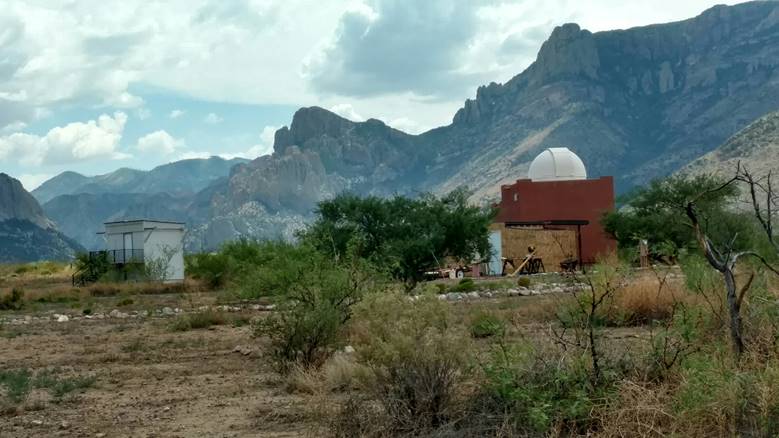 We’ve seen the space station go by at night. The big dipper is dominating the night sky. Well, the big dipper and the moon right now. So what is it about stargazers? Do they keep a list of the stars they’ve seen and identified? They must. If they didn’t, how would they know who was winning? And melons growing wild in the desert.
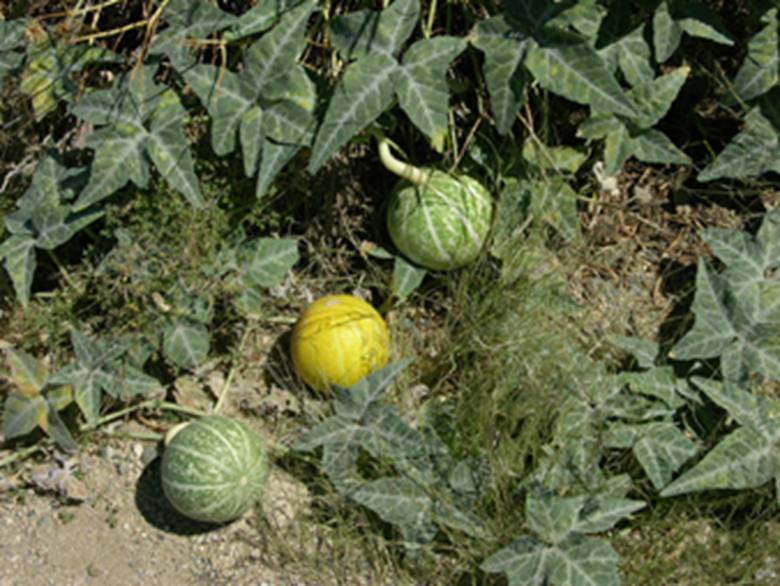 Native melons that thrive during the monsoon season.
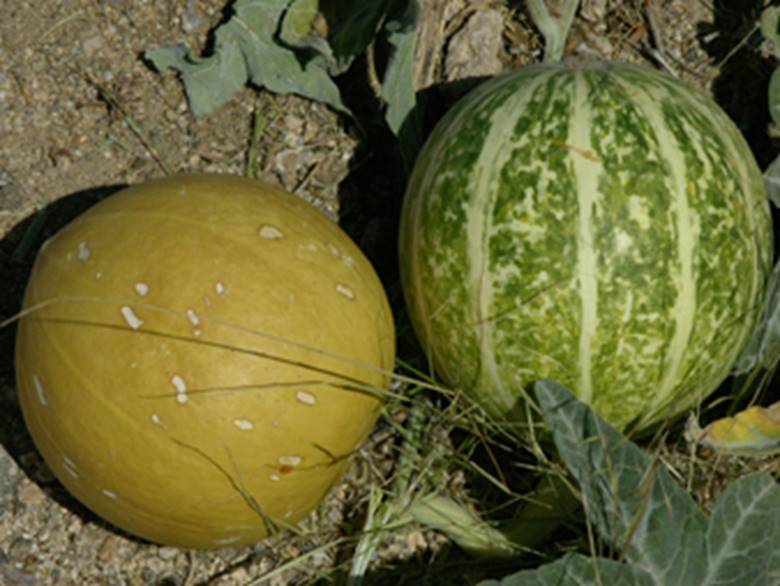 They’re called coyote melons. Not something we’re likely to sample though. I read that they contain a chemical that is the bitterest substance known. Normally a plant like this would rely on animals eating the fruit and defecating the seeds some miles away to propagate the species. Animals that survive today won’t eat them though, so their seeds have to be scattered by wind and rain. Based on evidence from current day elephants and rhinoceros in Africa, and prehistoric remains in the southern United States, it’s thought that the fruit might have been appealing to mastodons in more ancient times.