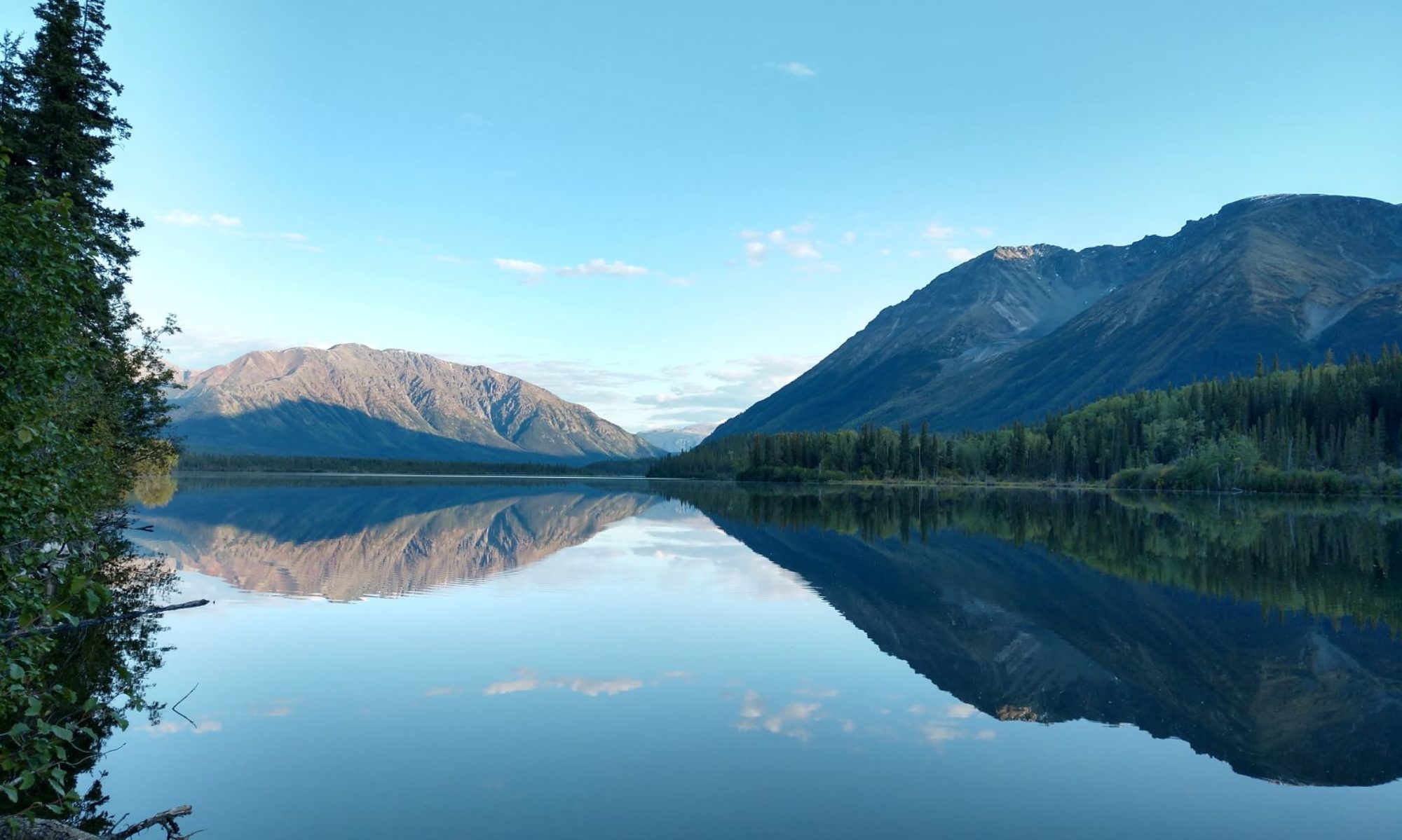
Well, it’s not really a picture; I’m thinking about our political process again. Anybody can run for president. Up until the first few primaries, any candidate is viable. The first two or three primaries narrow the field to a select few however. If you don’t do well in the first three primaries, you won’t be able to attract any more campaign money, so you’re effectively eliminated. Okay. I get it. The field needs to be narrowed somehow, but I have a problem with the “how”. For two out of the three first states, we’ve been hearing nonstop about the power of the evangelical voter. Two out of the first three states are about as “evangelical” as you can get. The system sets a religion test at the very outset, and if you don’t pass that, you don’t get to continue. I realize evangelicals are a significant portion of the population, and their voice should be heard, but I don’t think they represent the majority of the country. Is that fair, that first the field is narrowed by the most religious voters, then the rest of the country gets to decide among the remaining? If that does seem like a good idea, then what if it were the opposite, and the three states that were the least religious were the first hurdle to pass on the way to our presidency? Would that be just as good?
Proud grandparent alert!
It’s that time again. District Science Fair! Conner and Ari presented their project on Cause and Effect. (Conner and Ari are twins from different mothers. They were born on the same day at the same hospital, about half an hour apart to mothers who had never met.) This is the boys’ first year in middle school (6th graders); they’re competing against 6th to 8th graders.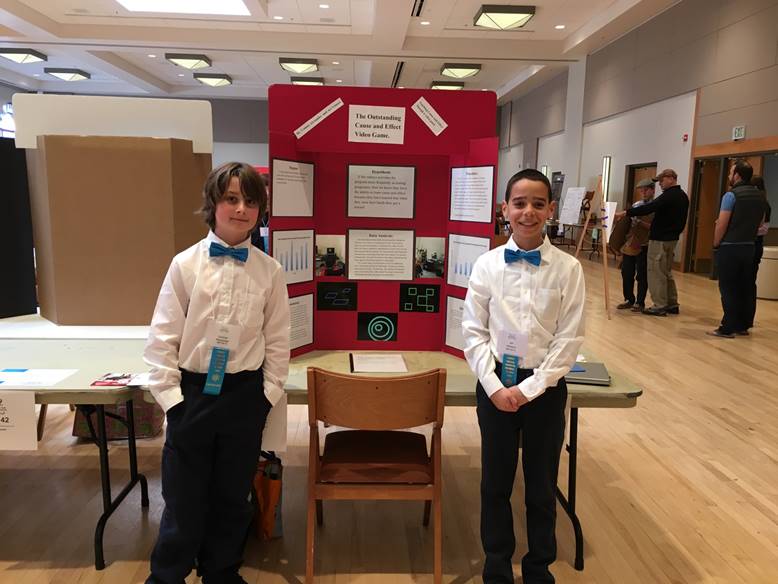 There were three teams presenting from their school. Their entry is similar to what they did last year, but more sophisticated now. The put together a video game (doing all the programming, video, and music themselves) that encourages and rewards deliberative movement. The test subject was Ari’s younger brother Paul, who has multiple challenges, including cerebral palsy and cortical visual impairment. Deliberative movement is difficult for Paul. This project was designed to determine if he could associate cause and effect, and encourage him to build skills. (There was adult professional oversight all along the way; multiple monitoring and approvals.) The results of their trials, spaced over several weeks, documented engagement and improvement. At the fair, they were required to make three individual presentations to three different judges. Judges are free to request presentations from other teams if word gets around that there is something interesting. In all, the kids made fourteen presentations over the course of three hours. The judges seemed to like it. There are no awards announced at the end of the day. There will be an award presentation tomorrow night, by invitation only. Conner and Ari were the only team from their school that was invited to attend. Their first year at the science fair, they created, tested, and demonstrated a solar death ray consisting of multiple focused mirrors. Last year and this year it was the cause and effect demonstration. Next year their goal is to launch a rocket with a payload the weight of Ari. They have already agreed that the payload will *not* actually be Ari.
There were three teams presenting from their school. Their entry is similar to what they did last year, but more sophisticated now. The put together a video game (doing all the programming, video, and music themselves) that encourages and rewards deliberative movement. The test subject was Ari’s younger brother Paul, who has multiple challenges, including cerebral palsy and cortical visual impairment. Deliberative movement is difficult for Paul. This project was designed to determine if he could associate cause and effect, and encourage him to build skills. (There was adult professional oversight all along the way; multiple monitoring and approvals.) The results of their trials, spaced over several weeks, documented engagement and improvement. At the fair, they were required to make three individual presentations to three different judges. Judges are free to request presentations from other teams if word gets around that there is something interesting. In all, the kids made fourteen presentations over the course of three hours. The judges seemed to like it. There are no awards announced at the end of the day. There will be an award presentation tomorrow night, by invitation only. Conner and Ari were the only team from their school that was invited to attend. Their first year at the science fair, they created, tested, and demonstrated a solar death ray consisting of multiple focused mirrors. Last year and this year it was the cause and effect demonstration. Next year their goal is to launch a rocket with a payload the weight of Ari. They have already agreed that the payload will *not* actually be Ari. Vermilion flycatcher
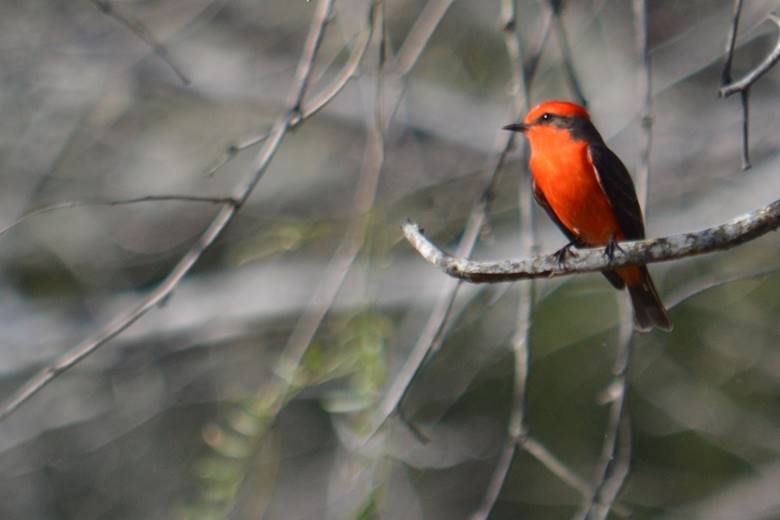
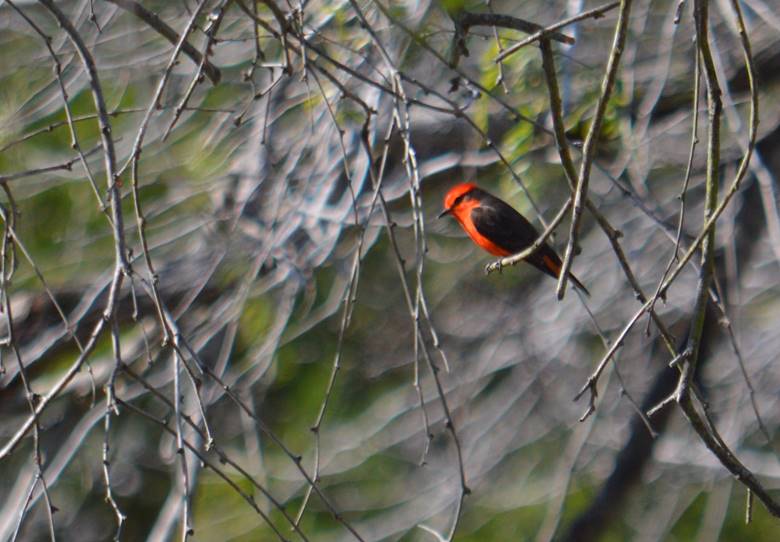 Flying out to snatch a bug out of the air.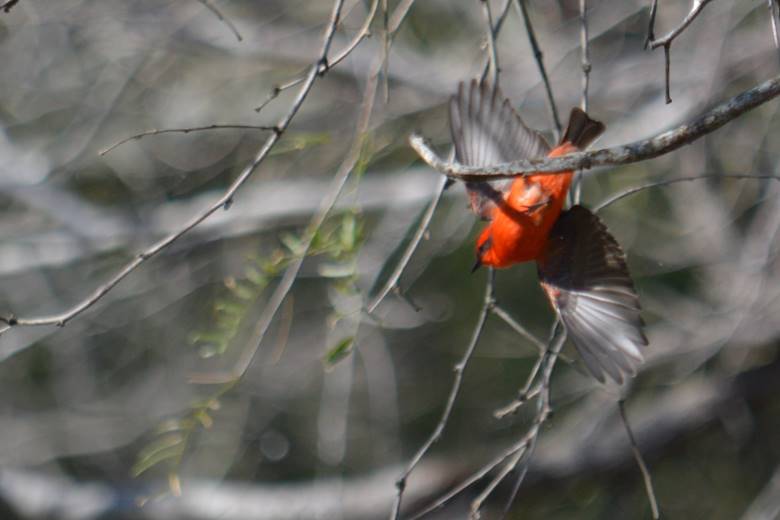
Along the way
A nice walk along the river outside Redding, CA.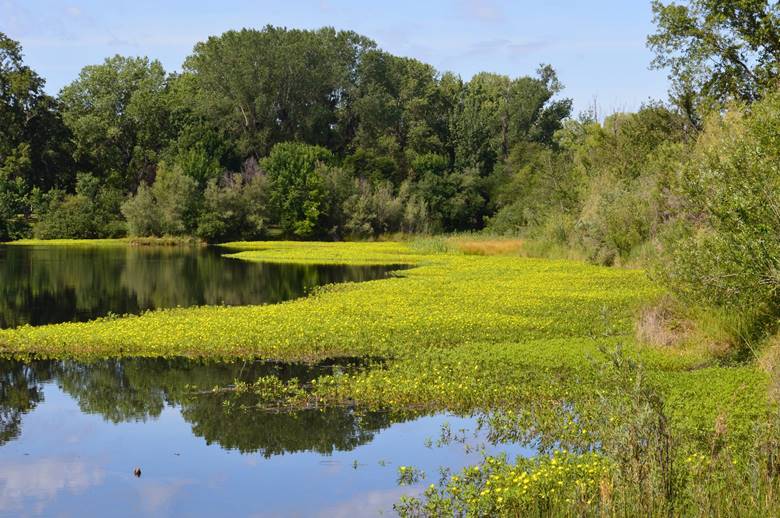 I just like the picture.
I just like the picture. Up close and personal
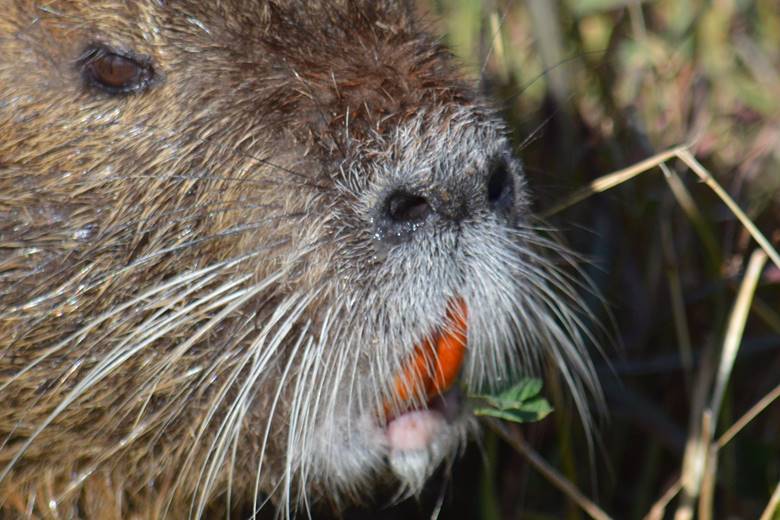 With a Nutria.
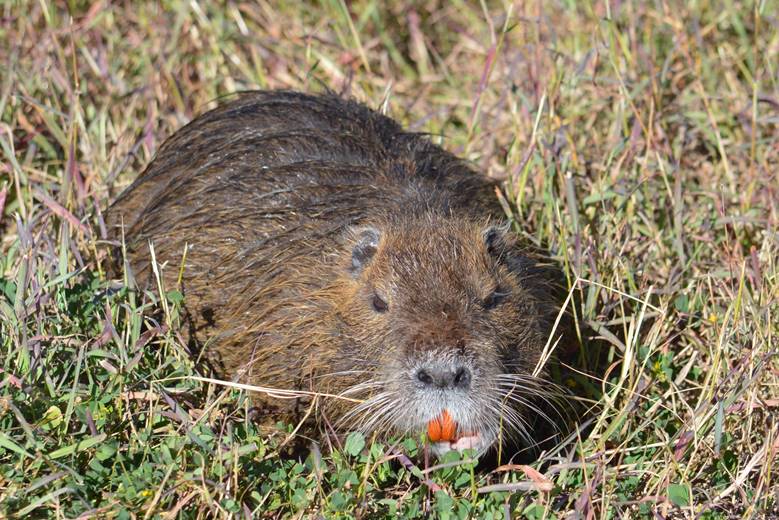 Nutria are large semi-aquatic rodents from South America.
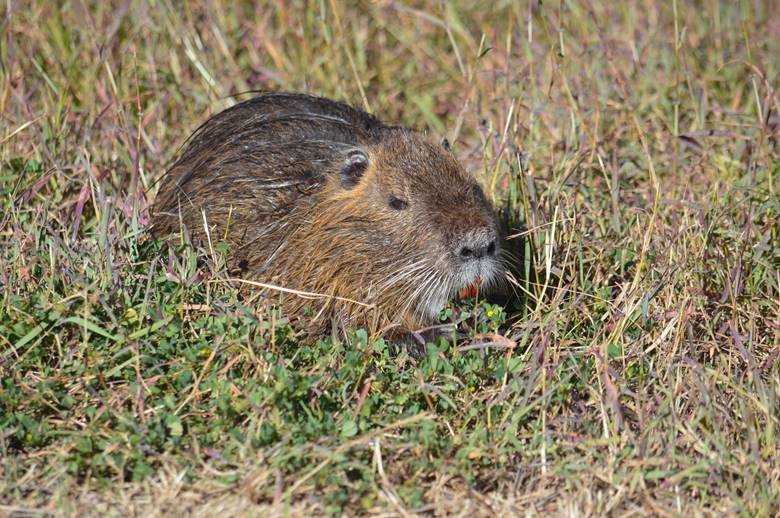 The orange teeth are not an aberration. There is more iron in the enamel on the front of the tooth (causing the orange color). The part of the tooth with iron in it wears down slower than the rest of the tooth, causing it to stay chisel-sharp.
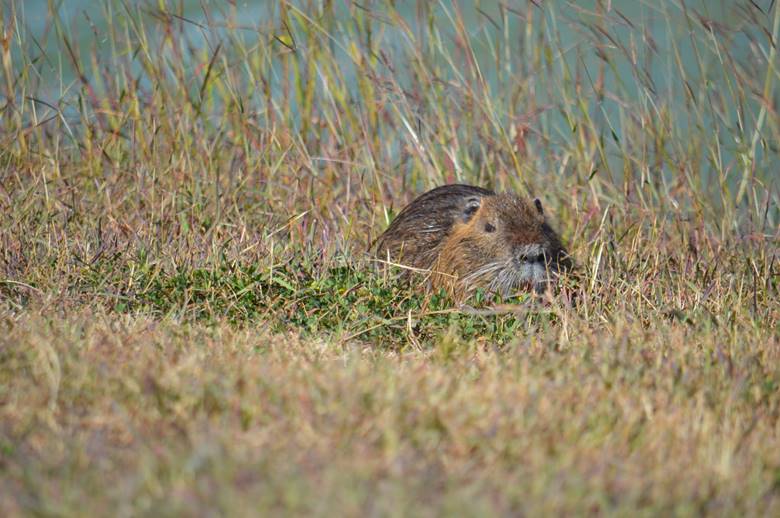 They like to hang out in marshes in South Texas and eat a lot of vegetation; about 25% of their body weight every day. Their primary purpose in life here seems to be gator fodder.