A button that allows the driver to temporarily increase power for a limited amount of time. They use it in the Indy Car Series, where the power output and fuel consumption are carefully controlled. The button can be used a limited number of times in each race. It makes the race more exciting when two cars of essentially equal power are battling for position. It can be used to pass, but it can also be used to defend a pass. Each driver has to be strategic about how and when to use it during the race. In fact, I think the push-to-pass button is such a good idea we should expand its use. Trucking companies control the power output and fuel consumption of their fleet trucks by installing governors set at 64mph. When two trucks are side-by-side on the interstate, one at 64 mph and the other at 64.01 mph, wouldn’t that be the perfect time for a push-to-pass? It could suspend function of the governor for a limited amount of time. Truck drivers don’t really want to drive side-by-side while the line of traffic grows behind them. Besides, each truck is losing efficiency as it fights the aerodynamics of the truck next to it. They’re much more efficient when driving in line drafting each other, than when being buffeted by each other’s bow wake while they’re side by side. The trucking companies could still determine the power and fuel efficiency standards of their fleet, while allowing their drivers a certain number of uses each driving period. There could be one more element of control for the truck drivers; adding to the interest of the job. (At the same time contributing to overall more efficient driving and reducing one factor contributing to congestion at the same time.)
We bought our house furnished
The old couch; it doesn’t look too bad.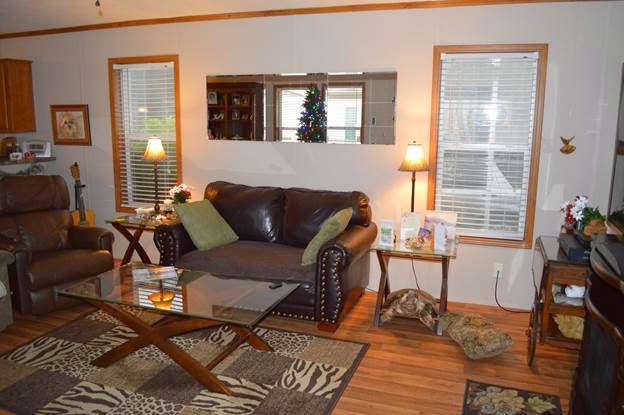 Not as long as we’ve got a towel on it to cover up the bottom cushions.
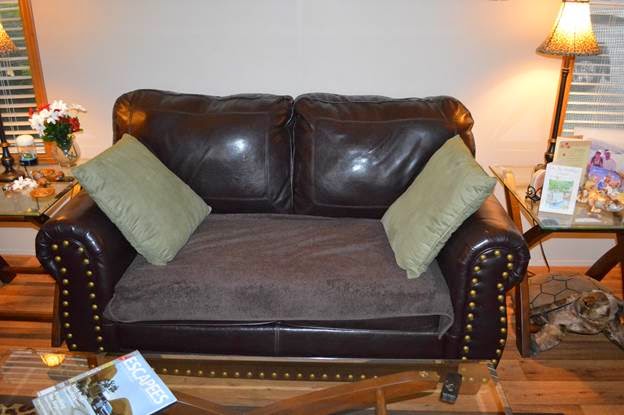 Without the towel, we can see the pretend leather peeling off.
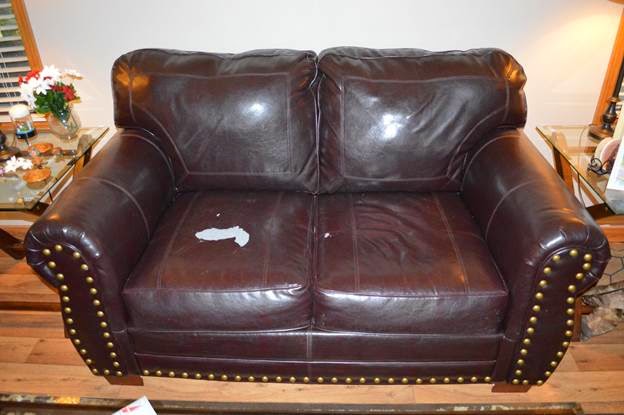 Besides, it’s only a two-seater. The new couch
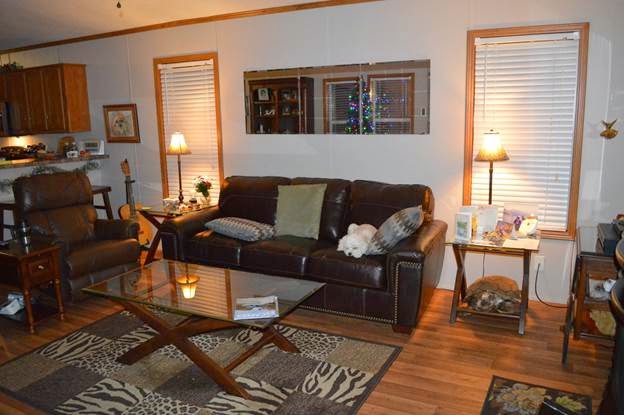 …is a lot nicer.
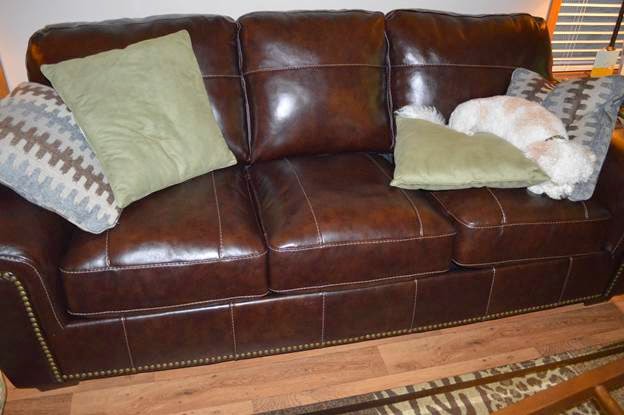 …and it’s a three-seater. If Henry makes room.
Not as long as we’ve got a towel on it to cover up the bottom cushions. Without the towel, we can see the pretend leather peeling off. Besides, it’s only a two-seater. The new couch …is a lot nicer. …and it’s a three-seater. If Henry makes room. Right again
Turns out I was right all day long. It’s my birthday. I decided we should go look for Aplomado Falcons today. Turns out that was a good idea (even though we didn’t find any falcons). Then I thought “Why not drive over to the Island and take a walk on the marsh boardwalk.” Again, brilliant. We saw pied-billed grebe.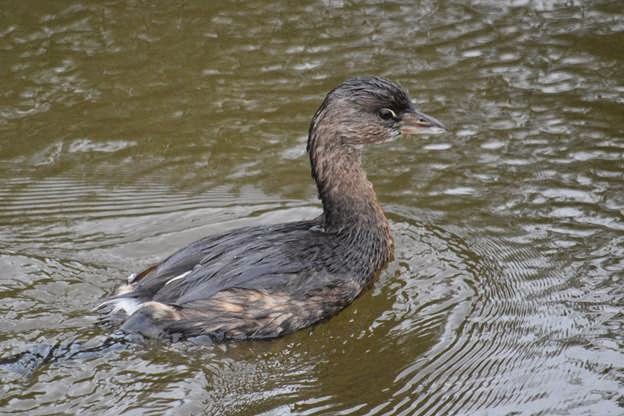 common gallinule.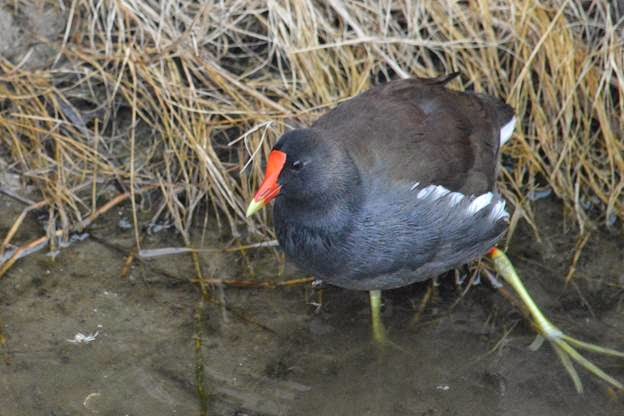
 …displaying tail feathers.
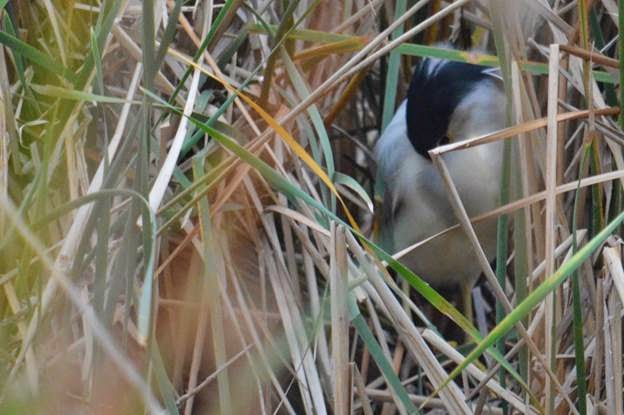
 …and a black-crowned night heron snoozing in the reeds.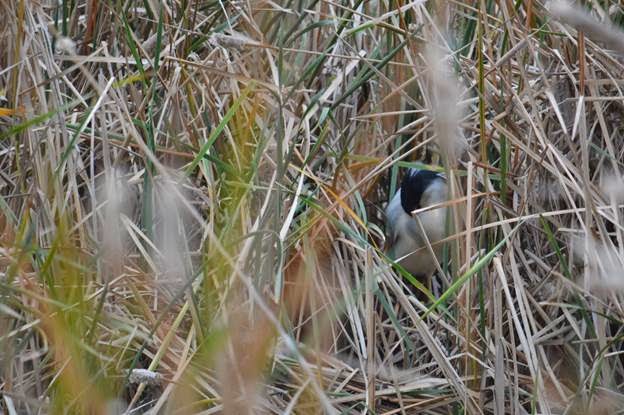
 Got what I wanted for lunch. Dinner too. Judy laughed at every joke I made. Damn I’m good.
common gallinule. …displaying tail feathers. …and a black-crowned night heron snoozing in the reeds. Got what I wanted for lunch. Dinner too. Judy laughed at every joke I made. Damn I’m good. Once again
…we realize how fortunate we are to live in this medical age. A few years ago, in 2007, with my left anterior descending cardiac artery 99% blocked, I was within a few heartbeats of dying of natural causes. The report would be: “His heart just gave out.” Instead, the doctors went in through my leg, put stents in my heart, and turned me loose to get on with my life. An excellent solution to what, in essentially all of human history, would have been fatal. It’s progressively more difficult for Judy to walk. The cartilage in her knee is worn and there is a tear. Without treatment, her future would involve progressively less walking and more pain until she couldn’t walk at all. Instead, in January, they’ll invade her knee with an arthroscope, clean up the cartilage, and she’ll recover within a few weeks. Now I find I’m losing function in my right arm because nerves are being pinched off by arthritis in my neck. My spinal column is being squeezed by vertebrae that have shifted out of place and by bone spurs growing up against it. The discs between the vertebrae have collapsed. Any other time in history before cervical spinal surgery and I would be looking forward to a gradual continual paralysis as the degeneration progressed, the nerves to both my arms got destroyed, and my spinal cord got shut off. Now, Problem? “Naah. We’ll just go into your neck, take out the crushed discs, insert some bone grafts to recreate the proper spacing, shave off the bone spurs, and hold it all together with some small plates and screws. A month or so in a tight collar, a couple months of recovery all together, and you’ll be good to go.” I might lose 5 to 10% of the mobility in my neck. I might not regain all the strength in my arms I’ve lost over the last 5 or 10 years. I think I’m just fine with that. Many challenges remain for medical science, but it’s getting better every day. Maybe a hundred years from now today’s medical practices will seem primitive, but no matter how much better they get in the future, isn’t it nice to have what we have today.
Great Blue Heron
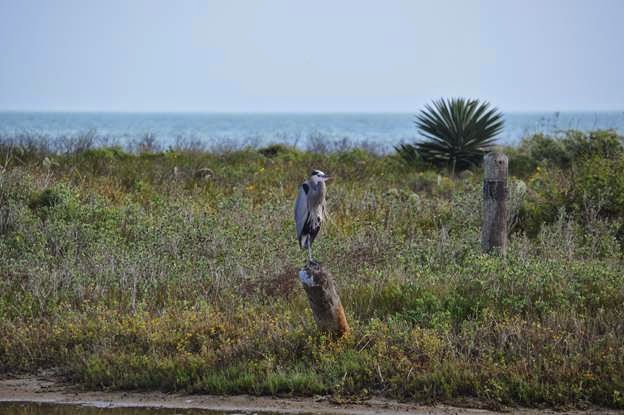 On a post
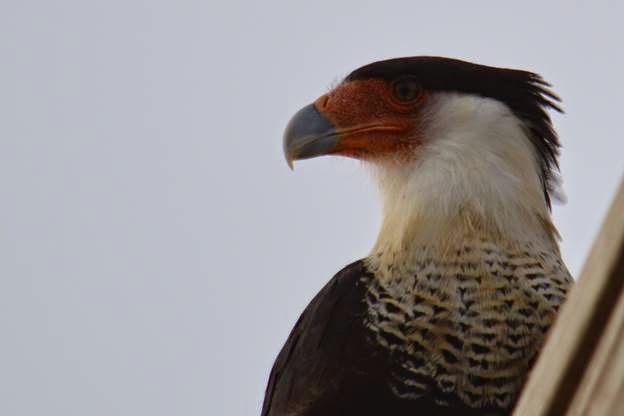
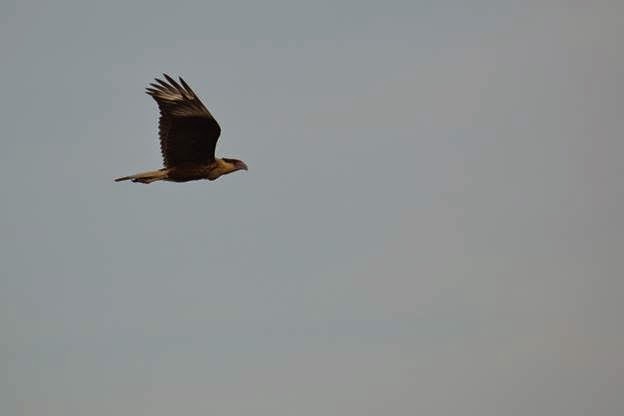
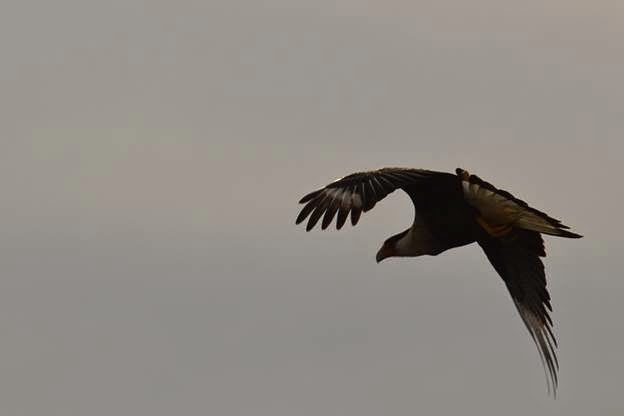
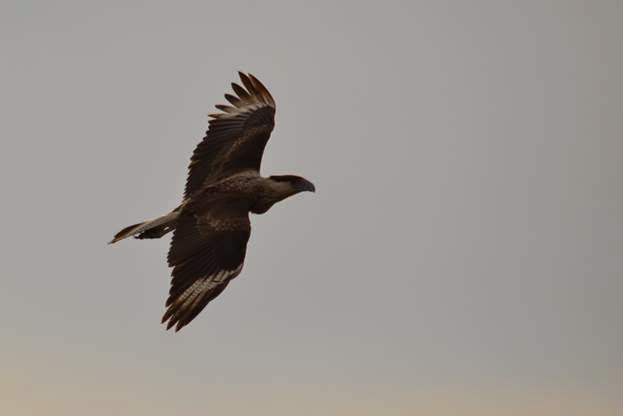
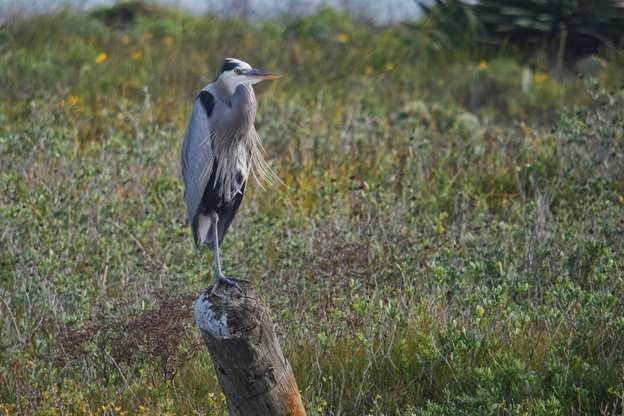 …and a Crested Caracara.