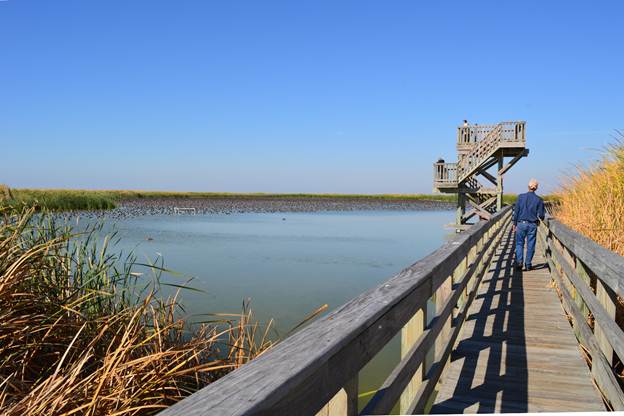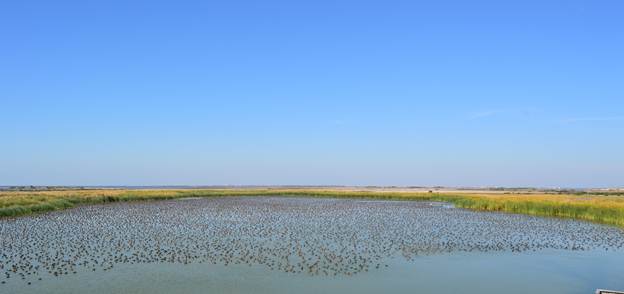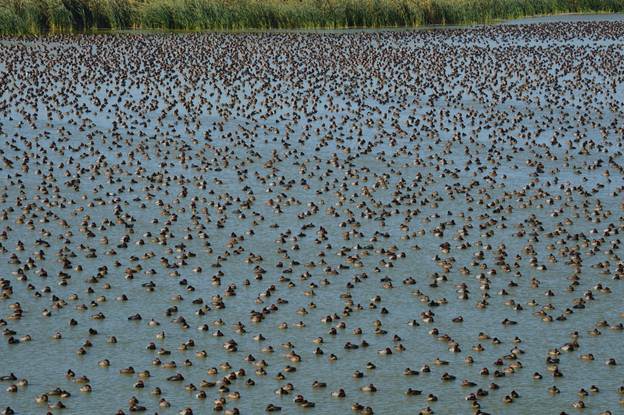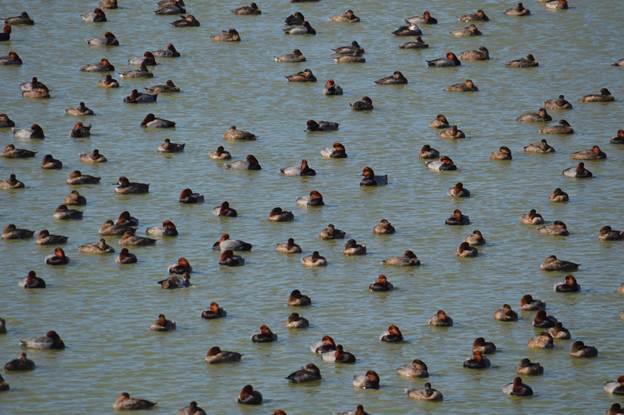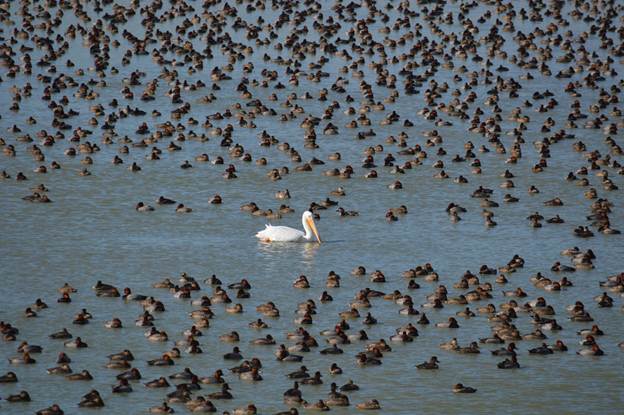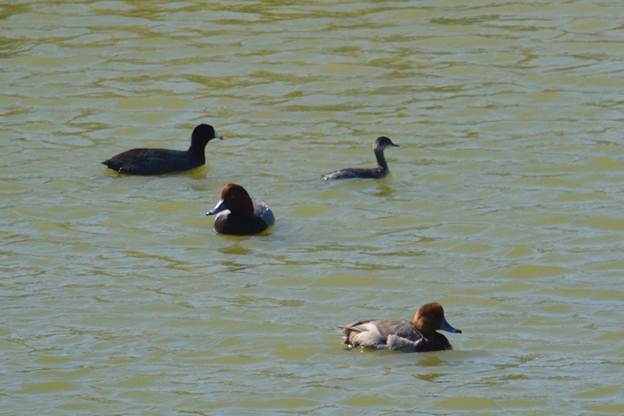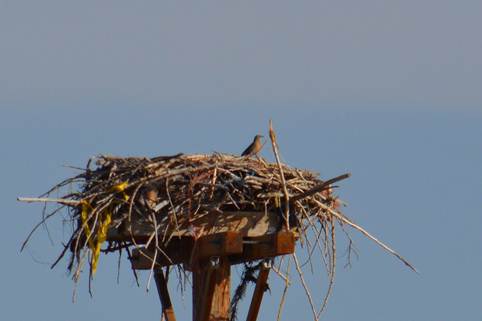
…we had a good day ducking at the Birding Center pond. We stood and stared at a couple thousand ducks, recognizing a few different species, (and missing the one we were after). This week, we decided to go parroting at a park in the Valley where parrots fly in to roost in the evenings. We were there, not to find a specific bird, but to revel in the spectacle (and to see how many species of parrots we could identify). So at 5pm, binoculars and camera in hand, we watched a great (and loud) flock of Red-crowned Parrots arrive.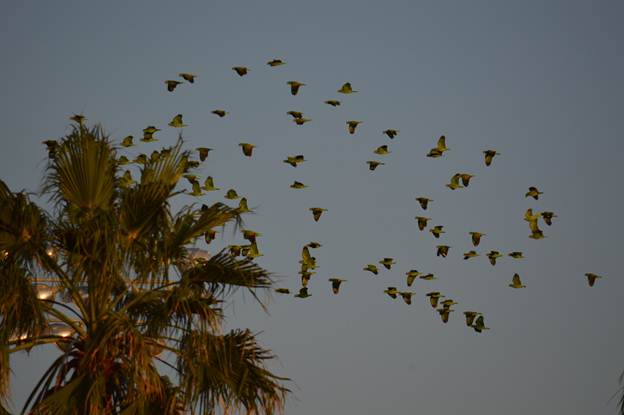
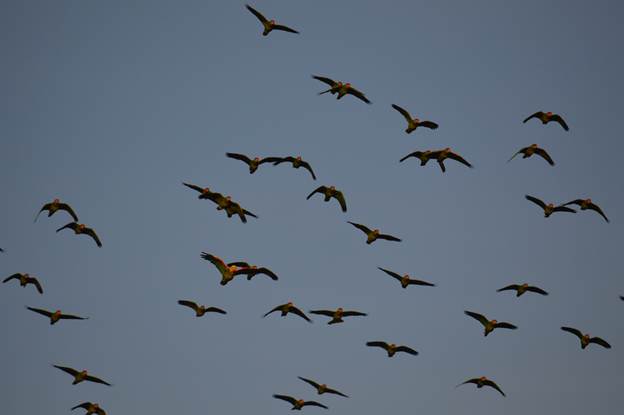 Those are the native parrots here, Red-crowned Parrots. They live in a few flocks in south Texas, and mostly in Mexico.
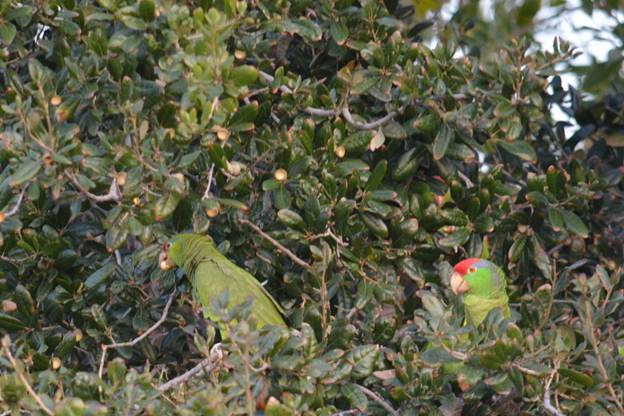 We also managed to pick out three other species in the flock.Red-lored Parrot…
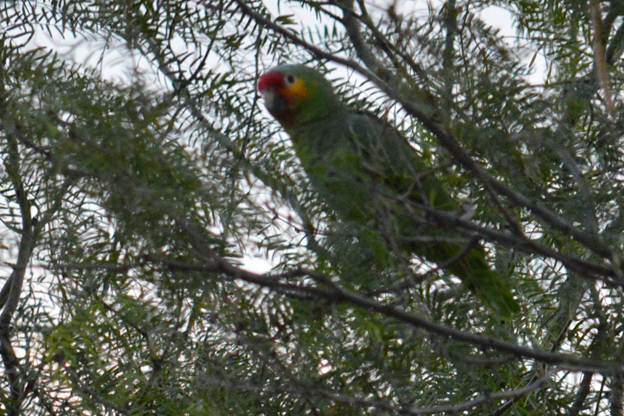 White-fronted Parrot…
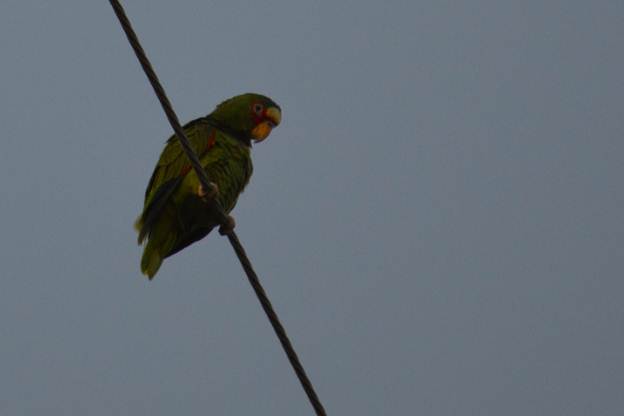 ..and Yellow-headed Parrot.
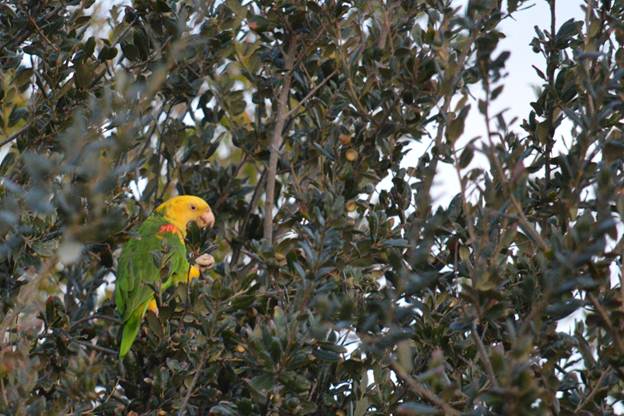 (Parrots fly in to their roost at dusk, so it’s hard to get good pictures in the evening light.) Who knew there were so many parrots flying around?
Those are the native parrots here, Red-crowned Parrots. They live in a few flocks in south Texas, and mostly in Mexico. We also managed to pick out three other species in the flock.Red-lored Parrot… White-fronted Parrot… ..and Yellow-headed Parrot.(Parrots fly in to their roost at dusk, so it’s hard to get good pictures in the evening light.) Who knew there were so many parrots flying around?