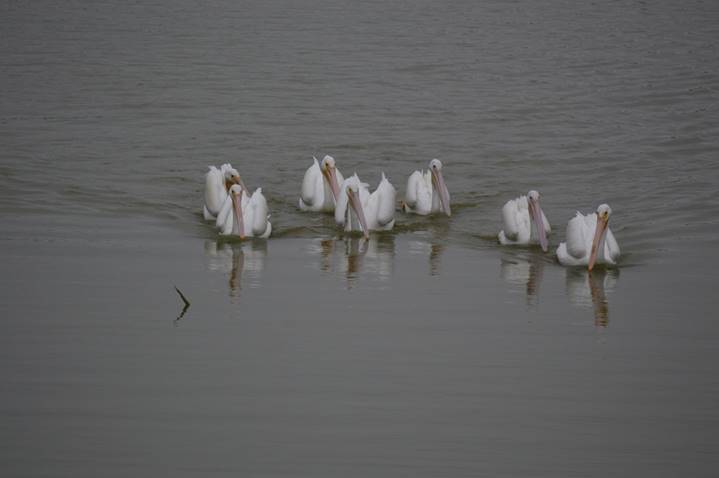
Fan out.
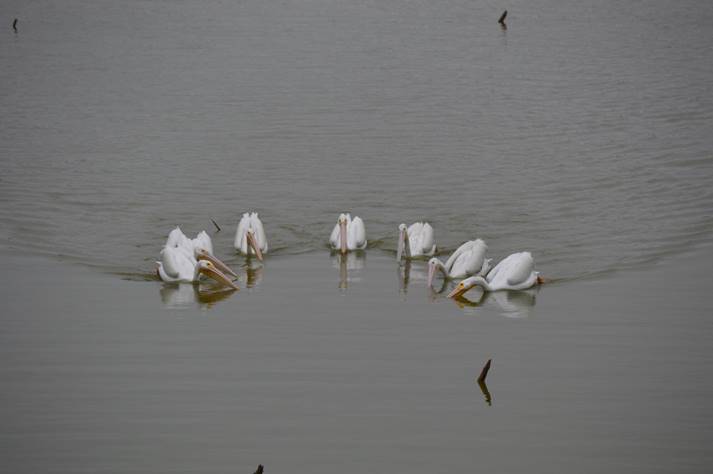
Surround the meal.
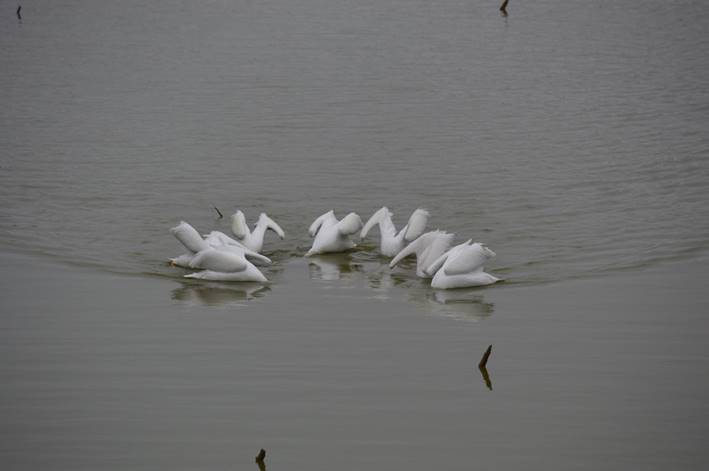
Everybody dip.
Come up for air.
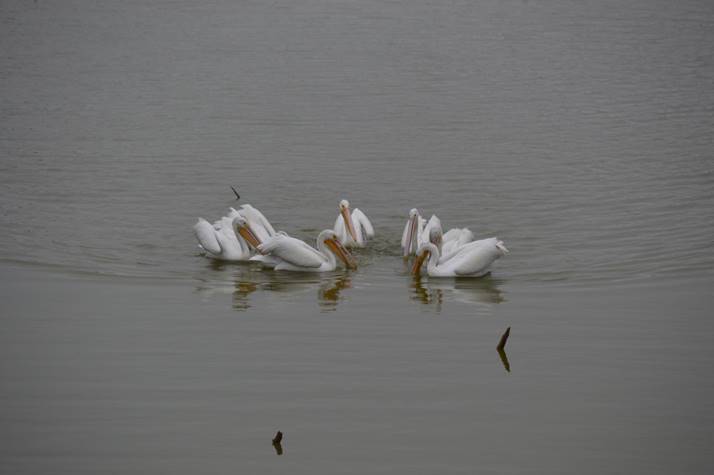
Gulp.
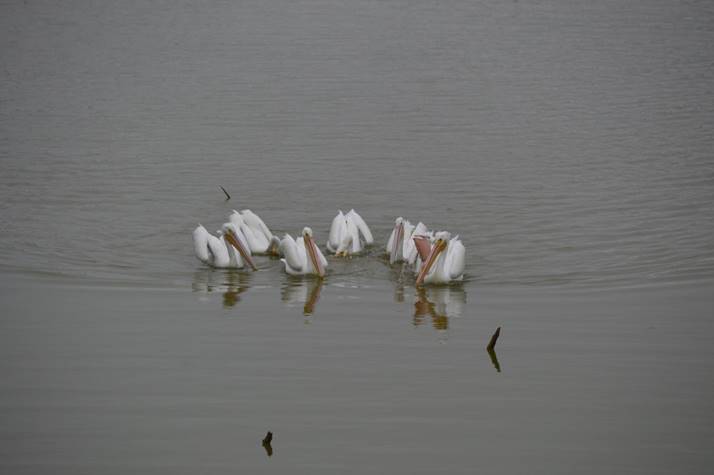
And repeat. The American White Pelican Water Ballet.
Fan out.
Surround the meal.
Everybody dip.
Come up for air.
Gulp.
And repeat. The American White Pelican Water Ballet.
…for the Texas Year. Birding. We were going to spend January at home watching winter birds here, February finding winter birds in West Texas and the Panhandle, March back at home, and April going up and down the coast looking at migrants. Winter birds and migrants, all handled by the beginning of May. It was an awesome plan.
So far, we have birds here at home and a few from San Antonio. We’ve gotten new seals put around the slides on the bus. The old ones were 15 years old. We have a couple of refurbished eyeballs. The old ones were 70 years old. We’ve gotten a couple covid shots and a deep freeze with frozen water pipes and power outages. February is almost over, and February birding hasn’t started for us yet. Maybe February will happen in March this year. April Migration can’t be postponed, so we might have to go directly from February to April. Who knew birding could be this complicated???
Candycorn for a face
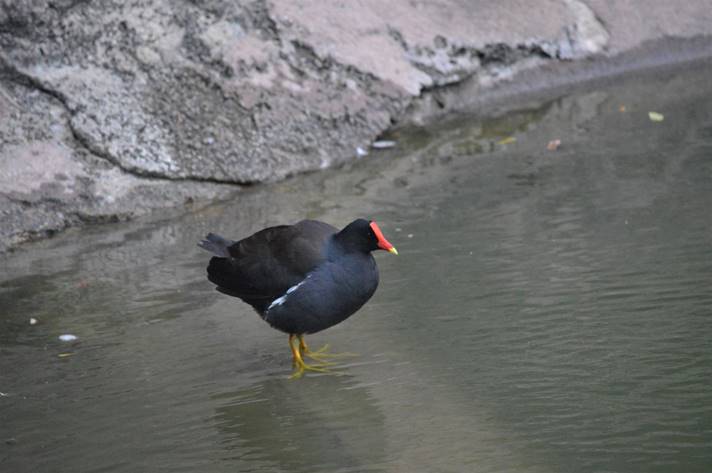
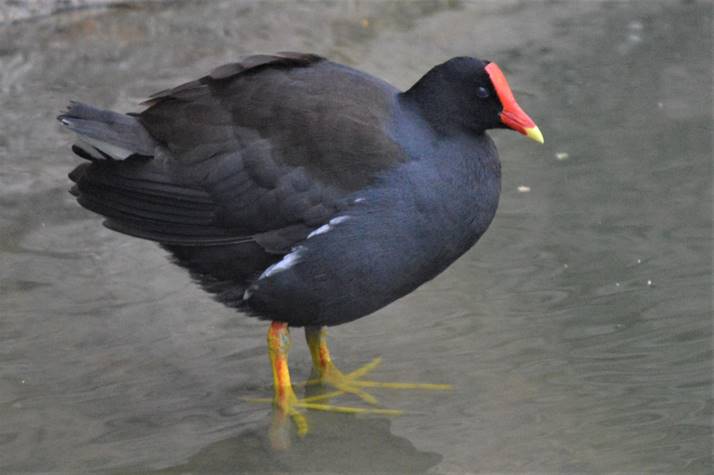
…and elegance.
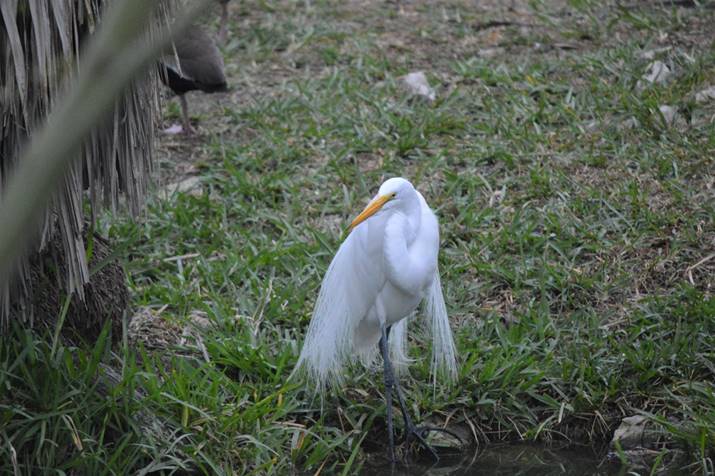
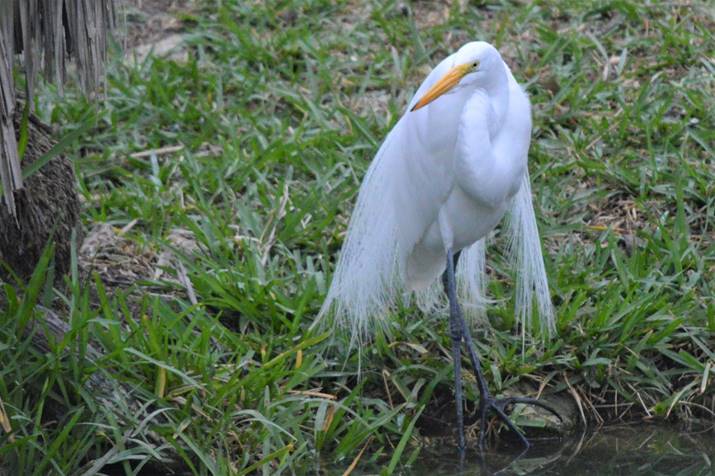
More people in Texas have power and water tonight than last night. Our power and water are still on and the boil-water alert has expired. It’s above freezing here during the days. Two more cold nights and we should be out of this. We see forecast lows in the 50s and 60s later in the forecast!
Here in the Valley, conditions have been a lot like the big cities up north you see on the news, except without the frozen roads. Road conditions in San Antonio as I write.
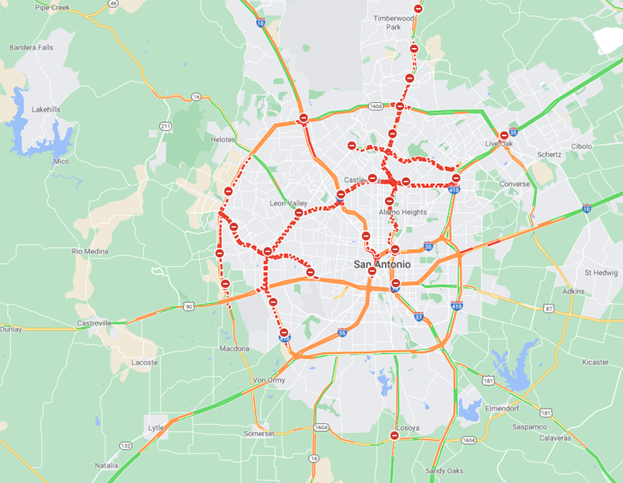
There doesn’t seem to be any way through, north to south or east to west.
I was out doing a couple errands yesterday. The power was out to about every other stoplight with almost everyone properly treating them as four-way stops, but that was slow-going getting through each intersection. The blocks-long lines at gas stations were reminiscent of the gas crisis in the 70s, where I would go to work in one car while Judy waited in a gas line with the other car. The next day we would switch cars and repeat. But as I was driving yesterday, I realized the scope of the problem here, stopped what I was doing, and drove straight home so I wouldn’t be contributing to the height of the crisis.
We have a mixed situation here at Sandpipers. Power has been out to about half the park since maybe Sunday. Today the big shuffle happened. People without power at their sites started up their RVs and moved them to sites with. Didn’t get everybody, but some relief for some.
One more note. Some of the pansies at our house are happy.
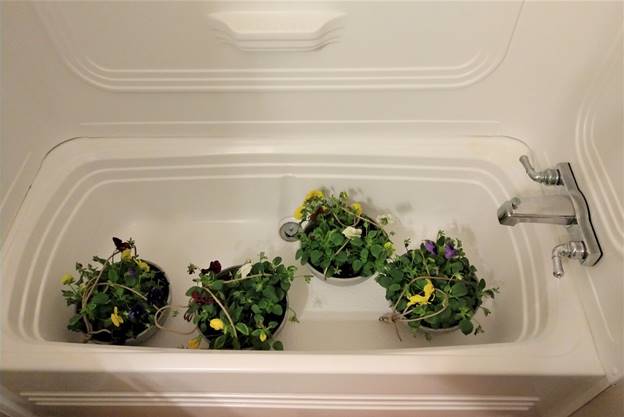
Well, maybe not thrilled, but not outside frozen either.
Texas is in an energy crisis. The most energy-rich state in the Union doesn’t have enough energy to meet an unexpected demand.
The governor of our state went on television to say this is what you get with the green new deal because the windmills are frozen. That’s an absolute, and political, lie. Not about the windmills, they are frozen, but about the scope of the problem. Wind energy provides about 15% of our power in Texas and about half of the windmills have been knocked offline by the weather. Windmills can be built to survive freezing weather, but Texas didn’t need to do that. It never gets cold here. (I’m told they have windmills in Norway.) The bulk of the problem is that natural gas pipelines are frozen, and the big oil refineries outside of Houston are shut down because they can’t operate in sub-freezing temperatures. None of that stuff was built to withstand temperatures ten degrees lower than normal. (It’s not like all utilities can’t operate in colder weather. I hear they even have electricity in Chicago!) We have a state-wide industry problem, not a clean energy problem.
Compounding further, there are three energy grids in the United States. Eastern, Western, and Texas. Texas is isolated from all other energy in the country. Can’t operate in cold weather? Just call California, Nevada, or Arizona for some of their electricity. Oops. Can’t do that. We’re Texas. Know why we have our own energy grid, disconnected from the entire rest of the country? Federal regulations. If we connected with other states, we would have to suffer federal regulation just like every other state. Know what federal regulation might have done? It might have made us build our infrastructure to higher standards.
To quote Pogo, again, “We have met the enemy and he is us.”
Our power outage last night turned out to be no big deal. It was only out from about 7:30 to 9:30, but by 9:30 we were already asleep with all the blankets piled at the end of our bed just in case! That was a lot of sleep, thank you.
The dripping faucet overnight worked. We had water this morning. It was only a trickle, but that was not on us, it was on the city pumping station power outage and their backup generators that ran out of gas. By mid-day we had water and electric both! A warmer day tomorrow with a high of 65, then back into the freezer with lows in the 20s the next two nights. Then we’re over it. A high of 80 on Sunday!
Judy got her one-week post-surgical eye checkup today. Her vision is now 20-20 in both eyes! She has never had 20-20 vision in her life!
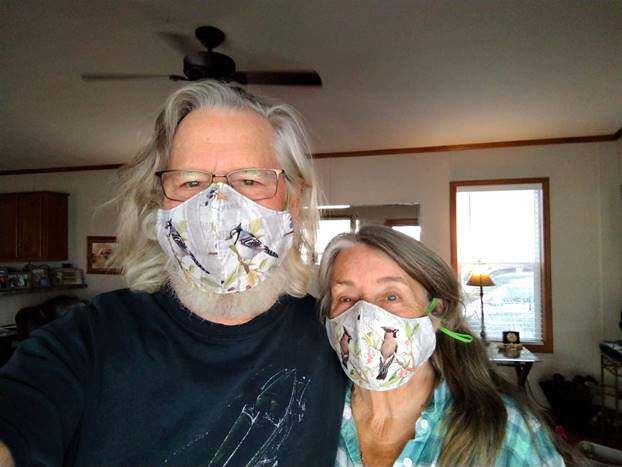
A friend in Alaska made new masks for us. They have birds on them! Perfect!
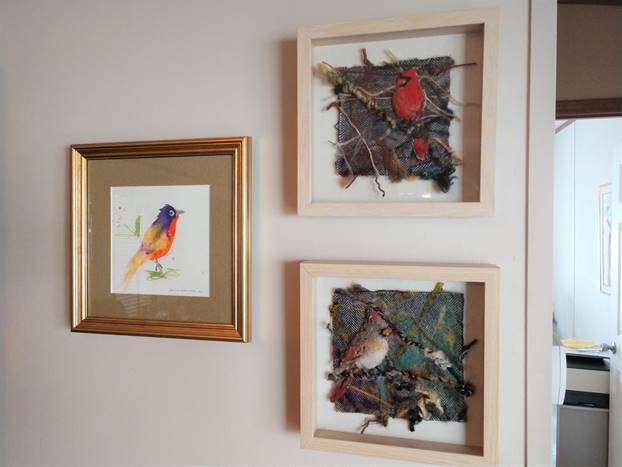
A bird-art wall.
Thank you Christie, and Rock!
And here is a drone camera, camouflaged to look like a hummingbird, to photograph butterflies up close!